
2 minute read

The FCC has fined Xtra and seven other DJI-linked firms, and moved against the lab that certified DJI's Pocket 4P. Xtra's Muse 2 Pro release in the US could be in jeopardy.
The Federal Communications Commission's latest swing at DJI "front companies" took direct aim at eight companies last week, one of which was Xtra Technology, the Delaware-registered brand whose entire catalog looks suspiciously like the DJI product line with the badges swapped. That is awkward timing, because pre-orders are already being taken for Xtra’s forthcoming Muse 2 Pro, which will be likely the only way to buy anything resembling DJI's flagship pocket gimbal camera, the Osmo Pocket 4P, in the US this year.
On 10 July, the FCC issued $25,000 fines to eight companies it says ignored formal requests for information about the importation and sale of wireless products linked to DJI hardware. These were Cogito Tech, Fixaxo Technology, Lyno Dynamics, Skyhigh Tech, Spatial Hover, SZ Knowact, WaveGo Tech, and Xtra Technology.
Xtra sells three products that track DJI's camera line almost feature for feature: the Muse (an Osmo Pocket 3 equivalent), the Edge (Osmo Action 4), and the Edge Pro (Osmo Action 5 Pro). It is currently taking pre-orders for the Xtra Muse 2 Pro, which is effectively the DJI Pocket 4P and due to launch in Q3 2026 for what the company indicates is going to be $600 - $700.
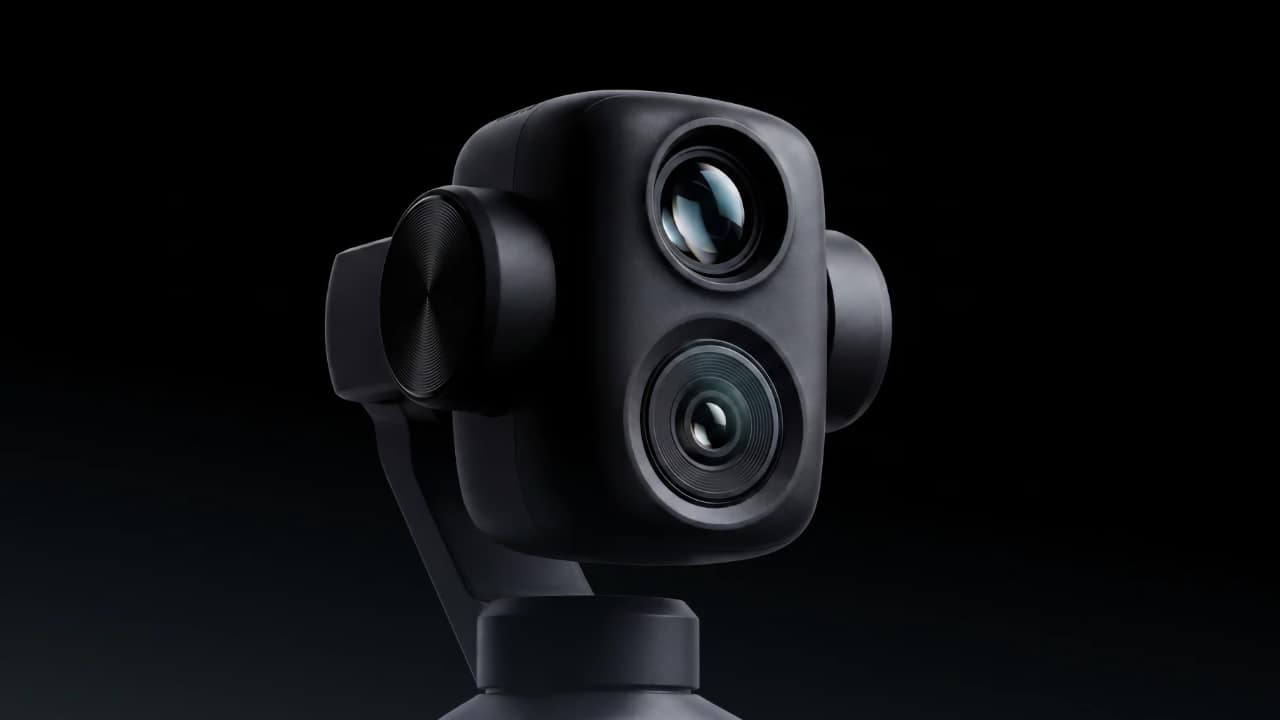 Its spec sheet lines up with the Osmo Pocket 4P point for point: a 1-inch main sensor paired with a 3x telephoto second lens, 17 stops of dynamic range, a 10-bit log color profile, and a three-axis gimbal. Xtra has made a handful of physical changes aimed at solo shooters which actually read as improvements. These include a screen that flips on both sides rather than DJI's fixed rotating display, a grip built into the body instead of sold as a separate accessory, a standard 1/4-inch mounting thread in the chassis, and a USB-C port moved from the bottom to the side so the camera can charge on a tripod.
But for all that, this is the Pocket 4P's spec sheet with a different name on the box, pitched at a market where the real thing cannot legally be sold.
 To be clear, the Commission has not accused Xtra or any of the other seven companies of breaching the drone and camera restrictions directly. The fines are for not replying to the FCC’s queries to date. All eight have until 20 July, ten days from the announcement, to respond before the agency considers further enforcement.
So, what happens next? If the Commission's information demand leads to a formal finding that Xtra is acting as a proxy importer for a Covered List company, rather than an independent manufacturer that happens to make similar cameras, the same regulatory bar that stopped the Osmo Pocket 4P could be extended to Xtra's products by the same logic.
There are also indications that the FCC is looking to stamp down on the whole rebadging process as these company-level fines are not the only enforcement in play. The FCC is also making moves to strip accreditation from the Shenzhen-based test lab that certified the DJI Osmo Pocket 4 and 4P for FCC compliance (it is unknown whether the Muse 2 Pro is also caught up in this). This is less to do with test quality and everything to do with the fact that the lab is, in a roundabout way, partly owned by the Chinese government.
To date court filings show that DJI reckons it is losing $700 million from shelved authorizations on 14 existing products, plus a further $860 million if it cannot launch 25 planned products in the US in 2026, a total of roughly $1.5 billion this year alone. If the FCC actions continue, it looks like there will be more than one company looking at proportionally similar losses as the year progresses.
Tags: Cameras Xtra Muse DJI Osmo Pocket 4P FCC


RedShark 2020 @ All rights reserved.

Comments