2 minute read

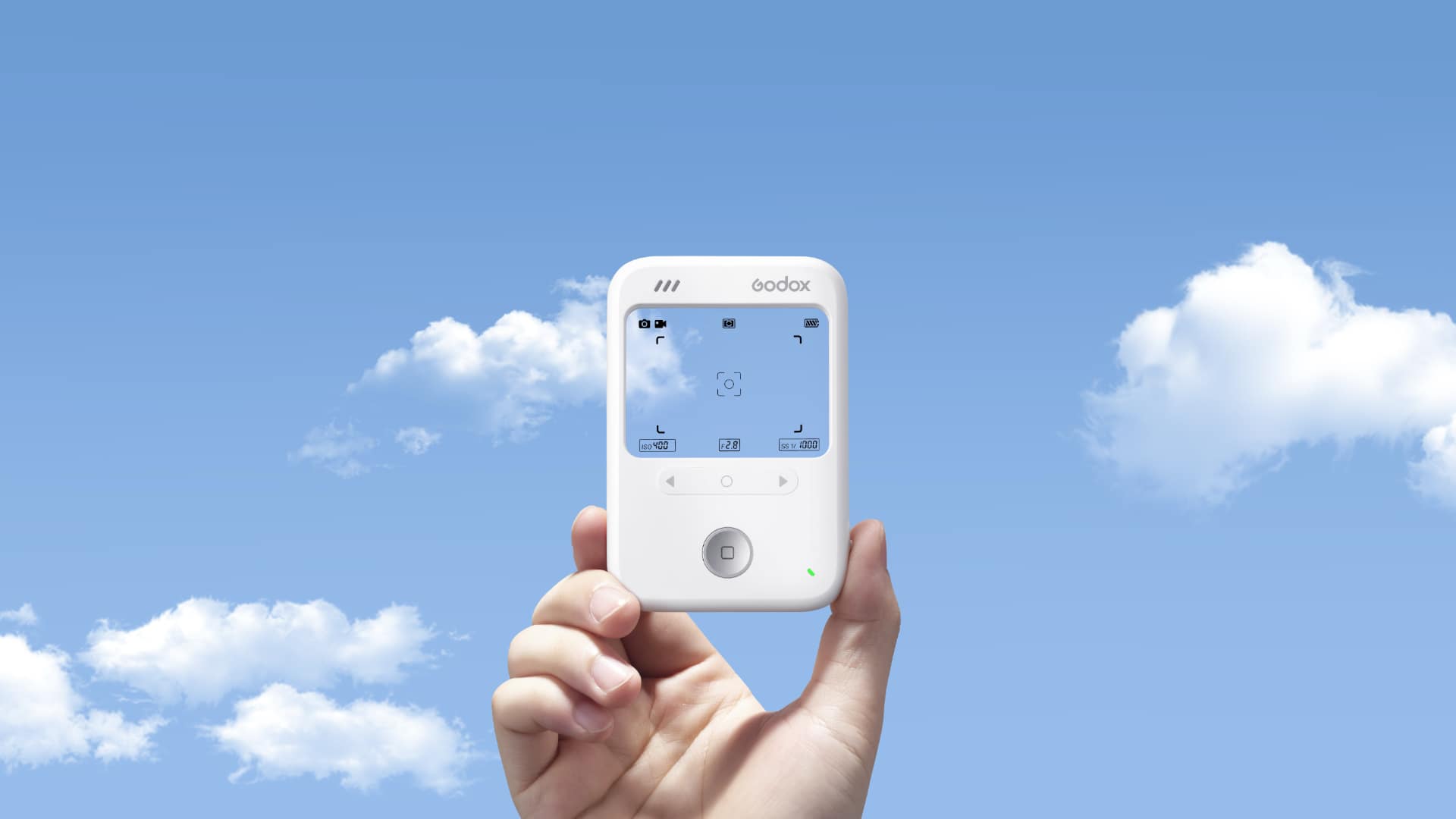
Godox's C100 is a $29 compact camera with a transparent display and no image review screen. It's a simple idea, but there are a few twists that elevate it beyond a toy and make it worth knowing about.
One of the fun things about the camera industry at the moment lies in the experimentation at the fringes with different form factors and the ways that we can choose to take photographs. Some of it is genuinely interesting; last year's Sigma BF and the Fujifilm X Half both made waves on release, while the attention surrounding Canon’s waist-level concept camera at CP+ at the start of this year shows that there is an appetite for something different, even if it is mostly nostalgic.
Few things are as different though as the Godox C100, which the company has just released in China. And just because it’s pitched at effectively a trinket/Secret Santa price point of ¥199 (approximately $29), that doesn’t mean that it couldn’t go on to become something influential in future device design.
The C100 is Godox’s first camera and is built around a transparent display rather than a conventional LCD screen. What you see is very much what you get: you look through the transparent display (Godox rates the panel's light transmittance at more than 50%), click a button, and take a picture of what you see. There is no other display and to see the picture you took you’re going to have to offload the file to another device via USB or physically remove the microSD card and read it.
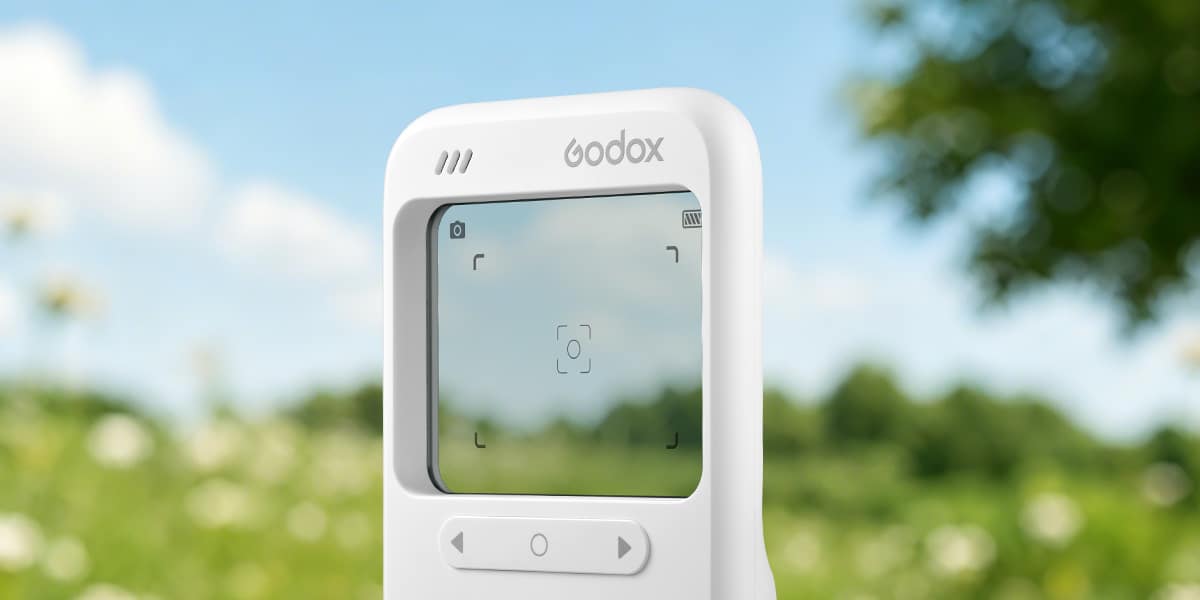 The C100's transparent display is rated at over 50% light transmittance, letting the scene show through with frame guides overlaid
It’s a wildly simple concept, and Godox isn’t the first to think of it. As PetaPixel points out, Escura showed a similar device at CP+ 2026. However, the Godox version has some key advances over that model, most notably active overlays for exposure, frame guides and battery status that are superimposed on the view. Exposure values are captured using a center-weighted light meter, while the camera natively supports four aspect ratios, 16:9, 4:3, 3:2, and 1:1, with frame lines adjusting on the transparent display accordingly.
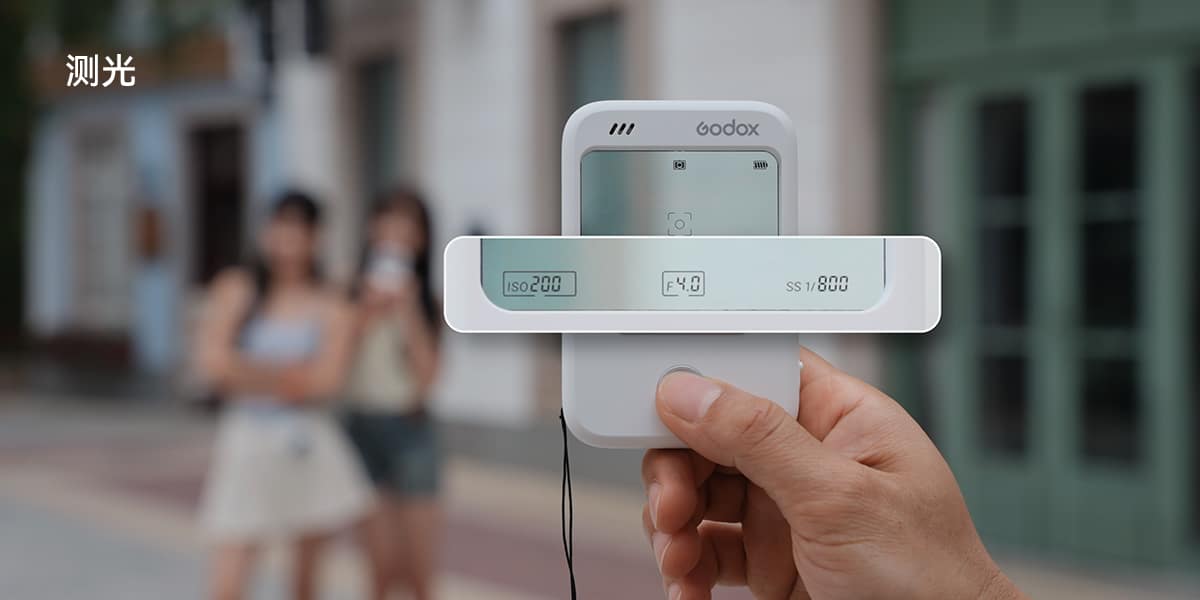 The C100's exposure overlay bar shows ISO, aperture, and shutter speed readings from the center-weighted light meter
The body measures 104 × 72 × 19 mm (4.1 × 2.8 × 0.7 in) and weighs approximately 65 g (2.3 oz). Storage is via microSD, with a maximum capacity of 128 GB. Charging is USB-C at 5V/1A, with Godox quoting over 1.5 hours of continuous video recording per charge.
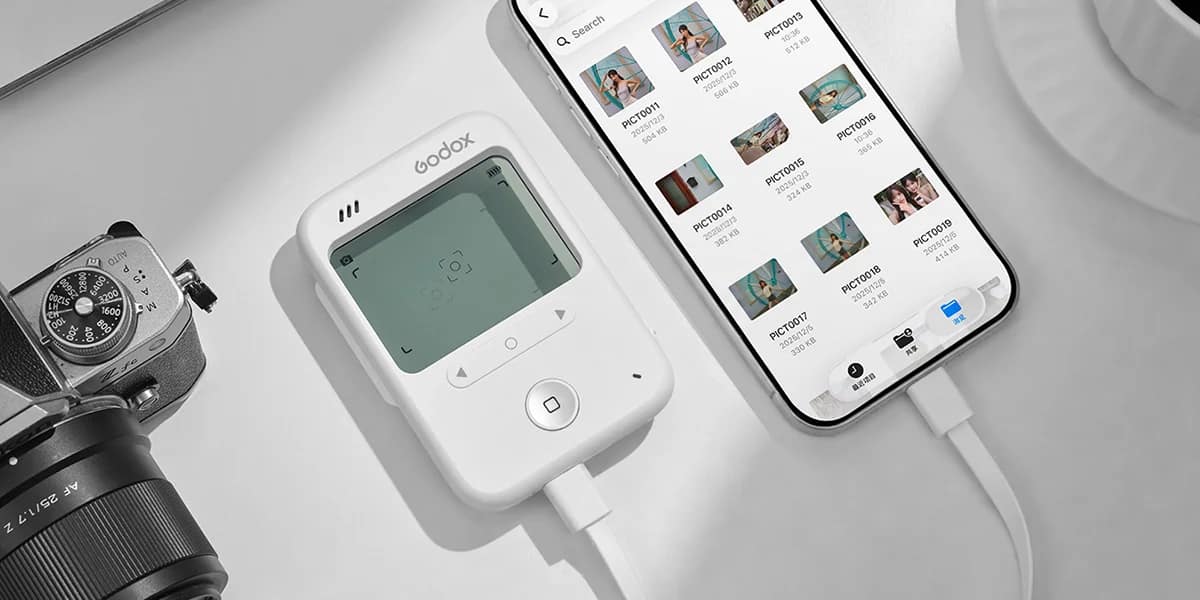 Images from the C100 must be offloaded via USB-C to a connected device or by removing the microSD card, as there is no rear screen for review
There is no published information on sensor, image size, or video quality. The only clue there is a picture of a connected iPhone that shows pictures topping out at around 500 KB, so nothing to write home about. But, as we said, it’s $29 so that is to be expected. Digging through the manual reveals further specs of ISO 100–800 (manual only), aperture f/1.0–f/64, and a shutter speed of 1/8000s–1s.
If it's a toy, it’s a useful toy, and it's potential reaches beyond that. Godox even reckons that it can be used as a light meter in its own right thanks to EV-coupled aperture/shutter control, and pictures it being used by a photographer alongside a vintage Zenza Bronica. That we’re not so sure of.
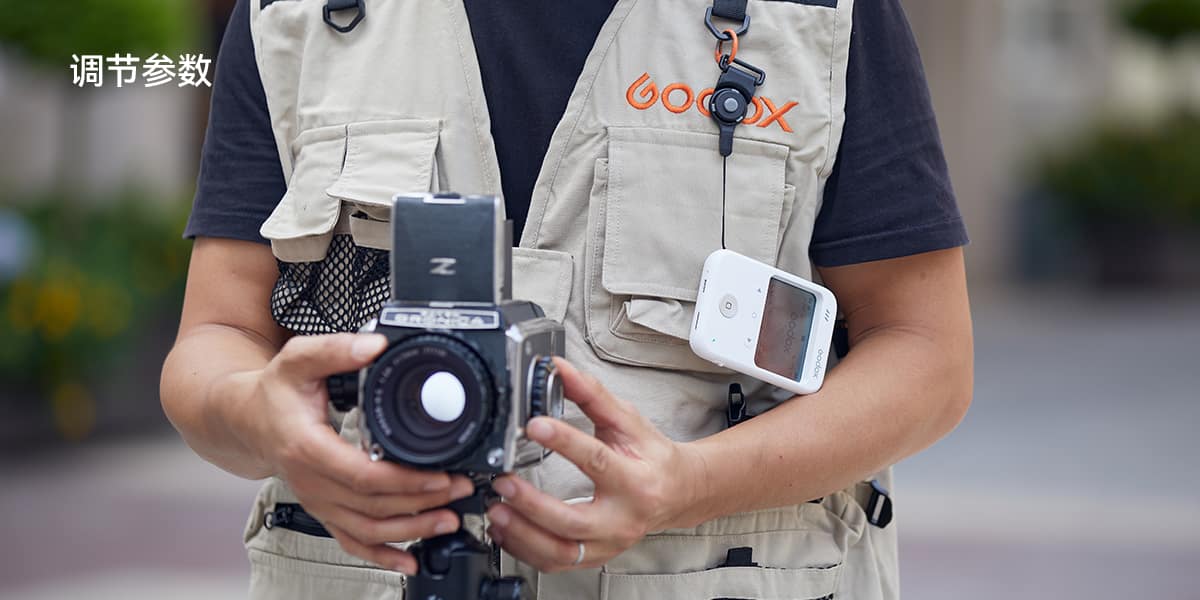 Godox suggests using the C100 as a light meter alongside traditional film cameras, shown here with a Zenza Bronica
But it’s an intriguing-looking device, and if Godox ever fancies making one with higher resolutions and, for example, the ability to display stored pictures on that semi-transparent screen, it might really be onto something. Here’s looking forward to Godox’s second camera.
Tags: Cameras Godox Compact Cameras


RedShark 2020 @ All rights reserved.

Comments