3 minute read

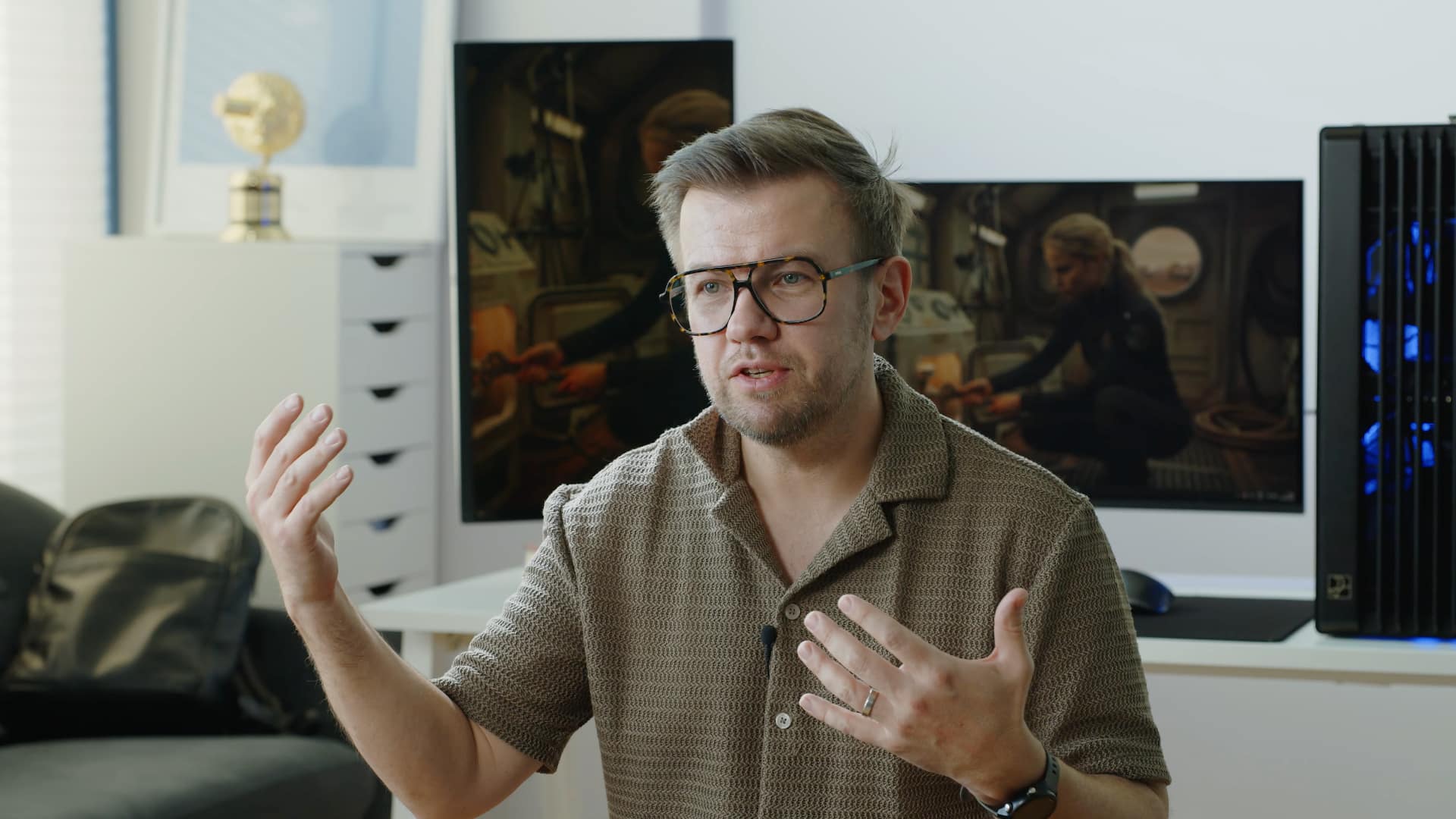
From The Penguin to Mars: How Estonia's FrostFX is building the future of AI storytelling. "I don't want to be a technician," says boss, Marko Post. "I am a storyteller.”
When audiences tuned into HBO's The Penguin, they were immersed in one of the most visually striking television productions of recent years. Behind the scenes, however, much of that seamless visual effects work came from a studio many thousands of miles away from Gotham City in Tallinn, Estonia.
FrostFX may not be a household name outside professional post-production circles, but among visual effects artists it has built a reputation for delivering high-end work on international productions while quietly exploring the future of AI-assisted storytelling. This is especially interesting right now when studios are looking internationally for value and access to the best creatives from production partners.
Led by VFX veteran Marko Post, the studio contributed more than 130 visual effects shots to The Penguin, work that formed part of a production that would go on to receive both a Visual Effects Society Award and an Emmy Award. Yet ask Post about awards, and the conversation quickly turns elsewhere.
"I don't want to be a technician," he says. "I am a storyteller.”
Over the last decade, Estonia has quietly become one of Europe's most interesting technology hubs.
Known internationally for digital innovation and software development, the country is increasingly producing world-class creative companies operating in visual effects, animation and virtual production.
FrostFX represents that convergence perfectly. The studio combines traditional VFX craftsmanship with an engineering mindset, allowing it to move comfortably between feature film work, commercial production, and emerging AI workflows.
Rather than treating artificial intelligence as a replacement for artists, FrostFX sees it as another creative tool, one capable of removing repetitive technical work while allowing artists to spend more time where it matters: making better creative decisions.
 One theme emerged repeatedly during conversations with Post: technology should become invisible.
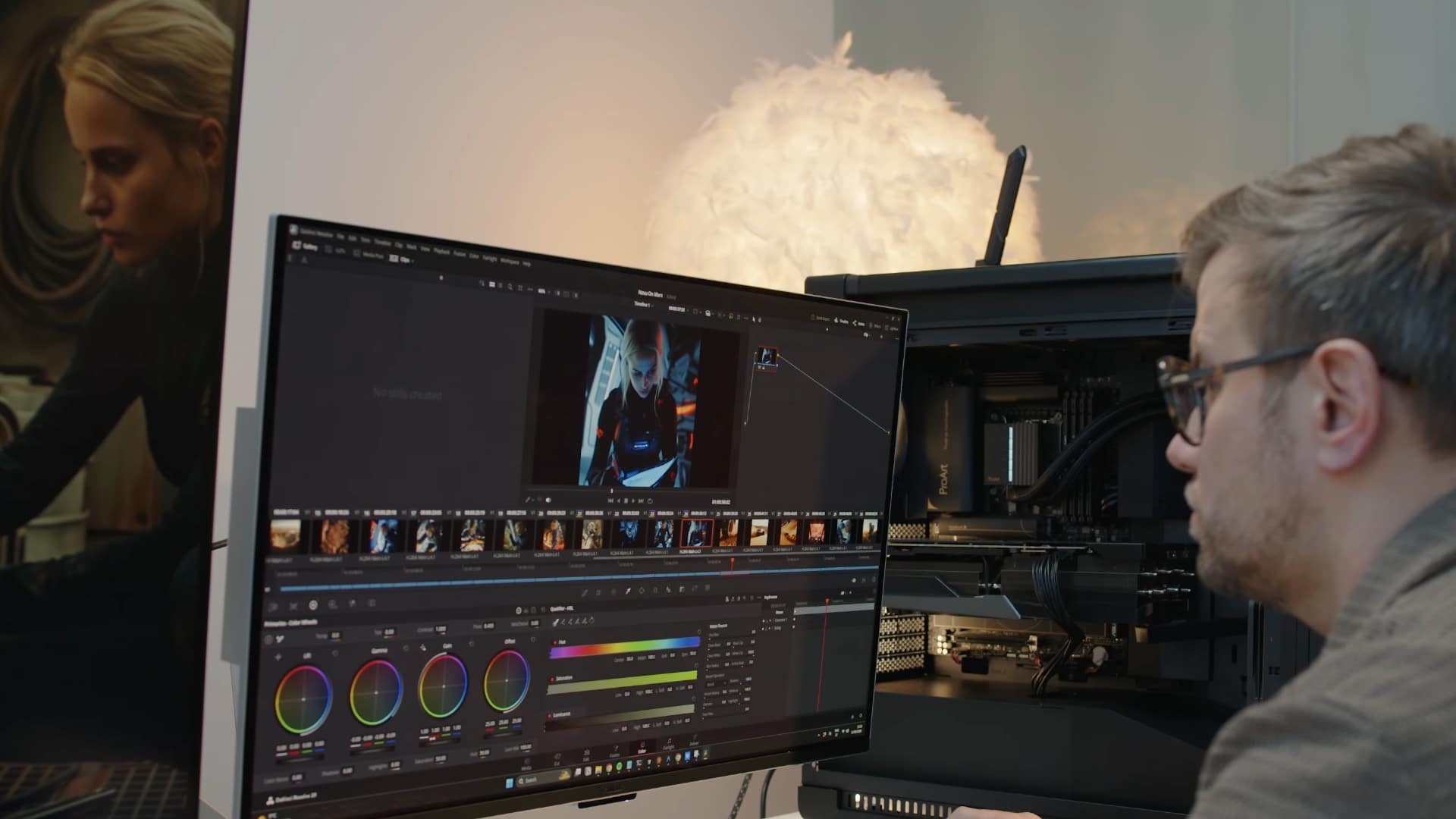
"What I've distilled over seventeen years is that you want hardware that is invisible in the creative workflow," he explains. "You don't want to focus on the hardware. You want to focus on the storytelling."
That philosophy feels increasingly relevant as AI becomes embedded into modern production pipelines.
Today's artists are expected to composite, render, simulate, train AI models, generate assets, review HDR imagery and deliver increasingly complex productions, often simultaneously. That is a lot! Performance matters. But reliability matters even more.
AI training jobs can run continuously for days. Overnight rendering remains commonplace. Instability costs money. For FrostFX, that's where a professional workstation becomes less about benchmark numbers and more about trust.
Post's current workflow centers around a TopPC Creator MAX Powered by ASUS workstation paired with the ASUS ProArt PA32UCDM QD-OLED monitor. While specifications obviously matter (a Core Ultra 9 processor, RTX 5080 graphics, 128GB of memory and colour-accurate OLED monitoring), the more interesting point is how little he thinks about the technology itself when asked about it.
"What I love about it is how stable it is, how cool it runs, and most importantly how much I can trust it on a daily basis."
For color-critical work, the monitor proved equally impressive. "I did some calibration tests on it and I didn't need to adjust anything, which is pretty rare from my experience,” he says. And such reliability is crucial. ”Colors are like the tone of voice of a story. It’s not what you say, it's how you say it."
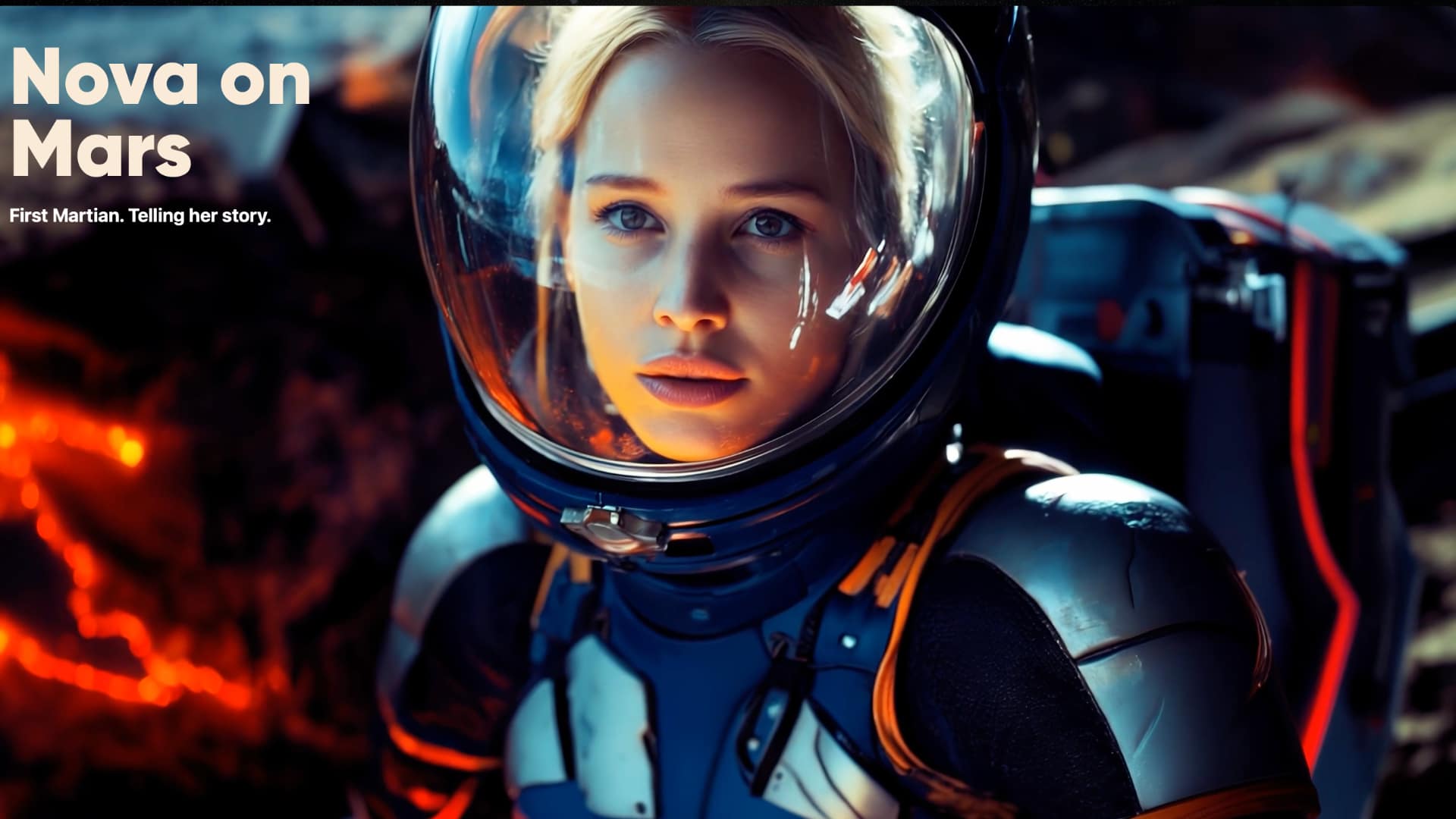 One of FrostFX's most interesting recent projects, Nova on Mars, is an experimental AI-native character designed to exist continuously online, interacting with audiences through social media while generating new content in real-time. Unlike traditional productions, projects like Nova (which is closely tied into an associated memecoin) don’t begin and end with principal photography. The idea is that they're always running, and that, rather than replacing filmmakers, AI is increasingly becoming another production department working alongside artists, editors, compositors and writers.
AI inference, model updates, asset generation and creative iteration happen continuously, placing very different demands on production infrastructure.
"We are running AI models twenty-four seven on the same PC," says Post. "Whatever we are throwing at it, it doesn't budge and it's reliable."
FrostFX demonstrates that world-class visual effects no longer need to come exclusively from London's Soho, Los Angeles or Vancouver. Talent has become genuinely global, and studs like it are competing on the biggest productions while simultaneously exploring entirely new forms of storytelling that blend visual effects, AI, and interactive media together.
Whether it's contributing award-winning work to The Penguin or imagining fictional characters capable of living permanently online, one thing remains constant, however. That goes back to what Marko said at the beginning, the technology is never the headline. The story is. And, to me anyway, that's the most important lesson of all.
See more from Marko Post below:
Tags: Post & VFX ASUS Why We Chose It


RedShark 2020 @ All rights reserved.

Comments