4 minute read

Why we chose it: Cinematographer Troy Edige used the Blackmagic PYXIS 12K alongside the URSA Cine 12K LF on Prada's latest Sea Beyond films, shot in Japan and Hawaii for National Geographic Storyworks.
[Blackmagic sent us this case study in, and we thought it had enough decent detail in it, especially when it comes to color pipelines, to publish it pretty much as is. Ed.]
Sea Beyond is Prada’s conservation initiative with UNESCO, now in its fifth year. This year’s two films, shot in Japan’s Izu Peninsula and on the island of Oahu in Hawaii, followed young people involved in ocean education programs, a Japanese foundation teaching children about stewardship through beach cleanups, and a Hawaiian freshwater conservation initiative.
Both films also required 15 and 30 second social cutdowns featuring Prada ambassadors Benedict Cumberbatch (Japan) and Letitia Wright (Hawaii) in branded fashion moments.
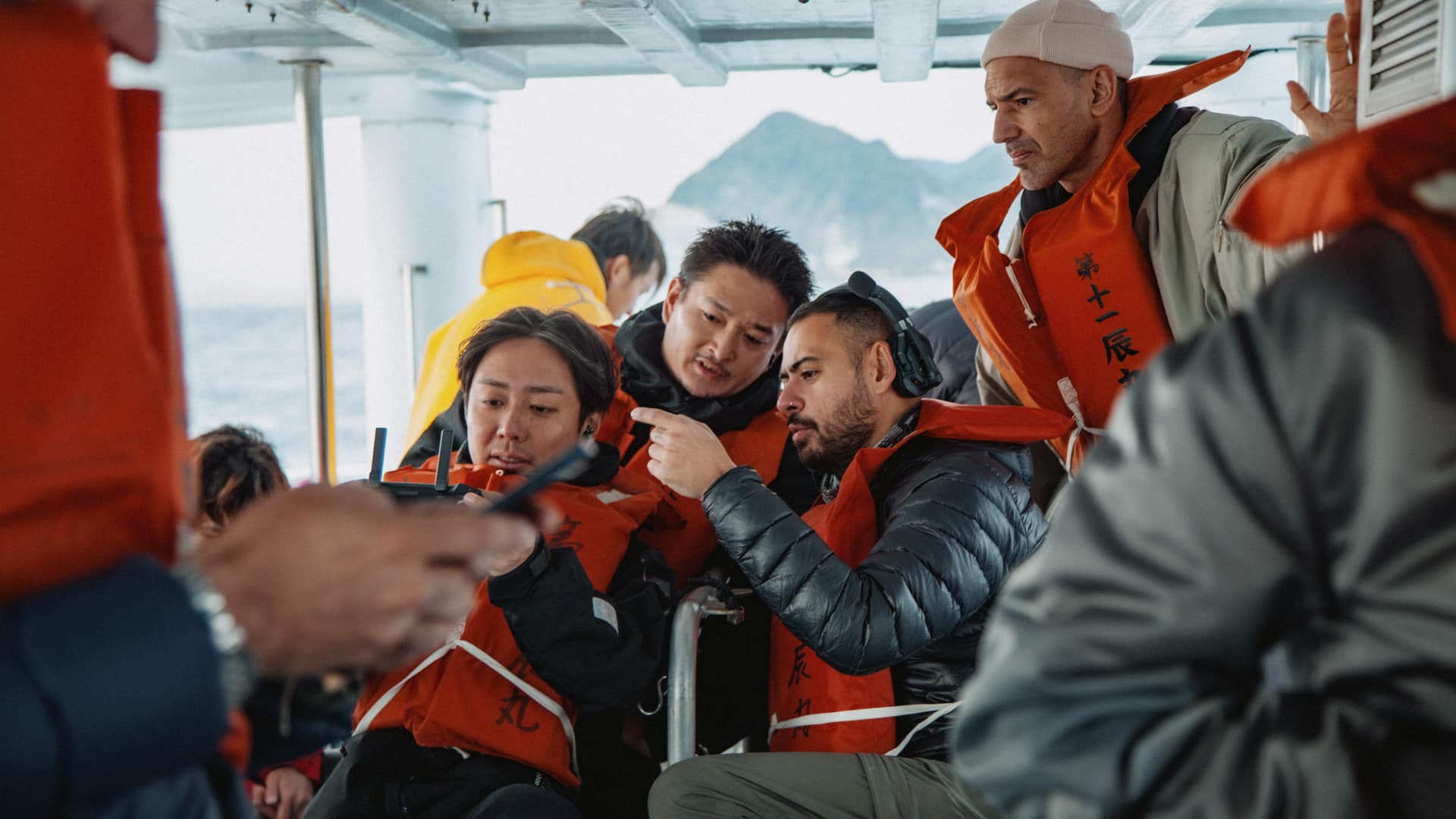
Troy Edige knows the rhythm of a National Geographic Storyworks shoot well: land, scout, shoot, move on. The Prada Sea Beyond films followed that same fast-moving pattern. But that combination of observational documentary content shot to luxury brand standards, on a tight schedule with a small crew, is where the camera decisions got interesting, according to Edige.
“The expectation is always more elevated and closer to a fashion film, even though the core storytelling is documentary-led. You’re shooting true documentary, but everything still has to live comfortably within a luxury brand world.”
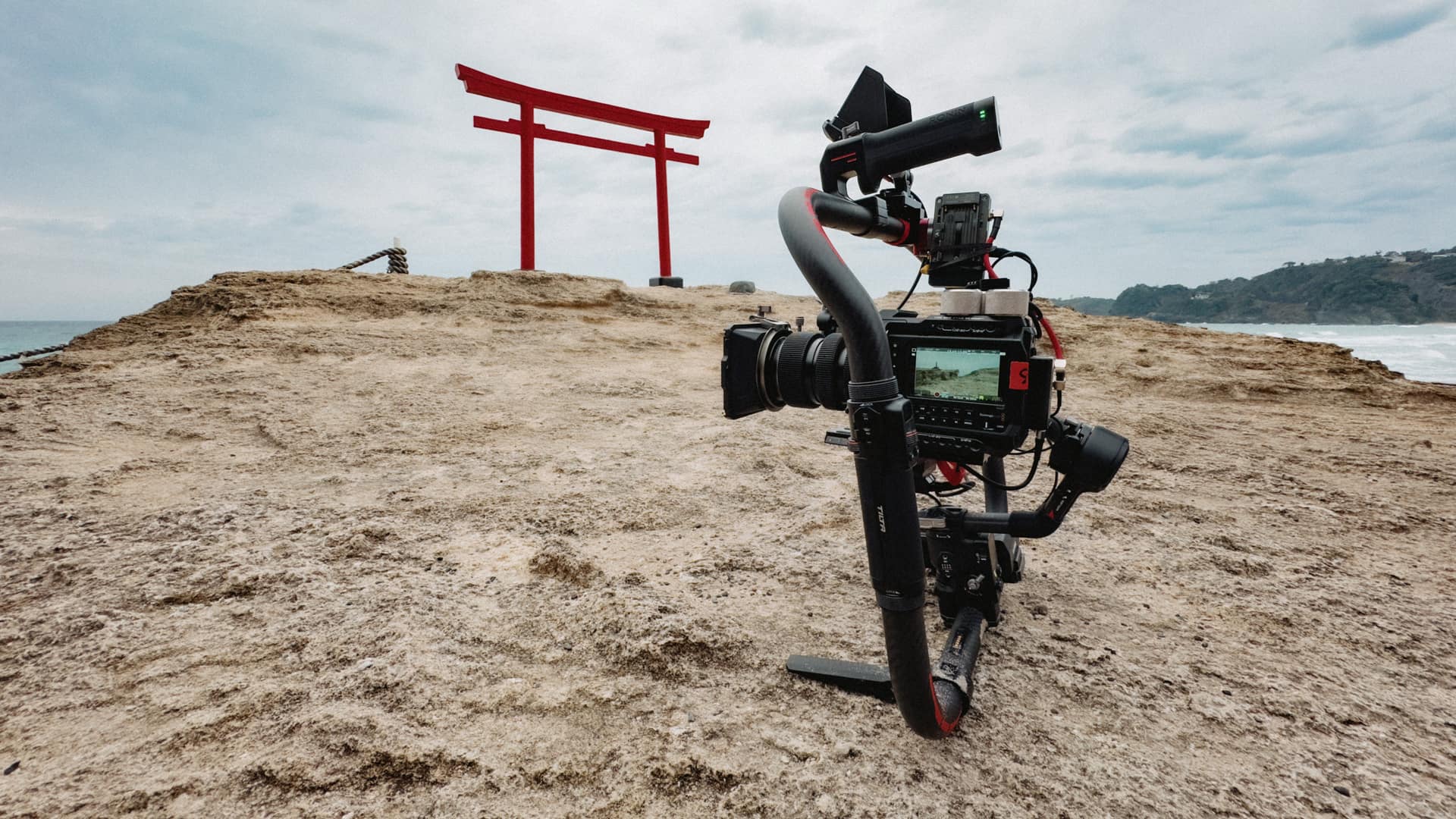
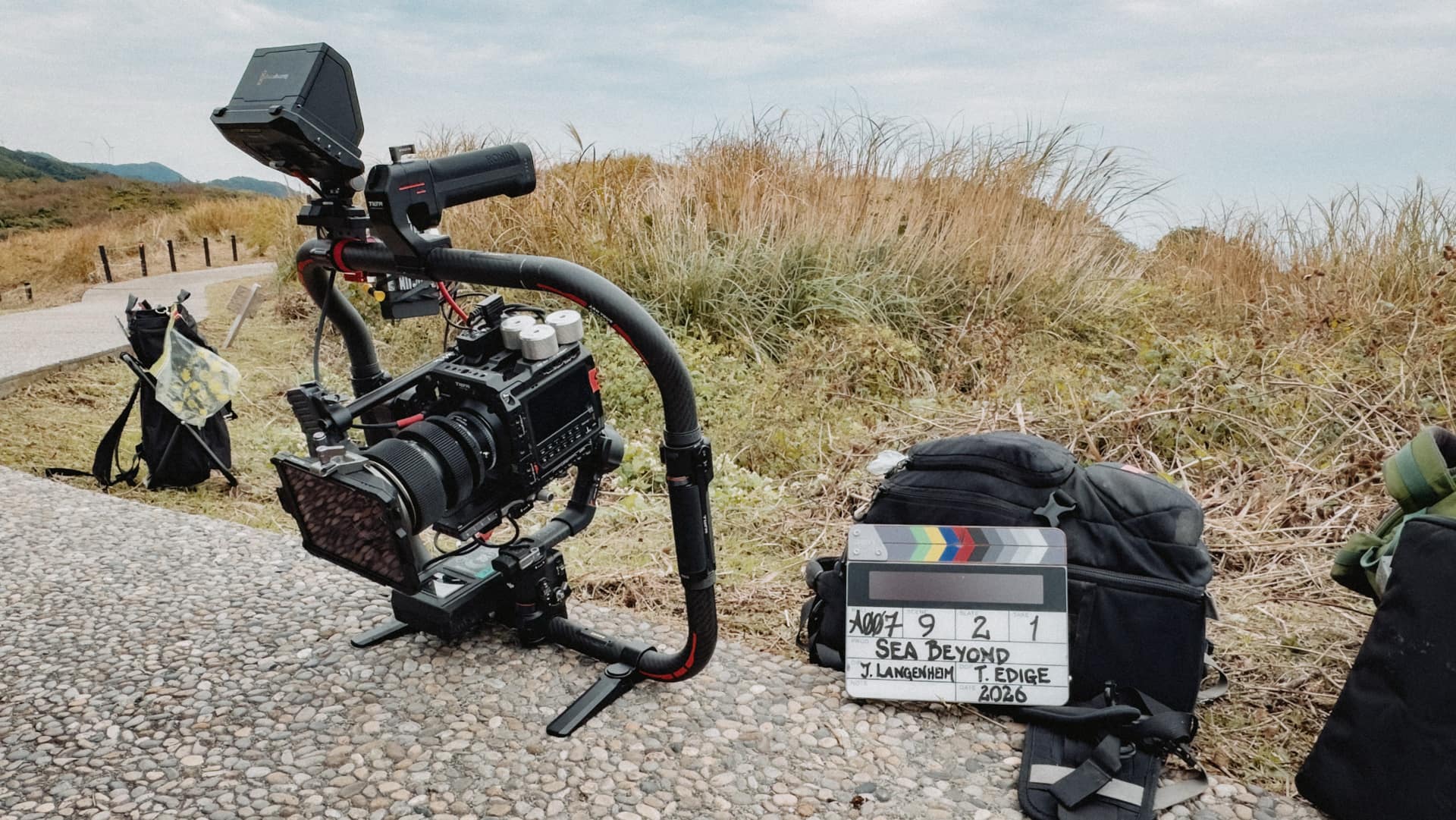 Edige had moved to the URSA Cine 12K LF last year, and the arrival of the PYXIS 12K just ahead of the shoot gave him a more compact camera that could sit naturally alongside it without changing the look or workflow he had already built around the 12K sensor.
Both the URSA Cine 12K LF and PYXIS 12K share the same RGBW sensor: a full-frame 36 x 24mm chip running 12,288 x 8,040 pixels with 16 stops of dynamic range. Where a standard Bayer sensor uses red, green and blue filters, the RGBW design adds a white (unfiltered) pixel to each group. That white pixel passes all wavelengths, which Blackmagic uses to improve light capture and inform the processing of the colour channels alongside it, particularly beneficial for fine tonal separation in greens and in complex skin tones.
For Edige, the shared sensor solved a problem he’d been working around for years: how to run a proper cinema camera on a gimbal without the footage looking like a different camera.
“Instead of putting a mirrorless on a DJI RS3/4 form factor gimbal and trying to dress it up to match the cinema camera, I had a true cinema setup on the gimbal: proper inputs, proper monitoring, proper data,” he explains. “That consistency made everything easier.”
In practice, the PYXIS 12K ended up capturing more footage than the URSA Cine 12K LF, simply because so many of the setups involved movement. Edige would normally prioritise A-camera work, but on this shoot that distinction nearly disappeared.
“I didn’t hesitate to grab the gimbal because I knew the footage would intercut cleanly,” he says. “That freedom keeps the focus entirely on storytelling.”
 Documentary in outdoor environments is one of the harder tests for any camera sensor. You’re not controlling your light, your backgrounds, or your colour palette. Japan and Hawaii gave Edige overcast-to-full-sun transitions, complex foliage, and the specific challenge of rendering a wide range of skin tones naturally, on a project centred on children and educators. “Skin tones were the first thing,” he notes. “They’re incredibly natural, with much more depth.”
Foliage was the second test. Greens and yellows are notoriously difficult in uncontrolled documentary environments, tending to collapse toward each other in the grade, especially in high-humidity locations where light quality shifts quickly. The RGBW sensor’s additional luminance data in the white channel gives the colour science more information to work with when separating similar hues, and Edige noticed it directly in the grade.
“They often collapse into each other,” he says. “The sensor gave us far more control, which helps when dealing with environments you can’t manage.”
The result in post was a significant workflow benefit: because the two cameras shared not just a sensor type but the same colour science and BRAW pipeline, the colorist was able to build a single colour volume for the entire project rather than matching shots individually. “That makes a huge difference to post efficiency,” Edige adds.
Edige says the camera delivered clean, consistent images throughout the shoot, without the IR pollution concerns sometimes associated with heavy ND use, and with little need for polarizers beyond basic density control.
The production’s capture format was 8K with a 3:2 aspect ratio. Edige saw the sensor’s value in practical terms. The added vertical height gave the team more flexibility for 9:16 and 4:5 social cutdowns, while the 8K capture helped retain fine detail when finishing the main films in 4K.
“I don’t frame with reframing in mind,” he says. “I always capture the frame I want. But having that extra sensor area gives you flexibility in post without compromise.”
Acquisition was Blackmagic RAW at 8:1 compression, a deliberate choice to keep hours of documentary footage manageable. Internal H.264 proxy recording removed a step from the on-location workflow, and offloads to SSD took roughly an hour per day. “That’s something much harder to manage with ProRes-heavy workflows,” Edige notes.
He’s precise about exposure discipline: 16 stops of dynamic range is more than sufficient for the conditions he shoots in, but he doesn’t use it as a reason to expose loosely. “I expose properly and don’t rely on fixing it in post,” he says.
The broader argument Edige is making is about where the URSA Cine 12K LF and PYXIS 12K sit relative to the rest of the market. Larger cinema rigs demand planning and infrastructure that doesn’t suit fast documentary work. Mirrorless cameras give you mobility but compromise monitoring, professional I/O, and crucially, sensor matching with your A-camera.
“When shooting documentaries, I’m always moving and adjusting settings to suit the environment,” he says. “These cameras work for that, and the PYXIS 12K let me stay on a gimbal without it feeling like a compromise.”
That’s not a trivial claim. Gimbal work on documentary shoots often means either accepting a visual mismatch with the A-camera, or rigging a cinema camera in ways that defeat the point of using a gimbal. The shared sensor resolved that trade-off.
Tags: Production URSA Cine 12K LF Blackmagic PYXIS 12K Case Study


RedShark 2020 @ All rights reserved.

Comments