2 minute read

How Lux Aeterna used LiDAR and a proxy-first pipeline amongst other tools to deliver high-end VFX for Netflix's Squid Game: The Challenge Season 2.
[This case study came to us via Lux Aeterna and we're publishing it pretty much as is. It's tempting to think that the unscripted genre is the one that bears the most resemblance to the reality that it is also named as, but when big budgets and equally large ambitions come into play, doing everything in-camera becomes unfeasible. The role of LiDAR here is interesting as is the fact that TV remains TV and its schedules don't change, even for VFX-heavy work. Ed]
Netflix’s Squid Game: The Challenge transformed the dystopian world of Squid Game into a real-world competition where 456 contestants face elimination through a mix of strategy, alliances, and endurance. With the ambition to recreate the hyper-stylised, cinematic world of the original Korean drama in an unscripted setting, Studio Lambert turned to Lux Aeterna to deliver high-end visual effects that could blend dramatic scale with the immediacy of reality television for the high-stakes second season.
Lux Aeterna contributed VFX across five of the season’s nine episodes, delivering environment extensions, compositing, cleanup, and lighting integration. The studio’s role was to help translate the show’s stylised aesthetic into the unscripted format – ensuring the practical builds and locations retained the distinctive visual language audiences associate with Squid Game, while remaining grounded in the realism of competition television.
To nail this look, the Lux Aeterna team worked from detailed on-set captures provided by Studio Lambert, including highly detailed LiDAR scans and high-resolution texture references gathered during filming. These proved invaluable for precise camera tracking and environment alignment throughout the project.
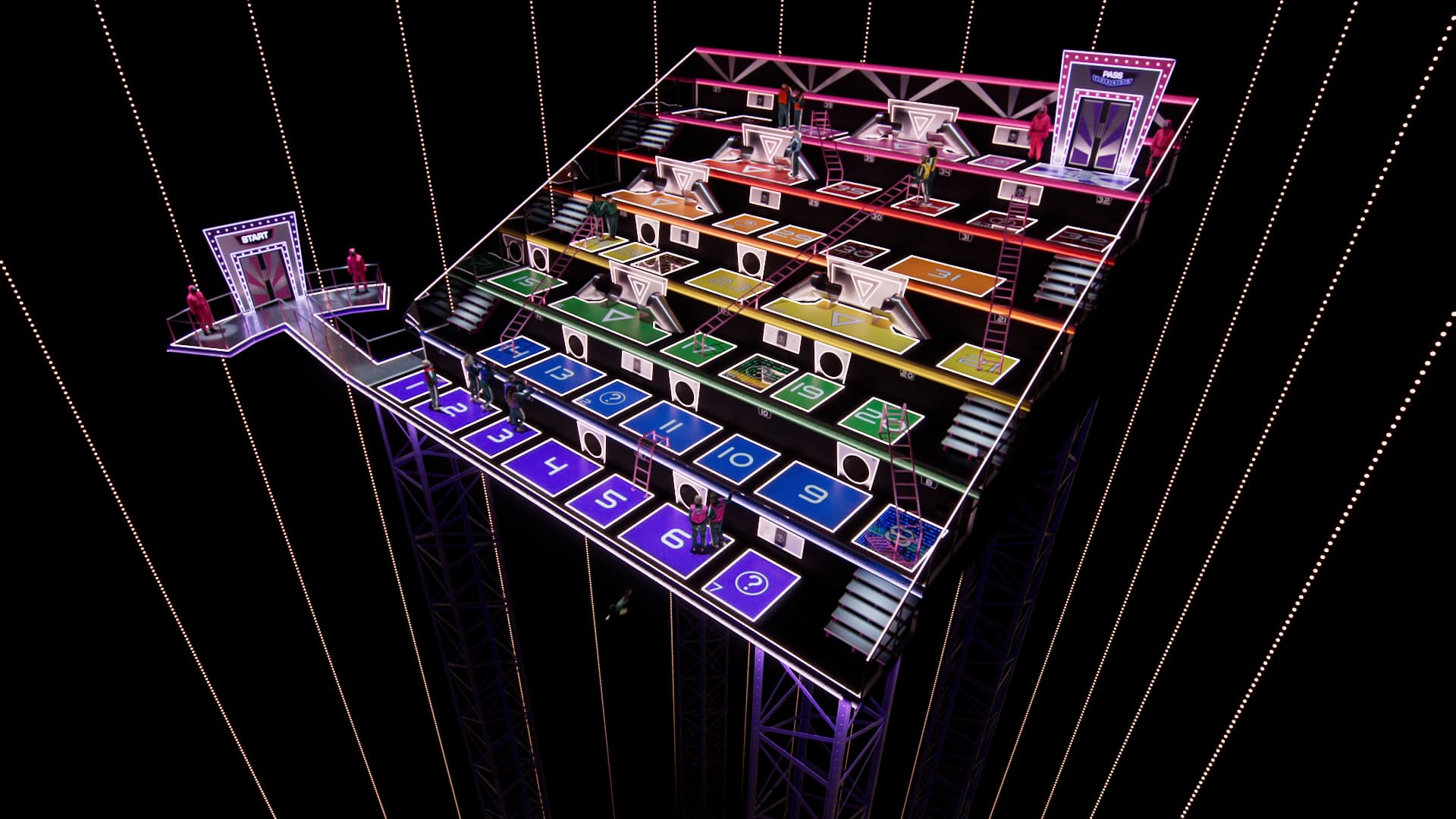 Compositing Supervisor Tav Flett explains that, due to the sheer volume of data being recorded, shot-specific metadata wasn’t always available, so the LiDAR became an essential anchor point for the tracking and compositing teams.
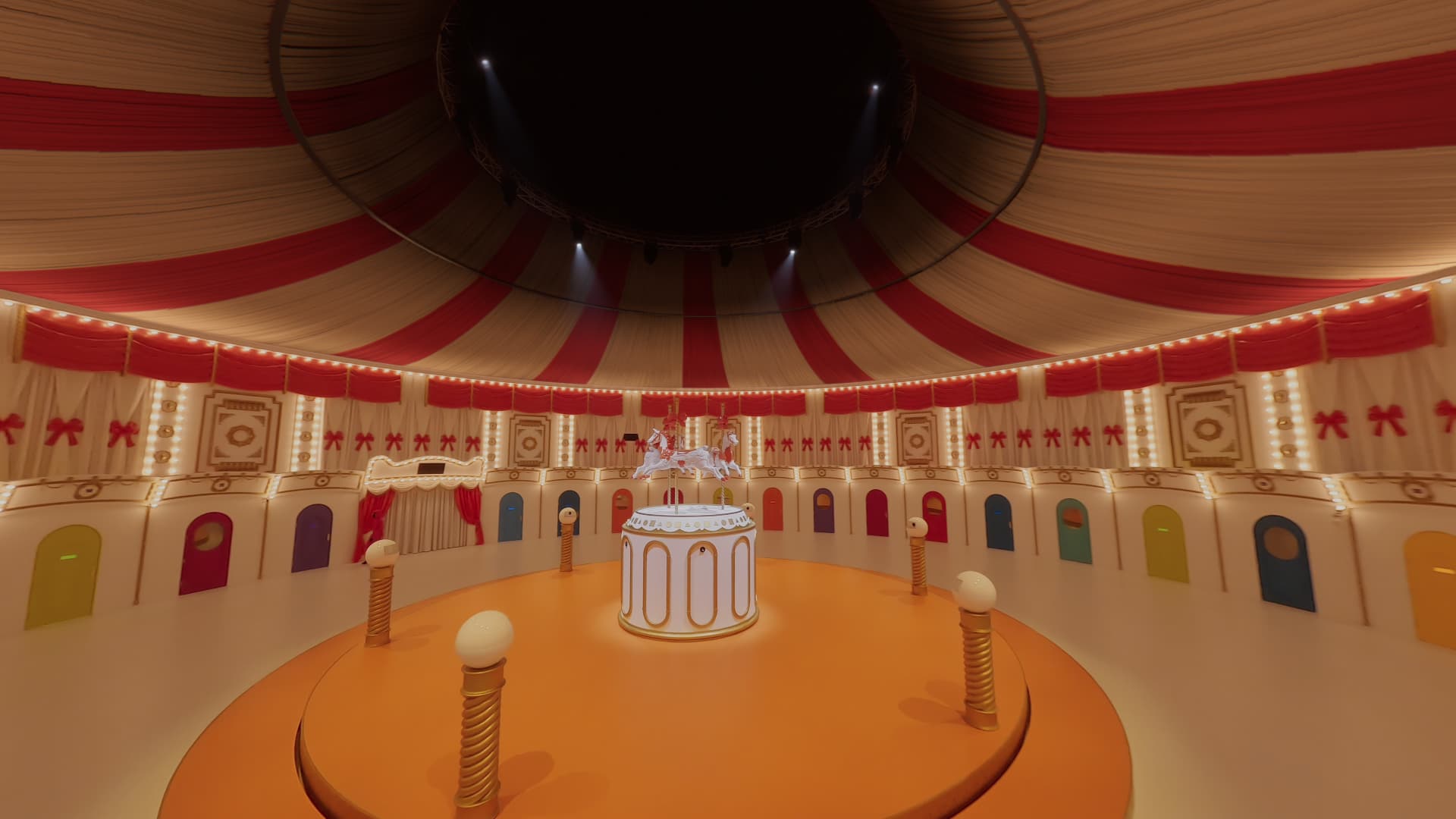
One of the most technically demanding sequences came in episode four, where a group of contestants are awaiting their challenge in a circus tent, and involved compositing CG renders through complex, dynamically shifting on-set lighting. “There were a lot of technicalities in terms of compositing CG renders through highly dynamic, animated on-set lighting,” says Flett. “The comp team did a fantastic job turning those shots around to the level of quality they achieved in the time provided.”
Delivering that level of complexity within a fast-moving unscripted production required a bespoke pipeline. Lux Aeterna began work from low-resolution proxy files provided directly from the edit, completing around 90% of each shot before receiving the full-resolution plates.
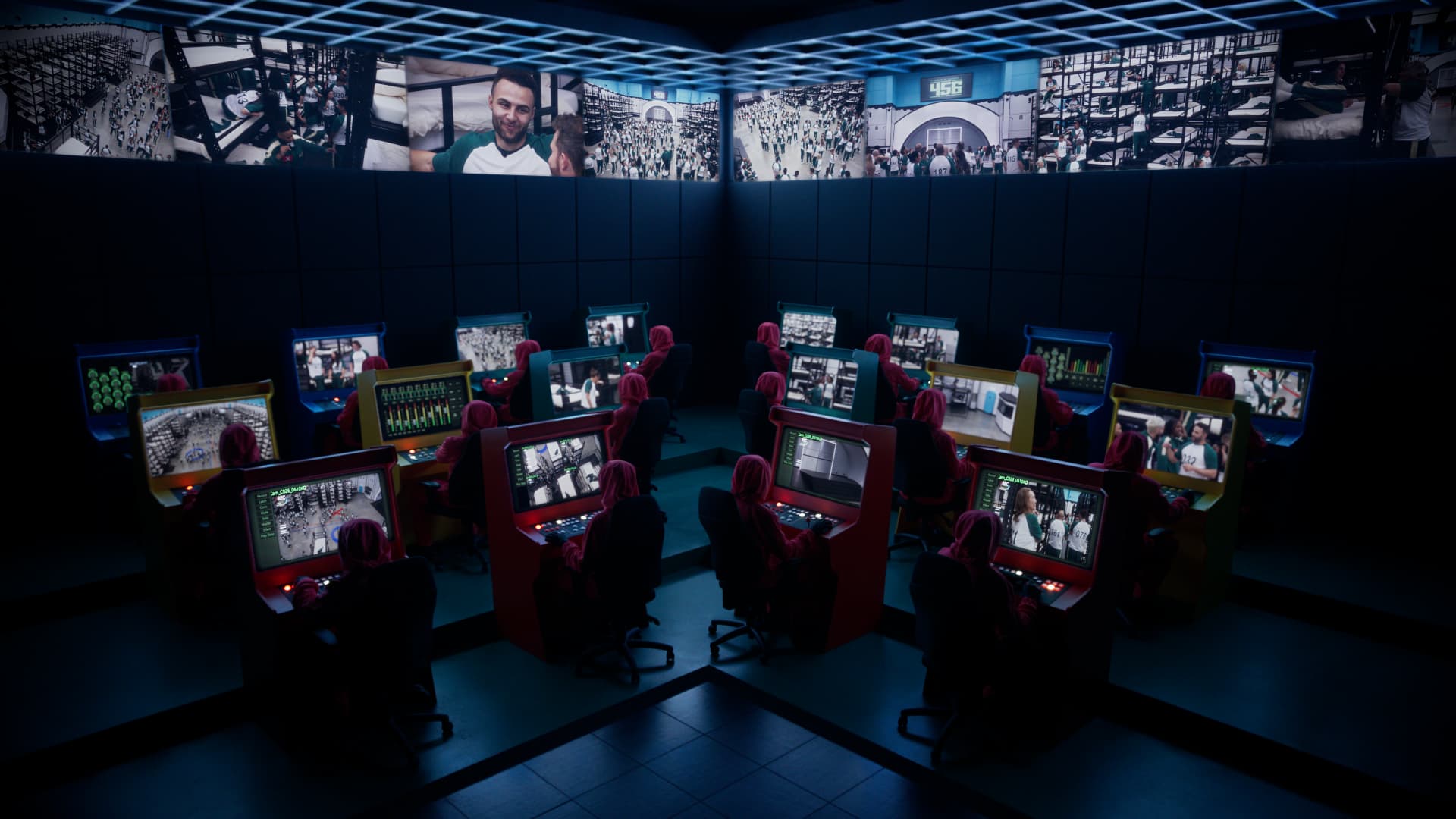
Once approvals were in place, final delivery windows were often just a few days. Emma Kolasinska, Executive VFX Producer says the pace of delivery demanded meticulous coordination from Studio Lambert’s VFX Producer, Glenn Kelly, whose planning and communication “made it possible for us to deliver high-end work on what is, by scripted standards, an incredibly compressed schedule.”
Maintaining visual continuity across hundreds of shots was equally critical, with the Lux Aeterna team implementing rigorous QC and shot-matching processes to ensure consistency of look and light across multiple compositors. Providing DI mattes and digital matte paintings also gave the online and grade teams flexibility to fine-tune colour and balance without compromising the visual integrity of the VFX.
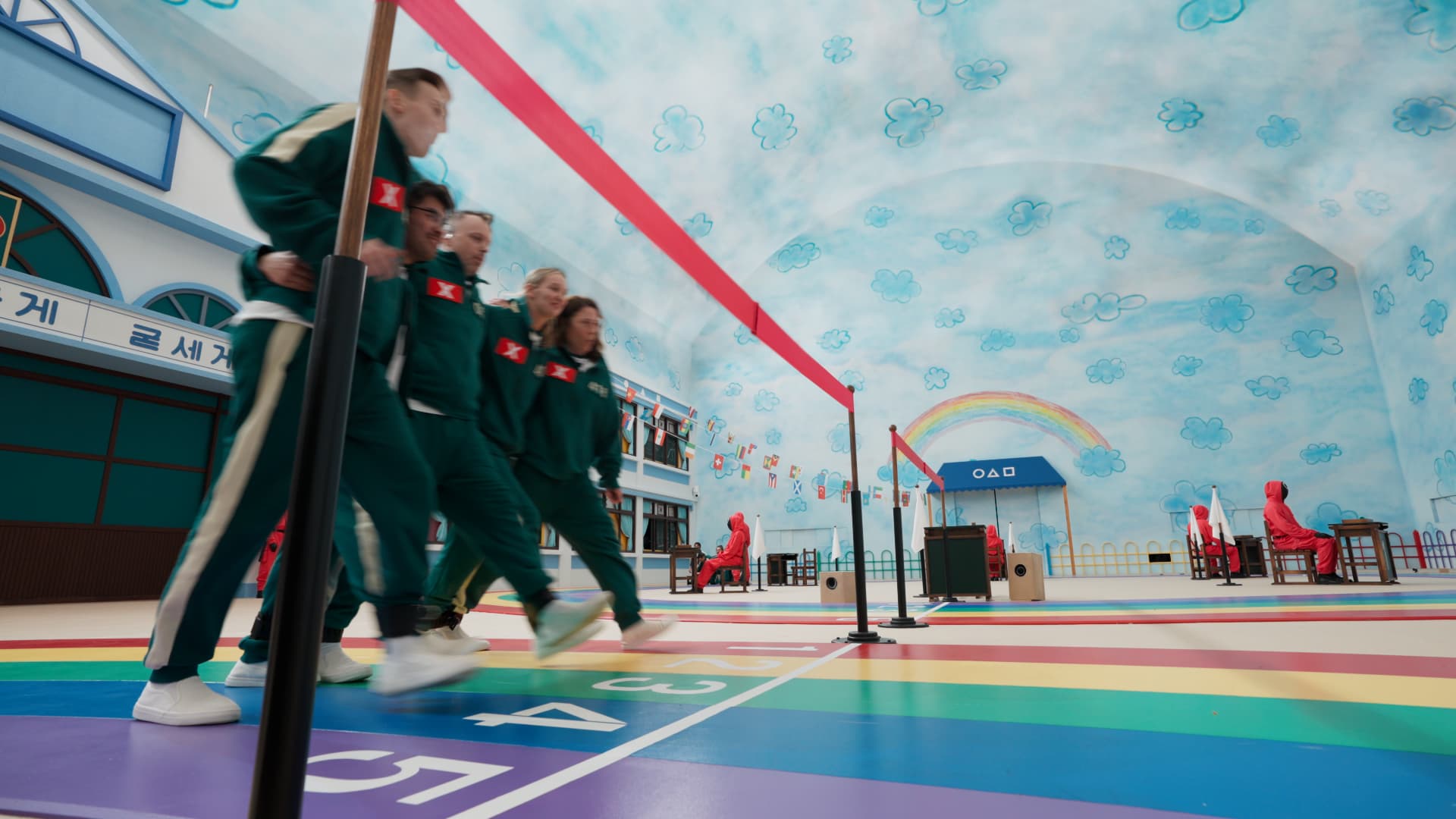 For Lux Aeterna, Squid Game: The Challenge demonstrates the growing role of sophisticated VFX in unscripted television. “This series shows what’s possible when VFX is embedded from the very beginning,” says Kolasinska. “When it’s part of the planning and creative vision, it can enhance storytelling, expand worlds, and redefine what audiences expect from unscripted television.”
The result is a series that feels every bit as polished and immersive as a high-end drama while retaining the spontaneity of reality television. Through close collaboration with Studio Lambert and a workflow designed for both speed and artistry, Lux Aeterna helped redefine what’s achievable for visual effects in unscripted storytelling.
As Kolasinska concludes, integrating high-end VFX into reality production “isn’t about spectacle for its own sake, it’s about creating a visual language that supports the story and the emotion, even when that story is unfolding in real time.”
Tags: Post & VFX Lux Aeterna


RedShark 2020 @ All rights reserved.

Comments