3 minute read

Cinematographers Paolo Concari and Jacopo Cosmelli took two 12K Blackmagic cameras and a set of vintage Leica R lenses up the Apuan Alps for OZ Racing’s Rally Legend wheels.
[Blackmagic sent us this one in and we liked it enough that we're publishing it pretty much as is. Ed]
OZ Racing’s Rally Legend “Keep Exploring” campaign took cinematographers Paolo Concari and Jacopo Cosmelli to Tuscany’s Apuan Alps, where they used Blackmagic URSA Cine 12K LF and PYXIS 12K digital film cameras to film a Jeep Wrangler JK fitted with the Italian manufacturer’s new off-road wheels.
The commercial follows the Jeep across paved roads, dirt tracks, and rugged terrain before shifting its attention to a nature filmmaker exploring the landscape on foot.
“From a cinematographic standpoint, the challenge was to maintain strong visual consistency while constantly shifting between very different shooting situations,” says Cosmelli. “From vast Alpine landscapes to high frame rates of the wheels, and onboard footage, we had to move quickly between different focal lengths, camera movements, and points of view.”
While the PYXIS 12K was used for much of the landscape photography, close-ups, and moving shots, the URSA Cine 12K LF came into its own for the slow-motion footage of the wheels. “Having the same RGBW sensor technology in both cameras gave us excellent color detail, along with 16 stops of dynamic range,” Concari says. “It also meant the footage matched naturally, giving Cosmelli a consistent starting point and plenty of flexibility in color grading.”
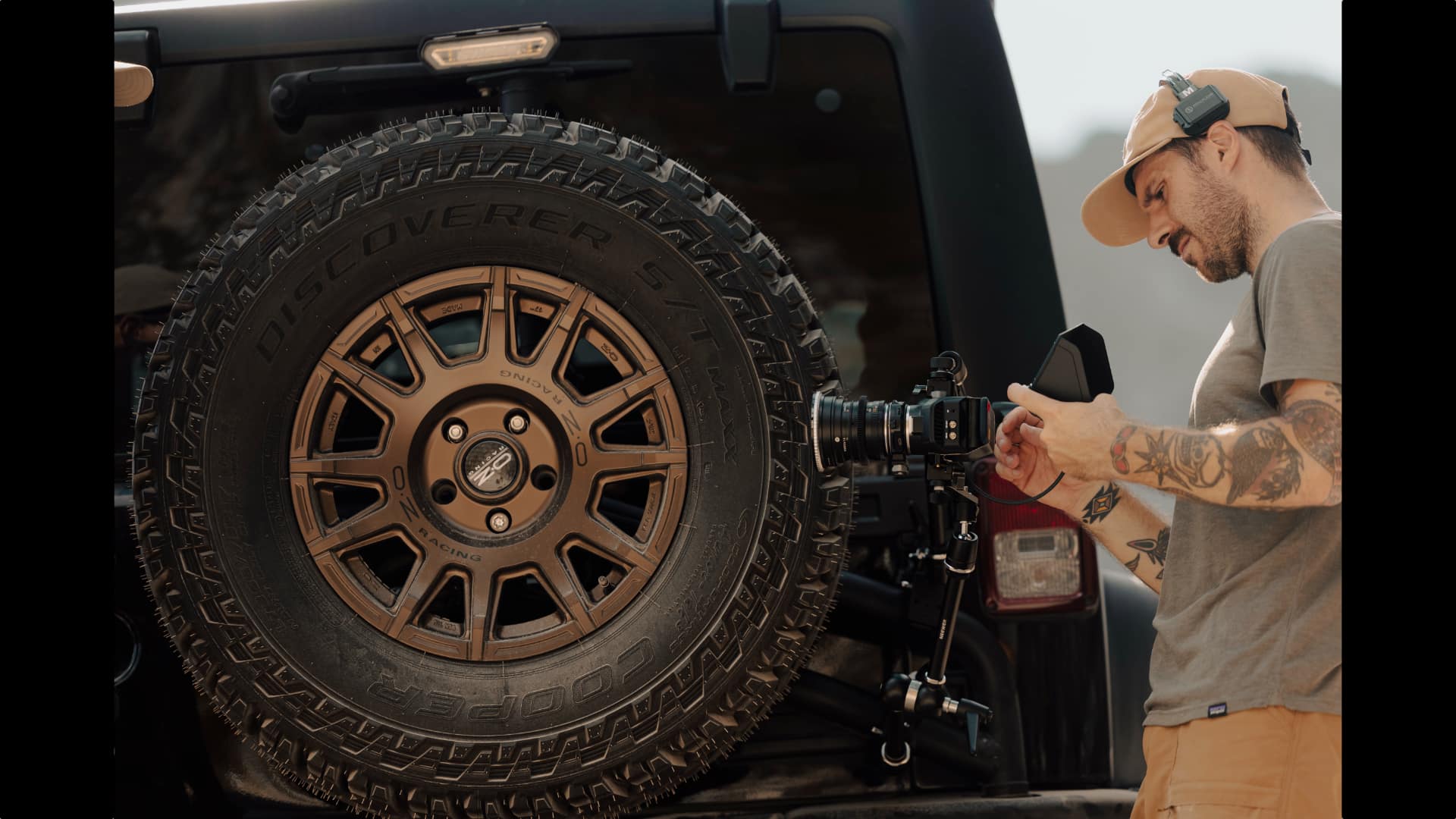
The PYXIS 12K was rigged with a Blackmagic PYXIS Monitor, a Blackmagic PYXIS Pro Handle, a SmallRig Mini Matte Box, a video transmitter, and a RØDE boom mic. “Despite the additional accessories, the setup remained easy to work with, particularly for handheld shots following the protagonist on foot and during the driving sequences,” he explains.
“The URSA Cine 12K LF was equipped with the 5-inch HDR touchscreen monitor, Blackmagic URSA Cine Handle, and Blackmagic URSA Cine EVF, along with a NiSi Cinema C5 Matte Box.
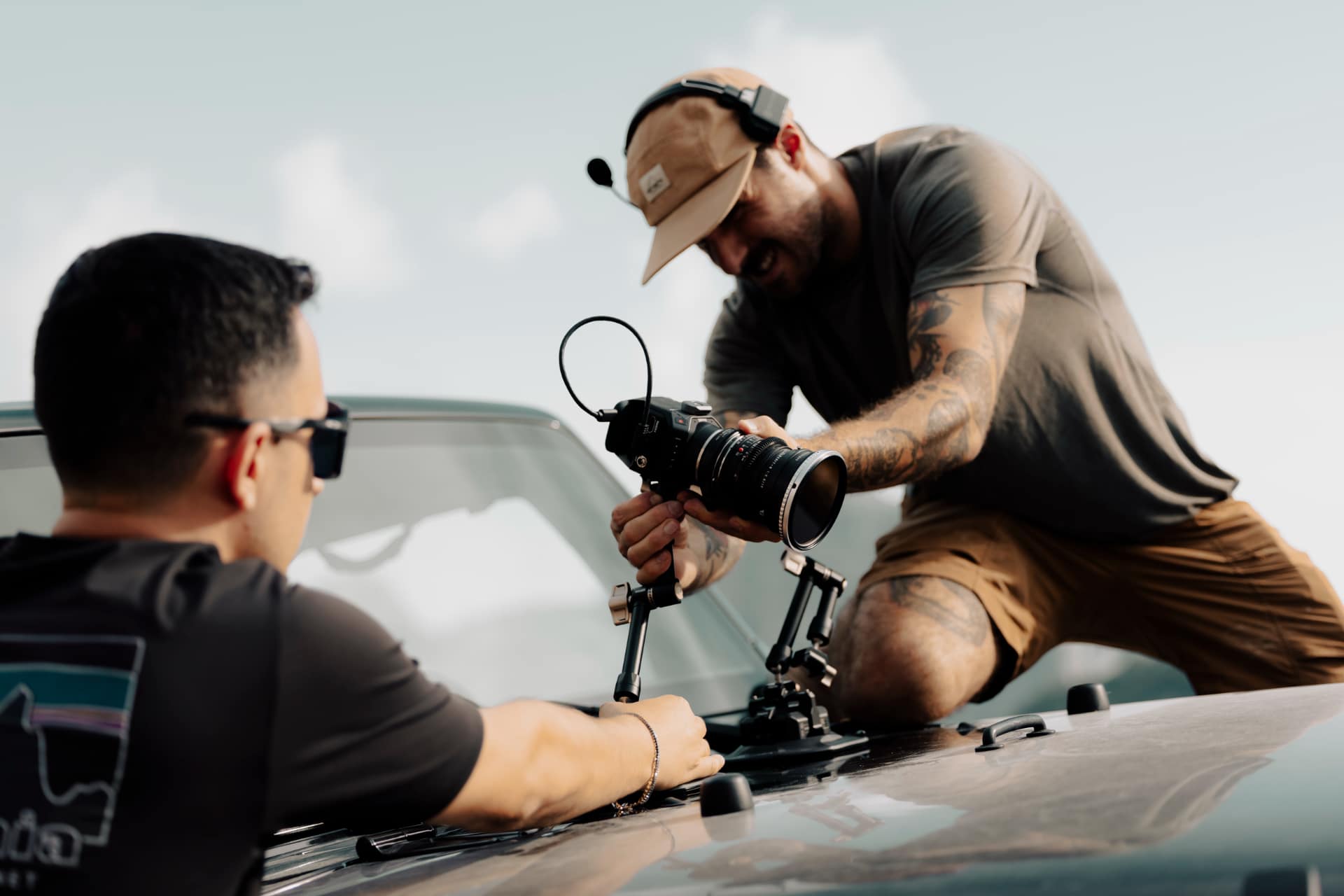 “We also used the Micro Studio Camera 4K G2 for the shots mounted on the Jeep and the FPV drone, where we needed something much smaller,” Concari added. “Both the URSA Cine and PYXIS were paired with vintage Leica R lenses, ranging from 19mm to 60mm Macro.
“We chose them for their organic rendering. They’re sharp without feeling overly clinical, with lovely microcontrast and natural bokeh. For the scenes where the actor leaves the Jeep and continues on foot, we mostly used the 24mm and 35mm on the PYXIS, shooting in 8K 3:2 at 25 fps. Those wider lenses gave us room to show the scale of the mountains without losing the character in the frame.”
For a scene with the actor standing close to the Jeep during the blue hour, Cosmelli switched to the 60mm Macro lens.
“We wanted to get closer to his face and pick up the smaller expressions, but we also had to be careful with the exposure,” he says. “He was standing in shade with a bright sky and mountains behind him. We shot at ISO 800 and used false color and the histogram to judge how far we could go without losing detail in his face or the highlights.”
For the automotive sequences, the URSA Cine 12K LF captured the Rally Legend wheels as the Jeep crossed water and loose terrain.
“We shot mainly handheld, although we also relied on a Manfrotto tripod for more controlled shots,” says Cosmelli. “We used the 24mm Leica R quite a bit, shooting 8K 3:2 Open Gate and switching to 2.4:1 when we wanted to go up to 224 fps.
“The water crossings were probably the trickiest because you never quite knew how the water was going to behave. The same with the dry leaves. We’d have one chance to catch it as the Jeep came through, so getting the timing right was important. Those shots were difficult to control because everything happened so quickly. Being able to push the frame rate meant we could really see what was happening around the wheels.”
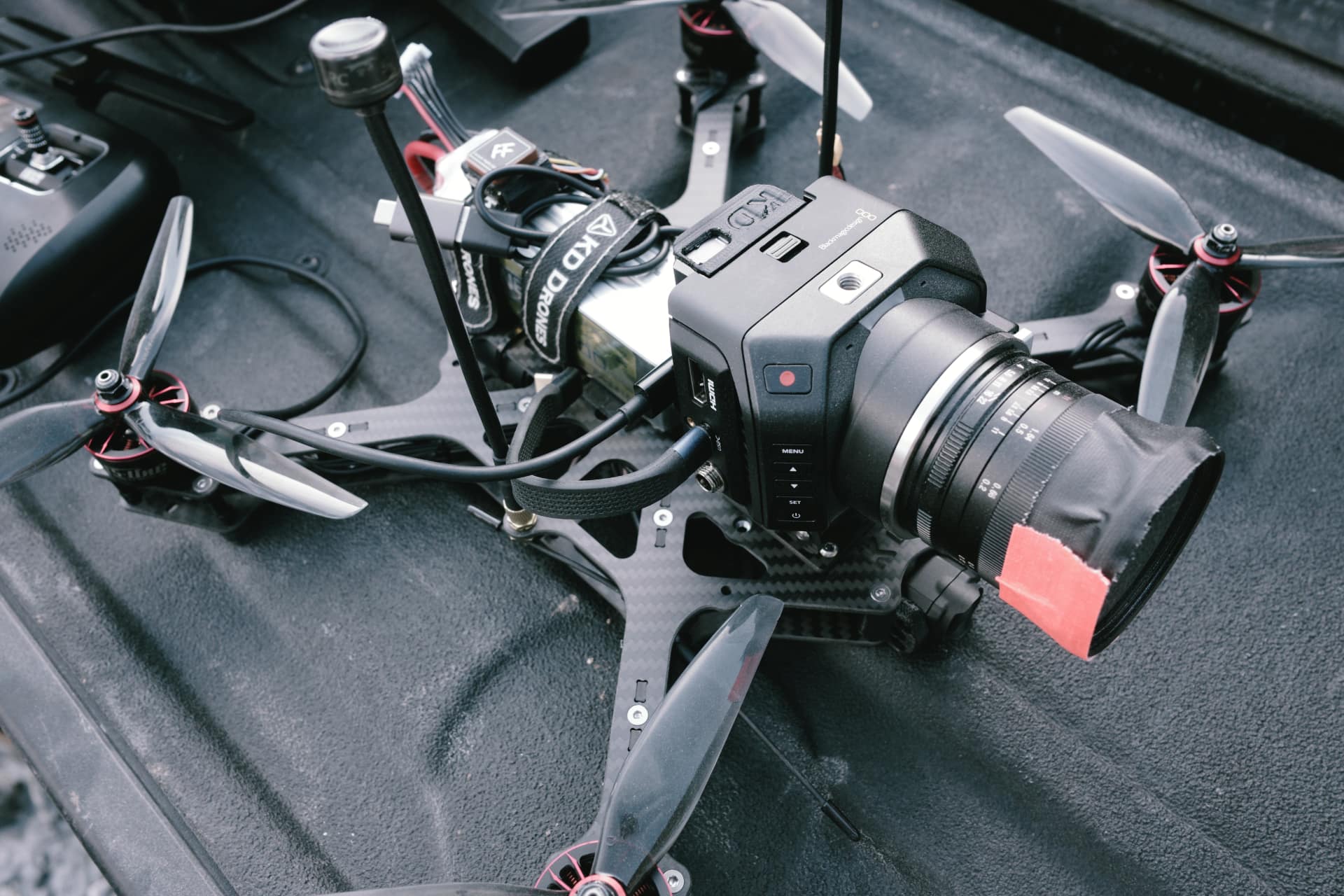 For onboard footage, the production used the Blackmagic Micro Studio Camera 4K G2, mounting it to the side, hood, and rear of the Jeep with Tilta suction cup mounts and a Manfrotto Super Clamp 035C. A Cinekinetic Cinesaddle was used to get the camera really low, right down beside the wheels. The team also flew the camera on a custom-built 178 mm (7 in) X4 FPV cinelifter drone, using either a Leica R 19mm lens with a Metabones adapter or a Laowa 7.5mm lens.
“The size of the Micro Studio Camera meant we could put it in places where the larger cameras wouldn’t fit,” Cosmelli concludes. “We could get right up close to the action with the camera mounted on the Jeep, then use it on the FPV drone for much wider shots, still recording Blackmagic RAW directly to a SanDisk SSD connected via USB-C in both setups.”
The team edited, graded, and delivered the campaign in DaVinci Resolve Studio.
Tags: Cameras URSA Cine 12K LF Why We Chose It


RedShark 2020 @ All rights reserved.

Comments