3 minute read

Tail Air 2 gets a 1-inch sensor and 4K60. Tail 2 ADV adds 21x optical zoom. Both record OBSBOT Log and go on sale December 8.
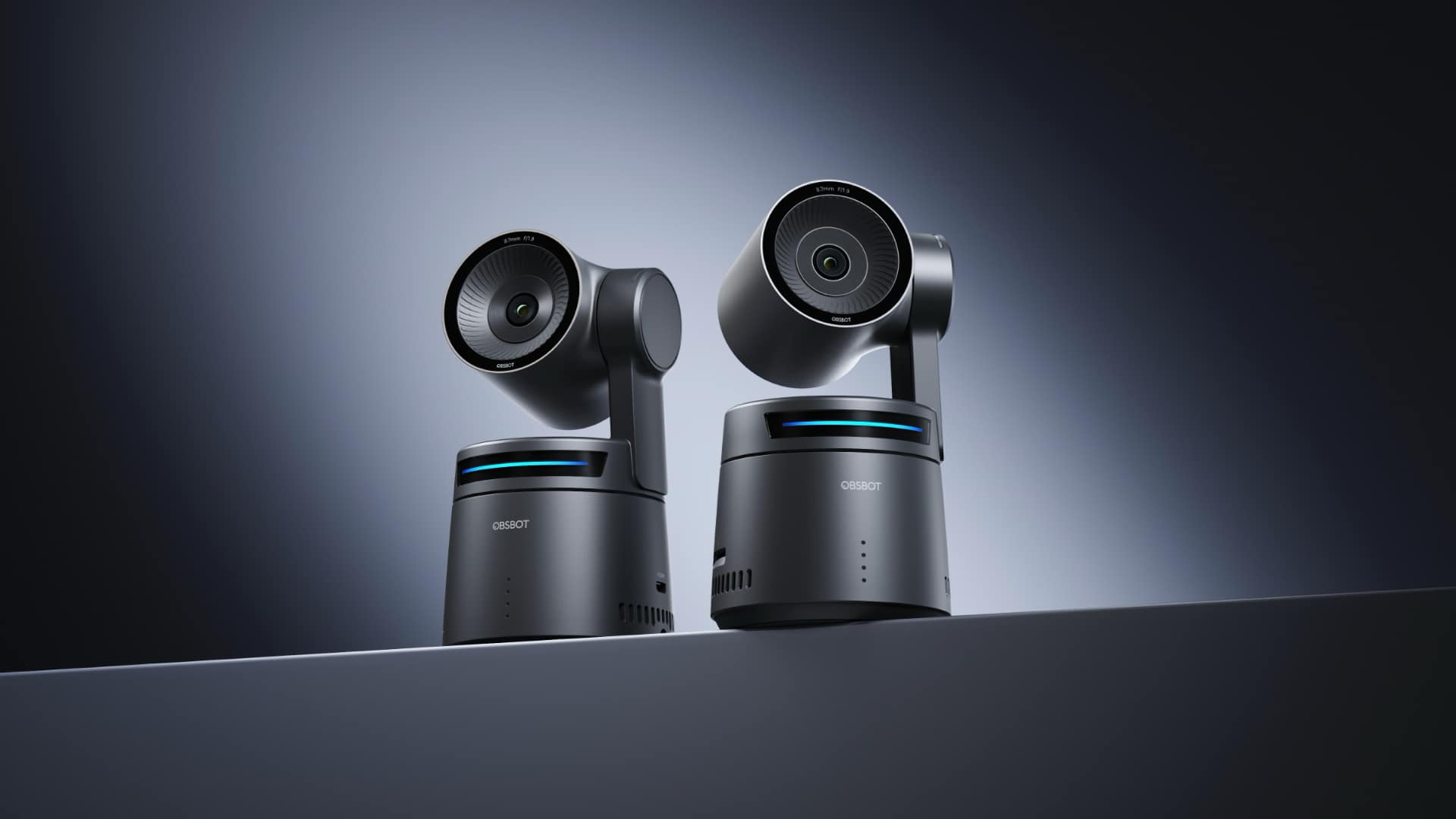
OBSBOT has added two cameras to its PTZR lineup: the Tail Air 2, which gains a roll axis and a 1-inch sensor, and the Tail 2 ADV, which adds 21x optical zoom.
The Tail Air 2 is an AI-powered PTZR camera with a 1-inch CMOS sensor (3.2 μm pixels), an f/1.9 aperture, and an eight-element optical lens. It records 4K60 and 1080p120. A dedicated AI imaging chip handles low-light noise reduction, while LOFIC HDR supports up to 13 stops of dynamic range under HDR recording conditions at up to 30 fps. Sensitivity reaches ISO 25,600 with HDR disabled. All-Pixel Phase Detection Autofocus (PDAF) offers Global Focus, Foreground Focus, and Face Focus modes.
Both cameras introduce OBSBOT Log, the company's proprietary 8-bit Log recording profile and the first in an OBSBOT camera. Custom 3D LUTs can be previewed through OBSBOT Center, OBSBOT Start, and OBSBOT Live while filming or streaming.
AI Tracking 2.0 recognizes people, more than 30 animal species, and over 200 object categories. Users double-click a subject or draw a selection box to choose what to track, and the software offers several tracking modes. Single-Person Tracking reacquires a briefly obscured subject; Group Tracking adjusts camera angle and framing as people move or enter and leave the shot; Face Framing leaves space in the direction a subject faces; and Auto Zoom maintains a selected full-body, medium, or close-up framing as distance changes.
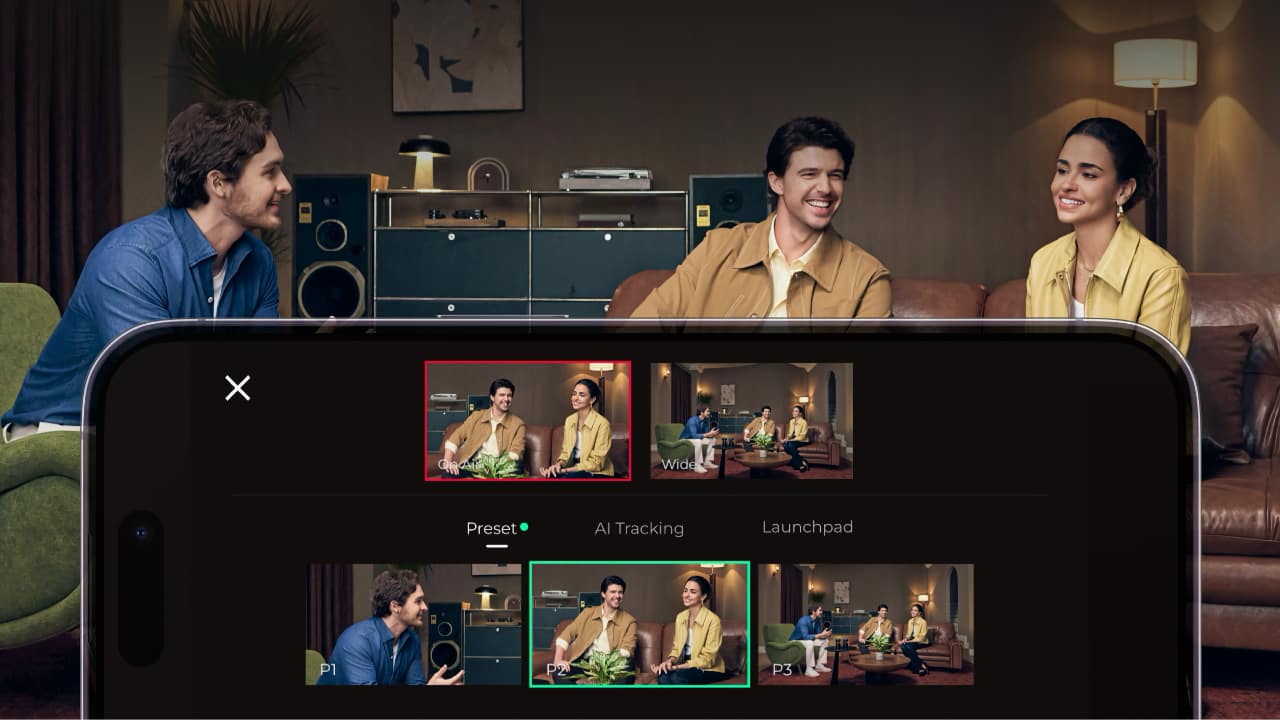 Tracking speed, single-axis movement, active tracking zones, and subject positioning are adjustable. Upgraded AI Director Grids switch between AI Tracking, Preset, and Launchpad in one interface. Gesture Control lets users control tracking, zoom, and recording from up to 5 m (16 ft) away.
A dedicated Roll axis adds rotation to Pan, Tilt, and Zoom. Launchpad 2.0 provides eight preset camera movements and two customizable modes, and an Auto Leveling System corrects camera orientation to keep the horizon level on uneven surfaces. For vertical content, the lens module physically rotates 90 degrees to capture native vertical 4K60 without cropping the sensor's full imaging area.
The camera is built around a native IP architecture and supports SRT, RTSP, and RTMP, plus NDI HX3 through the NDI-enabled version or a separately purchased license, over WiFi 6 or wired Ethernet. Control options are VISCA, OSC, Stream Deck, and an Open SDK. Physical connections are a 3.5 mm audio input, a Micro HDMI output, and two USB-C ports for power and data. It records locally to microSD cards up to 1 TB and has a built-in microphone and Bluetooth connectivity with the OBSBOT Vox SE wireless microphone.
A built-in 2630 mAh battery lasts up to 205 minutes at 1080p30, with USB PD 3.0 fast charging. Timecode (with compatible external timecode equipment) and Precision Time Protocol (PTP) synchronization are supported for multi-camera work.
The Tail 2 ADV has a 21x optical zoom, the longest in the OBSBOT lineup, plus a 40x hybrid zoom, via a 12-element optical lens system and a custom lens motor. The body measures approximately 10 cm (4 in) wide and 15 cm (6 in) tall. A custom 1/2-inch CMOS sensor with Dual Native ISO records 4K60 and 1080p120, with AI-ISP noise reduction in low light. HDR is supported at 4K30 with All-Pixel PDAF enabled, but not at 4K60. Focus Over Zooming helps the camera refocus on distant, stationary subjects as focal length changes.
A physical variable aperture runs from f/1.7 to f/7.0 at the wide end and from f/3.8 to f/7.0 at the telephoto end. In Pro Mode, aperture is set manually, and ISO and shutter speed can each be set to Auto or Manual.
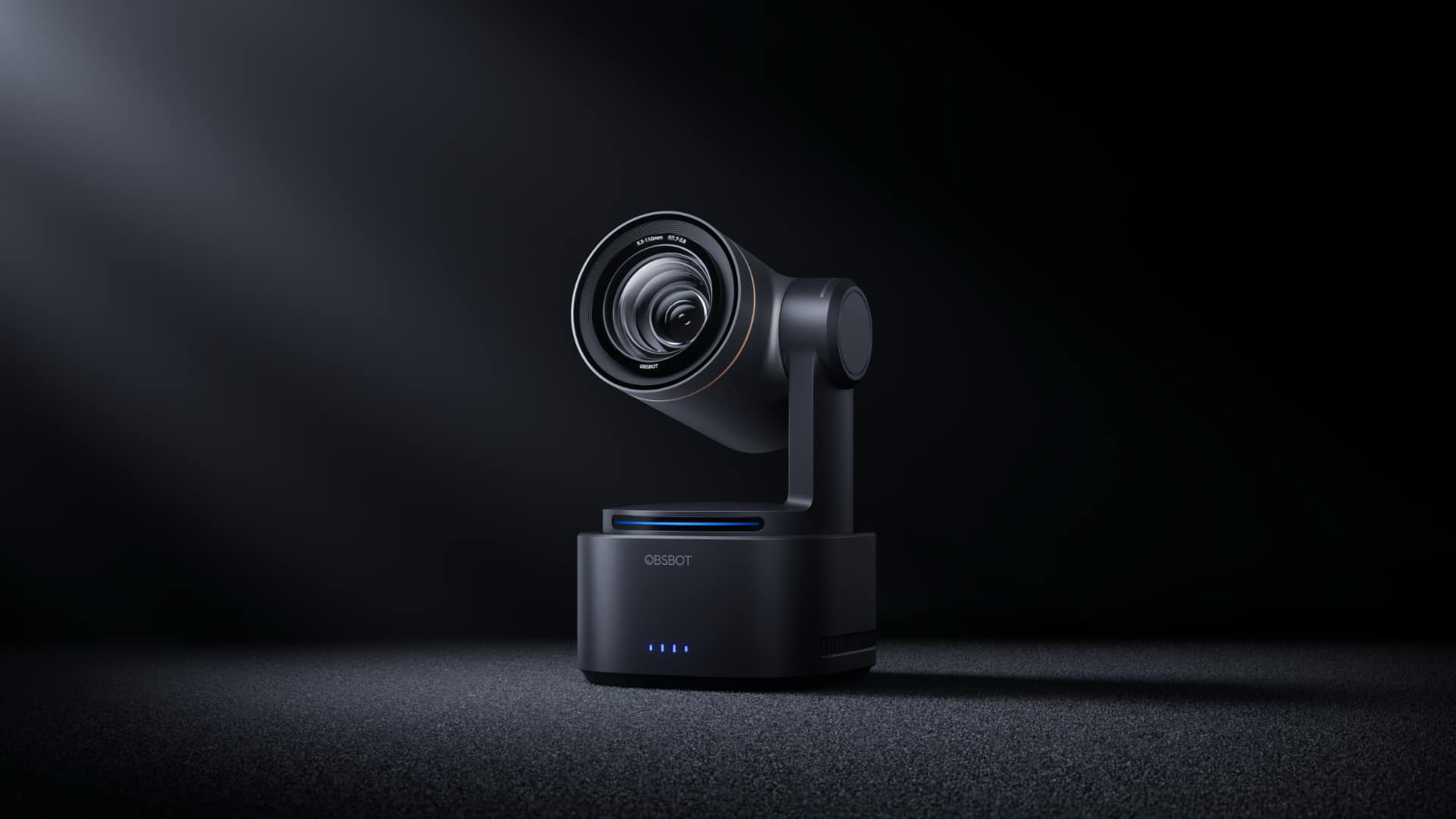 AI Tracking 2.0 works at distances of up to 240 m (787 ft), compared with 95 m (312 ft) on the Tail 2, and adds six tracking-speed settings (including a Custom mode with independent Pan and Tilt speeds), Axis Control, Composition Lines, and Zone Tracking. Otherwise the ADV shares the Tail Air 2's tracking modes, OBSBOT Log and LUT previews, Timecode and PTP sync, native vertical 4K60, and IP and control protocols, adding an official OBSBOT Log-to-Rec.709 LUT and Pelco-D/P control.
The ADV's connections include 3G-SDI output up to 1080p60, full-size HDMI 2.0 output up to 4K, Gigabit Ethernet, a 2.5 mm RS-232 port, separate 3.5 mm microphone and line inputs, dual-band WiFi 6, and PoE+ for power and network over one cable. FreeD output supplies camera movement and lens data for AR, XR, and virtual studio workflows, and a dual-color Tally indicator shows red Program and green Preview status in compatible NDI workflows. Gimbal angular jitter is as low as ±0.0005°, the Auto Leveling System also works in inverted or non-standard mounting positions, and a built-in 5000 mAh battery lasts up to 4 hours 36 minutes.
The Tail Air 2 lists at $899 for the Non-NDI version and $999 for the NDI version, with a $100 pre-order discount taking them to $799 and $899. The Tail 2 ADV lists at $1599, or $1399 with the pre-order discount. All go on sale December 8 through the OBSBOT online store, Amazon US, and select retailers worldwide.
Tags: Cameras PTZ cameras OBSBOT PTZR


RedShark 2020 @ All rights reserved.

Comments