2 minute read

Project Silica, Microsoft’s almost decade-long project to encode digital data inside glass, has just achieved a significant breakthrough in terms of the materials used.
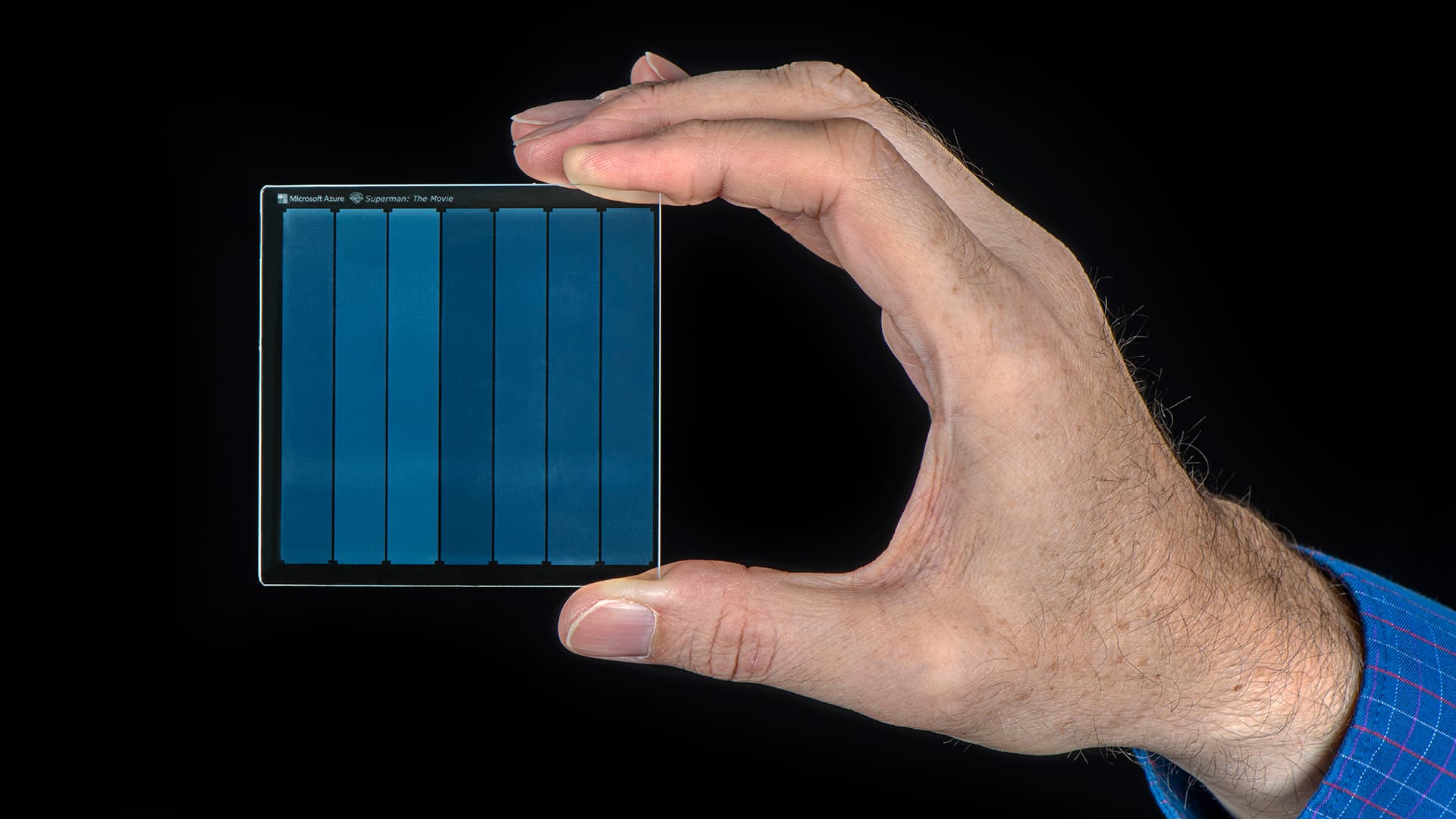
It’s been a while since we wrote about Project Silica, which first featured in a Microsoft Ignite 2017 keynote on future storage technologies. In 2019 it was announced that Microsoft and Warner Bros. had collaborated to store and retrieve the entire 1978 Christopher Reeve Superman movie on a piece of glass roughly the size of a drinks coaster, 75 x 75 by 2 mm (about 3 × 3 × 0.08 in).
Here's an overview of the project's potential from 2022.
The whole initiative was driven by the company’s Azure cloud branch, which rather than finding ways of storing classic movies (Superman can be seen as a classic now, right?) was looking at low-cost, low-energy storage technologies for its data centres. Arguably, in the seven years since that need has only become more acute, so it’s good to see that the team has made a breakthrough in terms of the materials used.
The problem with Project Silica was that it was failing at the low-cost objective by being reliant on expensive fused silica. This has now changed entirely, with the team publishing a paper in Nature saying that it had managed to replicate the process using ordinary borosilicate glass. And yes, that is the same stuff used in kitchen cookware and oven doors.
The future of storage is Pyrex®, basically.
“This advance addresses key barriers to commercialization: cost and availability of storage media,” says Microsoft in a statement. “We have unlocked the science for parallel high-speed writing and developed a technique to permit accelerated aging tests on the written glass, suggesting that the data could remain intact for at least 10,000 years.”
The basic tech remains the same: use femtosecond laser pulses to store information in tiny deformations dubbed voxels within a piece of glass. Hundreds of layers of data can be stored in glass only 2mm thin, as with previous methods, but there are some important improvements. The optical reader for the glass now needs only one camera, not three or four, reducing cost and size. In addition, the writing devices require fewer parts, making them easier to manufacture and calibrate, and enabling them to encode data more quickly.
As you can see from the pic below, though, the technology is still a way away from commercialisation.
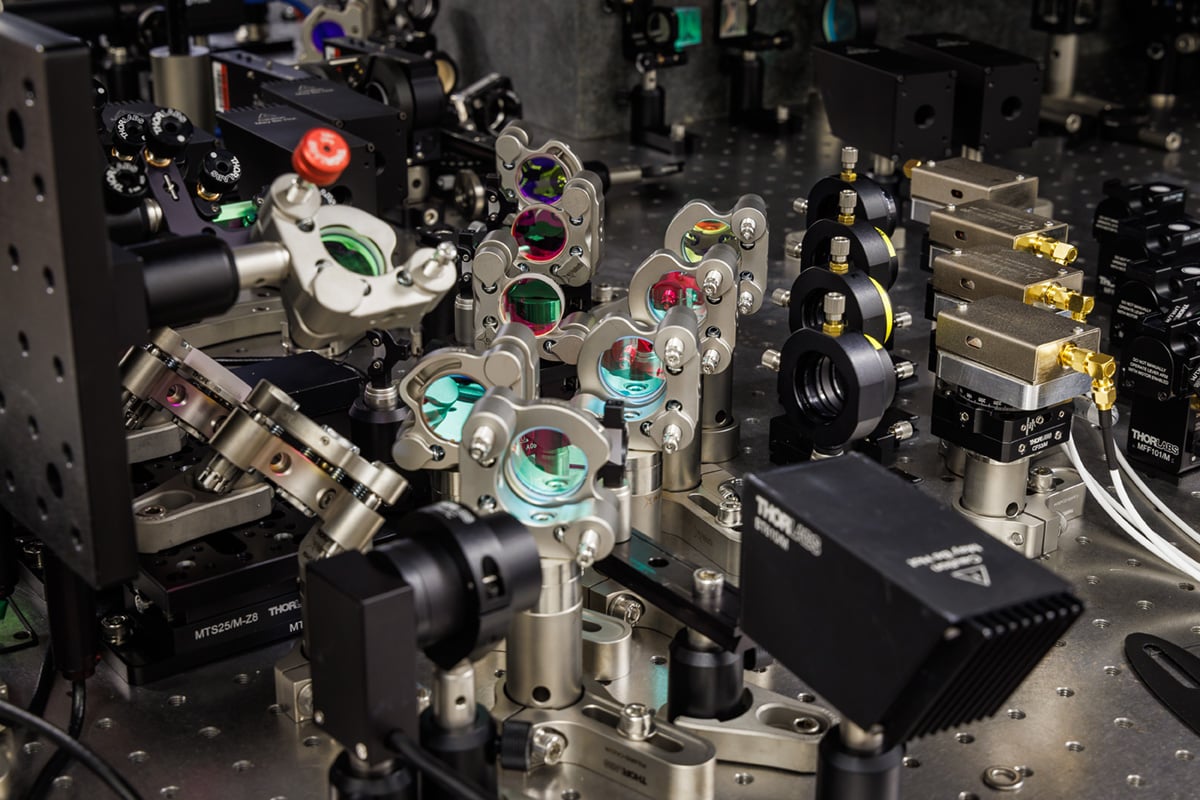
When can we expect to see glass-based storage on our desktops? Not for a while, to be honest if ever. As well as the challenge of getting all that equipment into something packageable and sellable, while the slabs have increased in size (Ars Technica reports they are now 12cm square) and can hold up to 4.84 TB, write speed remains slow at 66 mb/s, though new parallel writing advances can bump that up. Plus, it seems the business case has yet to be made to take it further.
“The research phase is now complete, and we are continuing to consider learnings from Project Silica as we explore the ongoing need for sustainable, long-term preservation of digital information,” writes Microsoft. “We have added this paper to our published works so that others can build on them.”
So, while it remains unique — the only long term storage that requires no energy to maintain data integrity for millennia that we can think of is stone carving, and this can hold much more information than that — it remains more of a curio than anything. That may change, but while the world’s tech companies are busy pumping their resources into the AI gold rush, it’s unlikely to be a priority at any time in the immediate future.
Tags: Post & VFX Storage Microsoft


RedShark 2020 @ All rights reserved.

Comments