9 minute read

Winner of the US Documentary Special Jury Award for Journalistic Excellence at Sundance, Who Killed Alex Odeh? we spoke to Tyler H. Walk and Anne Alvergue.
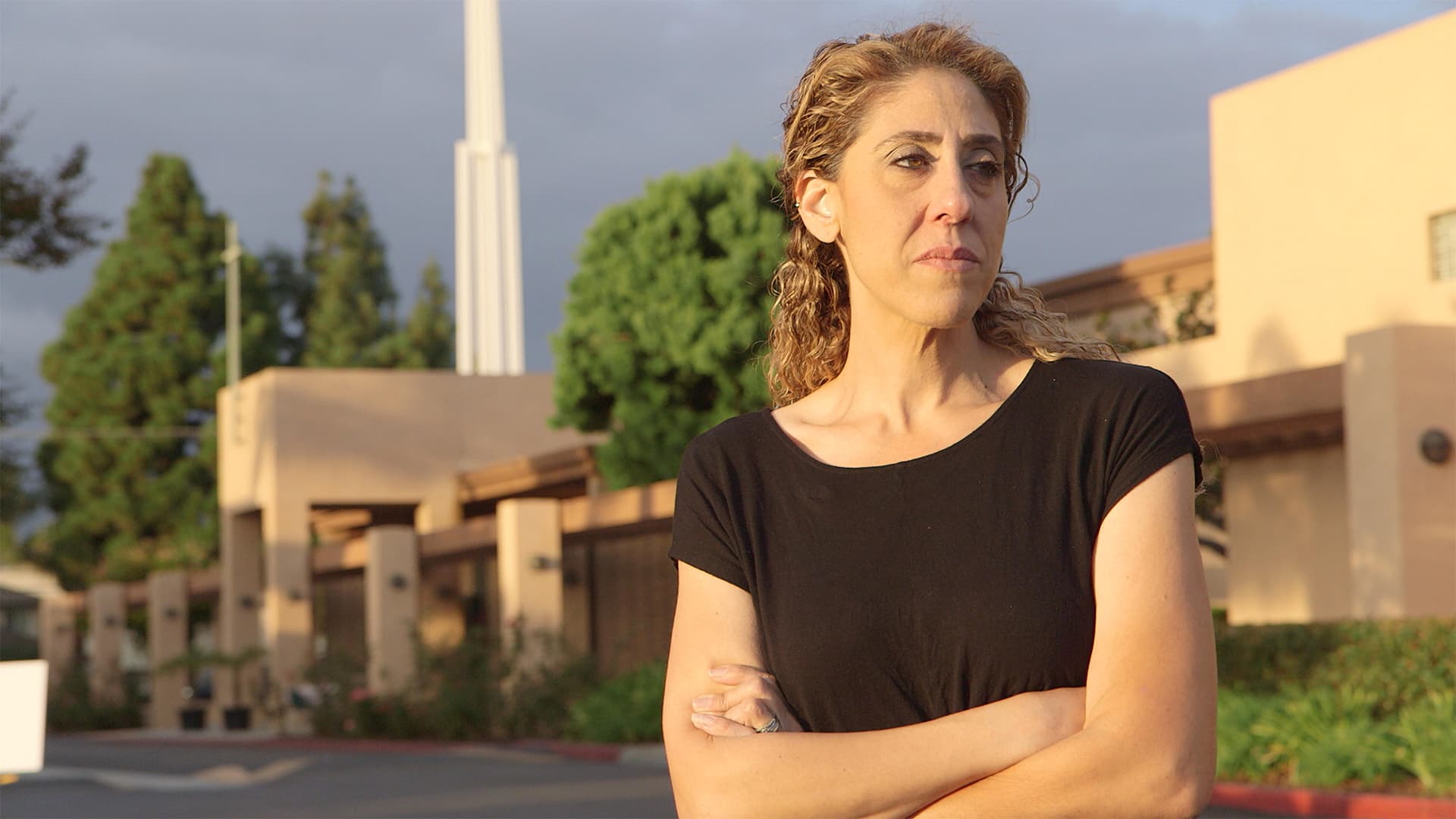
Called an “engrossing and surprising true-crime saga” by the Sundance panel, Who Killed Alex Odeh? starts as an investigation into a decades-old cold case and then widens its focus to depict an entire history of the suppression of justice for one Palestinian American family.
Activist, teacher, and poet Alex Odeh was assassinated by a tripwire bomb in 1985. Despite evidence and suspects identified at the time, no one has ever been held accountable for this act of political violence. Using archival footage and contemporary investigation, directors Jason Osder and William Lafi Youmans take the audience back to the time of Odeh’s murder and trace the extremist forces that may have been behind his death and the disturbing ramifications that remain today.
It was edited by Tyler H. Walk and Anne Alvergue on Adobe Premiere, with Alvergue assembling the rough cut before Walk took over to finish the project. Below they detail the challenges of the project and how working with Premiere, especially new tools such as text-based editing and Sound Essentials, helped them craft a compelling piece of documentary cinema.

RedShark: How did you first get involved with the project? What drew you to it?
Anne Alvergue: I had worked with Jason Osder before on an archival-driven project and we shared a common sensibility: prioritizing the archive to drive the narrative and using juxtaposition to create layered meaning. When Jason started to develop this new film with Will Youmans, he circled back to me to build a fundraising trailer. From that, they received the IDA Enterprise grant enabling me to come back and cut for about 5 months off and on to complete a first rough cut.
Centering the film on the 1980s murder of an Arab-American peace activist as a gateway into the Israeli-Palestinian conflict offered a fresh and unexplored lens for understanding contemporary geopolitics. I was equally drawn to subverting true crime conventions in documentary, pushing the form toward a more nuanced editorial approach.
Tyler H. Walk: Will Youmans and Jason Osder reached out to me after Anne had stepped away from the project, and I came on having the benefit of inheriting a very strong cut. When I’m deciding which projects to collaborate on, I’m always drawn to stories that force me to learn something entirely new—working on a documentary is often a crash course on a topic. In this case, I didn’t have a deep understanding of the Israel/Palestine conflict. The challenge of making the history of the Israel/Palestine conflict feel accessible and digestible within such a personal story, made the project feel both creatively exciting and meaningful to take on.
RS: How did you work with the director? What workflow did you establish to handle the film?
AA: I was tasked with navigating an immense archival collection and years of contemporary footage to uncover a clear narrative. I worked remotely with the Directors who would highlight their selects and we would make notes and outlines in Google Docs. Will had a huge treasure trove of archival from the ADC (American-Arab Anti-Discrimination Committee) that was mostly ¾” or VHS dubs or home movies from the organization. But it wasn’t labelled by date or source.
The first task was to screen, organize and shape the archival into thematic story threads —the victims, the suspects, the investigators, the family’s quest for justice, the Palestinian/Israeli conflict — like Productions, and I would pull footage into a separate cuts project (this was before Premiere had generative AI features and Productions). It was also important to piece together the various news reports from each character’s angle and to make the bombing and the subsequent investigation legible. From there, we explored ways to build the spine, using the journalist David Sheen as the protagonist and main investigator picking up from where the cold case left off over 30 years before.
TW: I started working from Anne’s rough cut, spending a lot of time with Will and Jason talking through what each scene was trying to accomplish and how we should approach the next pass. They allowed a great deal of room for creativity, essentially giving me free rein to experiment—trying different techniques, reworking structure, and moving story beats around to see how we all responded. Over time, we fell into a steady rhythm of regular deliveries and virtual meetings, where we’d assess what was working and what wasn’t, and I’d take those conversations directly into the next round of edits. That ongoing feedback loop helped the film evolve organically. Even though we were all remote, we made contact a priority.
RS: What were the main challenges you faced? What editing techniques and processes did you use to meet them?
AA: As the film’s early editor, we were able to experiment with an open canvas. There were a lot of ideas cast—from having the directors be characters in the film to building more of a deep procedural with the journalist David Sheen in his investigation, to doing a deeper dive into the original journalist Robert Friedman who had first reported on the JDL in the 1980s. Ultimately these threads were dropped for a more nuanced, integrated story foregrounding the family’s emotional journey seeking justice with the political machinations receding more into the background. Will and Jason were incredibly collaborative and supportive of all ideas; having that kind of trust with directors is essential for an editor.
TW: Trial and error was a huge part of the process. I’m a big proponent of trying an idea if someone feels inspired, because the cut will usually tell you pretty quickly whether it belongs or not. One of the main challenges was figuring out how to weave the story of Meir Kahane and the Jewish Defense League into the film without overwhelming Alex’s story, both before and after his murder. The constant question was how much context was actually necessary, and when it tipped into being too much. Deep into the edit, I separated the major story threads into their own strings and we watched them all, which made the imbalance impossible to ignore. That exercise helped us recalibrate the structure and ultimately re-center the film around Alex, with the broader context supporting rather than overtaking his life and legacy.

RS: Name two things: your favorite scene in the movie and the most difficult one to cut. Why these two in particular?
AA: When I started the project, much of the present-day material centered on journalist David Sheen delivering extended public presentations, litigating his case, methodically laying out the evidence he had gathered. The challenge was how to dynamically position him within the film alongside the filmmakers’ investigation. By reimaging this material as reporting on the ground in real time, we were able to energize the contemporary storyline and allow his narrative to pick up where the cold case left off.
While Sheen’s reporting remains the spine of the investigation, my favorite scene is the confrontation between Jason and Andy Green, one of the suspects in Odeh’s murder who remains not only at large, but publicly visible in Israel. The scene unfolds like a political thriller, tracking Jason and his co-producer in the tense lead-up to the meeting, ratcheting up suspense until the moment erupts.
TW: My favorite scene is the confrontation between Jason and one of our three suspects, Andy Green. There’s a brief but charged moment of conflict, and the edit was all about building toward that beat without tipping our hand too early. We needed the audience to feel the danger in that moment—the uncertainty, the risk—so pacing and restraint before that scene was crucial in making that tension land.
The most difficult sequence to cut was anything dealing with Meir Kahane’s legacy after his assassination and tracing its influence up to the current political landscape in Israel. There’s an enormous amount of nuanced history there, and we explored many characters, world events, elections, wars, and attacks in an effort to draw a clear line from Kahane to today. The attacks of October 7, 2023 forced us to re-evaluate some of that material; we even experimented with including the attacks at one point, but it never worked. The conflict is so complex that every point or idea we made opens the door to a dozen more, and ultimately the challenge was figuring out how little to include. We just needed context as it relates to Alex’s story, not to tell the entire history.
RS: How did the movie evolve? Now the film is complete, how differently do you see it compared to when you first started?
TW: At its core, the film has always been a record of Alex’s life, his murder, and the investigation into his killers—and that hasn’t changed. Neither has the reality of the FBI’s efforts, which has been stagnant for decades. What did evolve for me over the course of the edit was a deeper understanding of the ripple effects of that violence, particularly on Alex’s family. As the film took shape, it became impossible not to feel the weight of the trauma his widow and daughters have carried for decades, often quietly and without public acknowledgment. Seeing Alex’s family at the premiere at Sundance 2026 felt like a turning point—not just for the film, but for how his story now exists in the world. For the first time, it felt like the attention his life and murder never received was finally being given a much needed kickstart, and that reframed the film for me as not just an investigation, but an act of recognition.
RS: Apart from Premiere, what tools do you use and why?
AA: In addition to Premiere, I primarily used Photoshop to clean up imagery and Wondershare to capture and convert archival material from the internet. I also used Google Docs to communicate remotely with the directors, sharing notes, ideas, structural outlines and comments on cuts.
TW: Beyond Premiere, I used Google Docs for my journals and notetaking, Google Sheets for footage logs, Clipgrab for ripping videos form YouTube, and the editor designed Shutter Encoder, a very useful converter.
RS: Which brings us to why Adobe Premiere itself. What do you like about using it?
AA: I first started using Premiere in the 90s when it is primarily a tool for rough animation. I came back to Premiere after Final Cut dissolved and really haven’t looked back. I know most editors love Avid but I really prefer Premiere — the media management and ingestion flexibility, the user-friendly graphics, the ease of access between the other applications in the Adobe suite. Even at the earliest stage of this project with the heavy amount of archival with different frame and file formats, it handled the project well.
TW: I learned on Premiere back in the early 2000s, but I’ve been mostly on Avid for my career. Over the past few years though I’ve seen more and more feature docs ready to cut on Adobe Premiere. I think the ease of use, like just bringing in any old random clip—regardless of format or quality—and start cutting immediately without a lot of technical issues. On a documentary like this, where the material ranges from degraded archival to contemporary interviews, that flexibility is crucial. The Transcript tool was especially useful; being able to search dialogue and even edit directly from transcripts saved an enormous amount of time. I’m anxious to see what else Adobe comes up with.
RS: Any new features released recently that have impacted your workflow?
AA: I love Text-based editing and all the new audio enhancement tools and Generative extend. I work a lot with papercuts so being able to have more options with text within the edit application has improved my efficiency.
TW: Sound Essentials has really made cleaning up audio a breeze. Learning EQ never seemed to stick in my brain, so this makes it much easier and still has parameters that I can modify to get exactly what I’m looking for.
RS: Widening it out a bit, how has editing changed over the course of your career? Trends, tools, timeframes: what is different now compared to when you started?
AA: Over the course of my career, advances in technology have dramatically increased the speed and efficiency of editing (I started in the days of the Video Toaster and Media 100 and even cut a short film on a flatbed). Yet at the same time, particularly with the rise of AI and the pressures of the current marketplace, edit timelines have continued to shrink. While these tools streamline process, they cannot replace the time editors need to experiment, take risks, and play within the cut to discover the story. In documentary filmmaking, where editors often shoulder the responsibility of shaping and effectively writing the film, I hope these compressed timelines prove to be a temporary market distortion rather than a lasting norm.
TW: Editing has changed dramatically since I started. So many polishing tools are now easily accessible, and presets make it easier for someone like me—who focuses primarily on story—to clean up picture and sound quickly. Even a simple pass can really elevate a cut. I’ve also learned since the days of Final Cut Pro 7 to never have software loyalties. There’s a ton of great software out there, and limiting yourself to just one is unnecessary, so learn them all!
On the downside, timelines have become increasingly compressed. Recently, a streamer asked me to create a near show-length rough cut in just two months. I had to be upfront that such a short window would limit our ability to watch all the footage and naturally “find” the story in the edit. Fortunately, the producers collaborated very closely, helping to craft scenes on paper which my assistant would assemble and I focused on editing. It was not ideal, and it showed. It lacked heart and resulted in what I’m seeing more and more of: a trend toward very formulaic, paint-by-numbers storytelling.
RS: Finally, what’s next? What is the next project we will see your work on.
AA: I am co-directing an archival-driven feature documentary entitled ANCHORWOMAN with filmmaker Jeff Daniels. It is a story about one of the first anchorwomen in this country, Jessica Savitch, as a portal into the world of firsts and the challenges in this country to accept women as voices of authority.
TW: Next up I’m working on my own feature, a fictional story about the deep dark underbelly of documentary filmmaking as told through editing. Very meta. In addition, I’m working with the incredible director John Krokidas on his first documentary. It’s a deeply personal story about parents in the South navigating healthcare challenges and the lengths they go for their child.
Tags: Post & VFX Editing Sundance Adobe Premiere Film Editing


RedShark 2020 @ All rights reserved.

Comments