
4 minute read

There are still only 41 screens capable of showing Christopher Nolan's The Odyssey in 15-perf/70mm, and IMAX CEO Richard Gelfond has been explaining why the company can't simply manufacture more.
Seen Christopher Nolan's The Odyssey in true 15-perf/70mm? You’re one of the lucky ones. Nolan’s epic has created the largest stampede for cinema tickets in years, and the crush is concentrated on a single, specific bottleneck: the 41 IMAX venues worldwide equipped to project the film in true 15/70mm. Tickets there are sold out for months, and have been pretty much since they were first released.
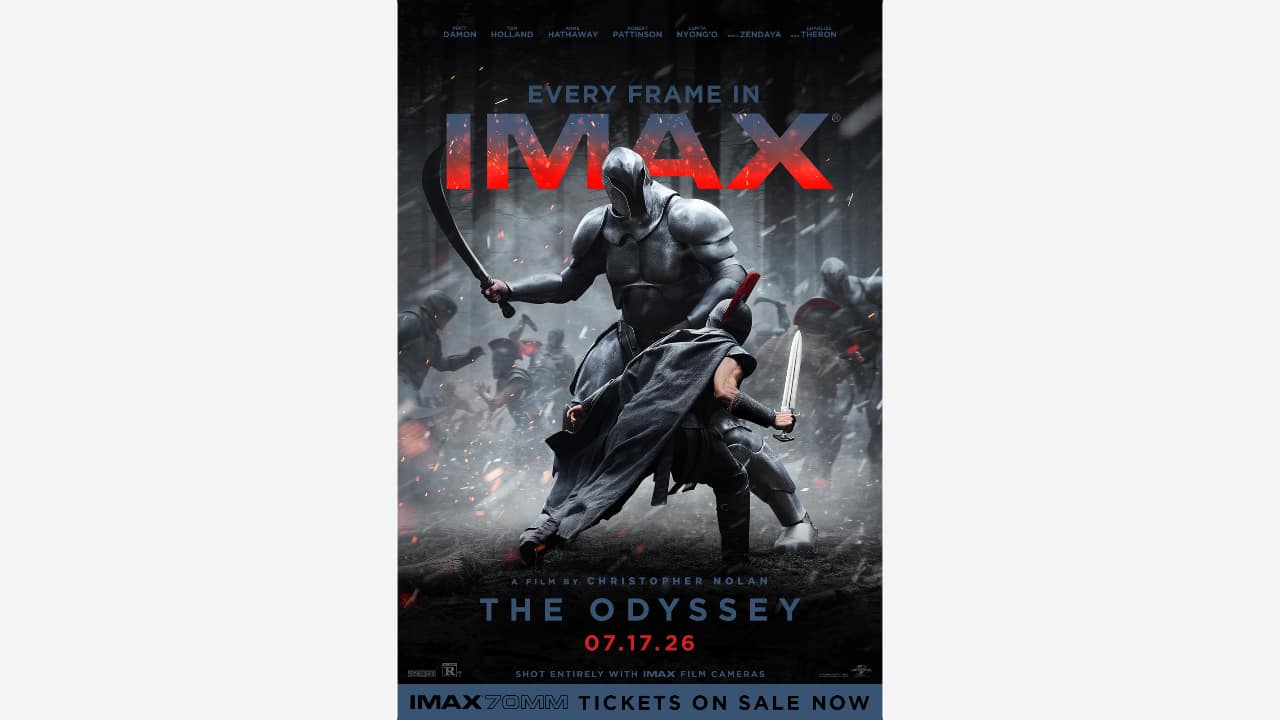 There are roughly 1800 IMAX screens globally, the vast majority of them digital, but they don’t seem to be able to entirely siphon off demand for the blue riband 15/70mm projection. IMAX has responded by adding 2am and 7am showings, which is an interesting prospect for a three-hour epic. And while some hyperbolic press predictions of four-figure prices are probably going to come true over release weekend, on the whole resale tickets for the screenings are going for $300 to $400 against a face value of around $25 to $28.
The obvious question is why IMAX doesn't just build more of the projectors that make this format possible. IMAX CEO Richard Gelfond addressed it directly in a red carpet interview with Variety at the film's premiere, in a clip that has since racked up more than 7.5 million views on X.
"We're sold out in some theaters into the fifth week already, and the 2am shows, the 7am shows, so there's certainly more demand," Gelfond said. "The problem is they haven't made new IMAX film projectors in about 50 years. So we retrofit them, we rebuild them, and part of our strategy is to see how far we could take it. But certainly, demand-driven, I'd like to see more.”
Pressed on why IMAX doesn't simply manufacture new units to meet that demand, Gelfond's answer was blunter still: "We build new projectors every day, but film projectors using this film, it's not practical. So we've got to find them, and we've got to rebuild them, which is what we did for The Odyssey. But can all 2,000 of our theaters have the film projectors? No, there's just not that many around. But I think we could continue to grow it.”
There’s a real feeling there of ‘won’t’ rather than ‘can’t’, but there are good reasons why what Gelfond says about more projectors not being practical tracks.
The problem is the format. Just to back up for a second, 15/70mm film runs through the projector horizontally rather than vertically, with 15 perforations per frame rather than the four used in standard 35mm. That orientation gives IMAX its resolution advantage: the exposed frame is nearly ten times larger than a 35mm frame, and because there's no optical soundtrack sharing the film stock (IMAX audio is handled separately, synced from a hard drive system), the entire frame is dedicated to image.
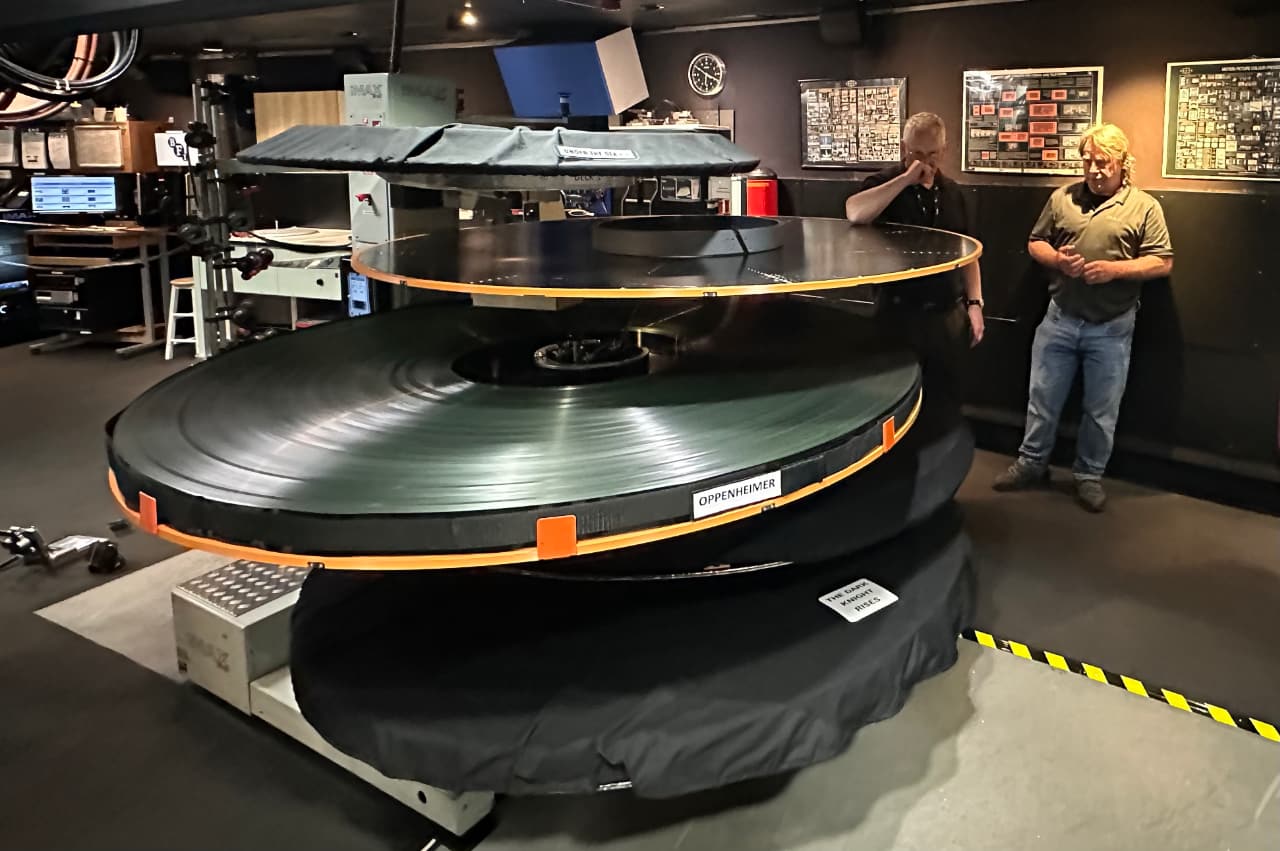 That all has implications. An hour of IMAX 70mm film weighs around 136 kg (300 lb), and a feature-length reel of just under three hours, of the kind needed for a circa three hour Nolan film (such as Oppenheimer, above), weighs around 272 kg (600 lb). Projection booths built for this format need reinforced, custom rewind tables, and the film itself travels through a genuinely exotic path: up roughly 9 m (30 ft) into a ceiling-mounted platter system, through the projector gate, and back down 9 m (30 ft) to a take-up reel, moving at around 103 m (337 ft) per minute, more than three times the speed of standard 35mm projection.
Have a look at What it takes to show Sinners in IMAX 70mm for a look into the projection room handling one of these behemoths.
Simply put, a 15/70mm projector isn't just another mechanical assembly you can spin up on a modern production line in a factory somewhere. It's a bespoke engineering solution to a bespoke physical problem, and that solution was designed for, and built in, a manufacturing era that ended decades ago.
Gelfond's "50 years" claim is not exaggerated. IMAX's dedicated 15/70mm film projectors, the GT and later dual-system models, stopped being manufactured as new equipment as the company shifted its investment toward digital and laser projection for the vast majority of its screens. Digital IMAX is cheaper to install, cheaper to run, and scales easily to thousands of screens rather than a few dozen.
Building a new production line for a projector format used by a handful of releases a decade, when almost every other IMAX screening runs on far cheaper digital hardware, is a hard sell to any board.
 Nolan’s Oppenheimer pushed the network to 30 fully outfitted 15/70mm venues. Following that title's success, for The Odyssey IMAX said it spent more than a year tracking down decommissioned and abandoned projectors. It then rebuilt and redistributed parts to bring the network up to 41, a net gain of 11 (it would have been 42, but one unit was lost during the process).
Could IMAX realistically build new 15/70mm projectors? Sure, but does it release enough films in the format to justify the investment? Doubtful. One of the things that drove The Odyssey ticket sales to such heights is precisely the rarity of such movies. They are events that roll along every few years. Release of those every season and interest would soon start to wane, no matter how stellar the reviews of the movie in question.
If you want to see The Odyssey in the format that Nolan and DoP Hoyte van Hoytema envisaged and shot it in, there are currently 41 places on Earth to see it that way. Adding those 11 projectors since Oppenheimer debuted in 2023 sounds like it was a Homeric epic in itself, and the company isn't promising a 42nd anytime soon.
Tags: Technology IMAX The Odyssey


RedShark 2020 @ All rights reserved.

Comments