7 minute read

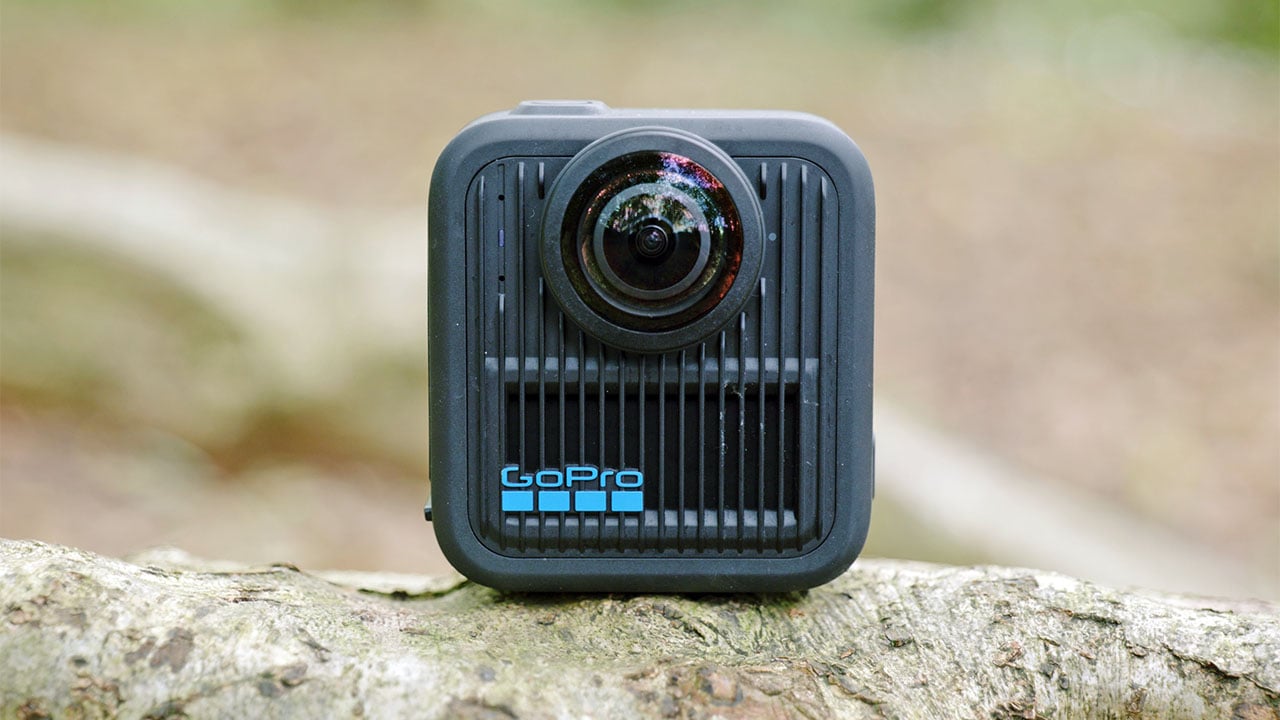
GoPro’s Max 2 is a much-anticipated camera that was originally due to make an appearance over a year ago. Was it worth the wait? On balance, Simon Wyndham thinks it was.
When GoPro announced that it was finally working on a successor to 2019’s Max 360 camera, it became the subject of high anticipation. Originally, we were expecting to see the release of the camera more than a year ago, but then it was seemingly delayed. I predicted that it might be because GoPro wanted to put the new GP3 processor that it had been developing into it.
That prediction turned out to be wrong, with the $499 Max 2 using the existing GP2 system. The big question is, does the inclusion of the GP2 rather than a newer chip hold the camera back?
On paper, the Max 2 has four main things going for it over competitors. The first is what GoPro is calling “True 8K”. A 360 image is created by merging the spherical image from the two sensors on either side of the camera. However, the merging process does come at the expense of resolution because some of the image at the edges needs to be used as overlap space. As a result, this means that the final merged image from some cameras is less than 8K of true resolution.
GoPro says that the Max 2 sensors capture over 4K resolution. That means that once the overlap area is used for merging, the resultant image contains a full 8K of resolution and contains up to 25% more resolution than rivals. When it comes to reframing the final image, that’s a lot of extra visual real estate.
The second feature of significance is the replaceable lens system. Insta360 changed the game when it introduced user replaceable lenses on its X5 camera. But, although it was a huge leap forward at the time, the process requires specific humidity levels in a dust free environment, as well as a calibration process. It’s still a fairly straightforward process, but not one you’d want to be doing on the side of a muddy MTB trail.
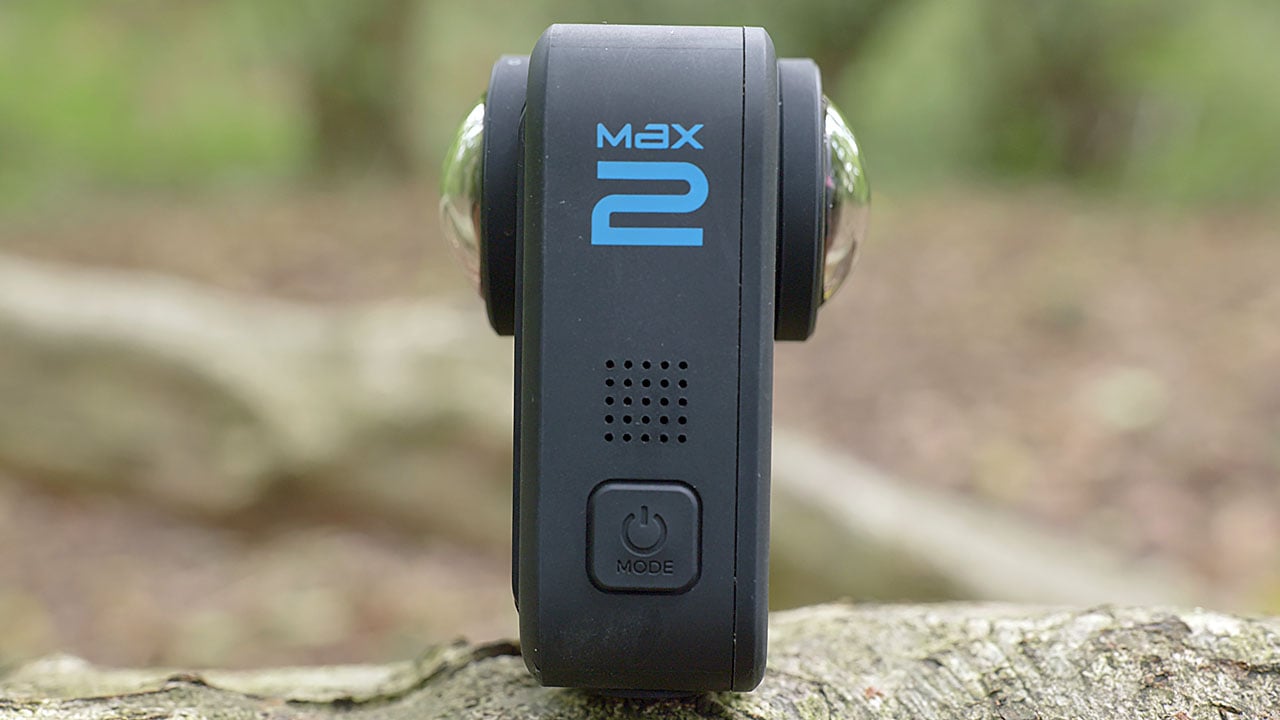
The lenses on the Max 2 can be replaced anywhere, and it only takes seconds to do. If you think your camera might be at risk, it’s a simple matter to carry a spare lens or two and you then have peace of mind that your day of filming won’t be ruined by a mishap.
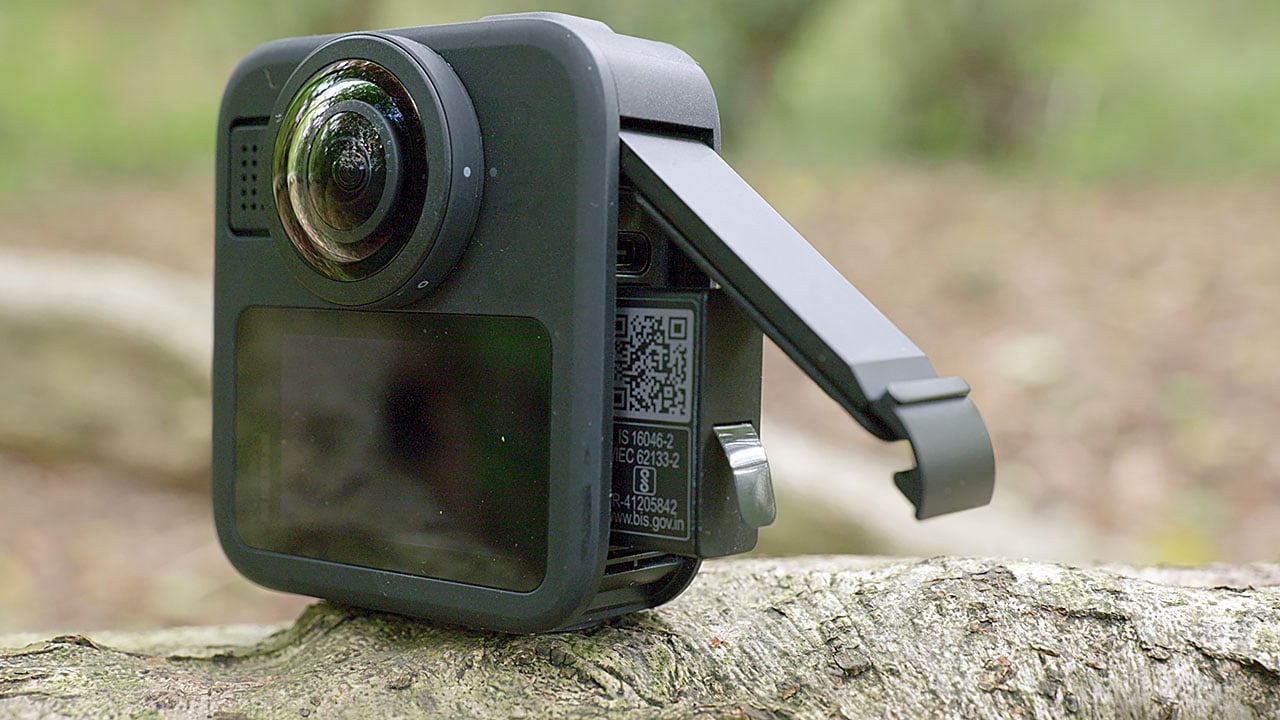
The third important feature is the versatile mounting system. The Max 2 can use the traditional fold away mounting fingers, a 1/4” screw, or a magnetic clip system. This available choice of mounting system is particularly important for a 360 action camera.
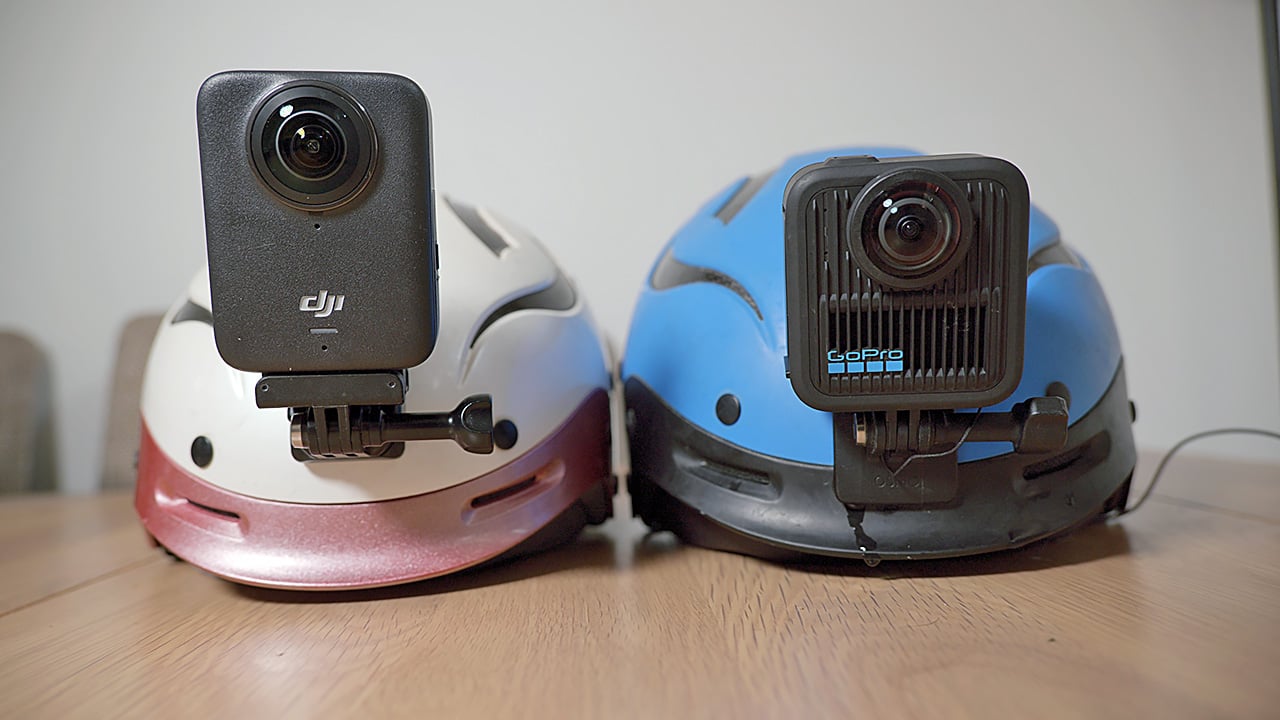
When it comes to the form factor of 360 cameras, although both the X5 and Osmo 360 are marketed as action cameras, they aren’t well suited to helmet mounting. GoPro has a good understanding of what adventure sports people need in terms of being able to affix a camera to a helmet or other body mount. The X5 is far too tall, and although you can attach an adaptor bracket so that it can be mounted horizontally, which improves things significantly, it’s still not ideal in terms of its size and form factor.
The Osmo 360 is slightly better, but it’s around 1 cm / 0.4 in taller than the Max 2, and this is where the flexibility of the GoPro comes into play. The Osmo 360 has to be affixed to a magnetic clip mount, whereas the GoPro does not. As a result, once the cameras are attached to a helmet, the Osmo 360 sits a good 2 cm / 0.8 in taller than the Max 2. You could lower the profile of the Osmo slightly by using a two prong to 1/4” screw mount adaptor, but screw mounting isn’t the best idea on a helmet.
2 cm might not sound much, but it not only makes a difference in terms of the vulnerability of the camera, but it also raises the helmet’s centre of gravity so the camera is much more noticeable to the wearer. The Max 2 on the other hand doesn’t feel much different while wearing it to any other action camera.
The fourth feature is the ability to use GoPro’s Labs firmware. Labs opens up a huge array of flexibility for setting up the camera. You can pretty much set up any aspect of the camera you care to mention; it’s like having an engineering setup menu on a professional camera. One of these settings selects the recording bitrate. The current “high” bitrate setting of the Max 2 is 120 mbps. I understand that GoPro is planning on releasing a future firmware that upgrades this to 200 mbps, but with Labs you can take it all the way up to 300 mbps.
This is unprecedented in any action camera until now. I have been using the Max 2 with this setting, and recordings have been totally reliable. You will need a decently fast SD card, but if you have this puts the Max squarely at the top of the tree when it comes to image quality and flexibility.
The Max 2, just like its rivals, is being marketed as an action camera. Yes, I know these cameras are used for much more than that, but at their core they are being shown as something you can use for outdoors and adventure.
I’ve been using the Max 2 in some pretty risky shot setups, and it’s come out the other side pretty much unscathed. The lenses are incredibly tough. I accidentally dropped the Max 2 from a height onto a carpark and there wasn’t so much as a mark on the lens that took the hit! I did find its limits when I accidentally scraped it across rock on the side of the river, but even then the resultant scratch was very small. I replaced the lens just in case it ruined future shots regardless.
Battery life on the Max 2 isn’t as good as its competitors. In 8K mode I got just over an hour out of it. That said, considering it’s using the GP2 processor and is pulling images off two sensors, GoPro must have found some serious efficiency gains somewhere in the pipeline. It is a bit disappointing though that the Max 2 isn’t using the forthcoming GP3 to give it a bit of future proofing. Given that Insta360 and DJI won’t be resting on their laurels in the coming year, it is important that the Max 2 stays competitive for a while.
Low light is another area in which the Max 2 falls down compared to the competition. GoPro has always focused on good quality daylight footage, but I think it’s about time that we did see some focus on giving better low light imagery. 1-inch sensors are not the solution, since that would increase the size of the camera. But, maybe the GP3 processor will enable much better image processing and low light noise reduction on future cameras.
One other feature that the Max 2 lacks is fast charging. I’ve been banging on about this for nearly three generations of GoPro now. In 2025 it is simply rather ludicrous that there is still no fast charging on a GoPro. This must be rectified in any future camera.
Audio is a mixed bag. The onboard audio is actually pretty good, with the 6 different microphones giving the camera a lot of choice when it comes to the automatic wind reduction, as well as the ability to capture spacial audio. However, wireless audio is a different matter. Whilst I did get the camera connected reliably to the DJI Mic 3 transmitter, it’s over standard Bluetooth audio, which means that the sampling frequency is limited to 16 Khz.
I’ve long felt that GoPro really needs to develop its own wireless mic system that can give high quality audio direct to its own cameras along with 32-bit float local recording to the mic itself. Although the Bluetooth audio is passable, it’s certainly lower quality than you’d get using the DJI or Insta360 mics respectively with their own cameras. As a result, if vlogging is your thing, the Max 2 might not be the best choice for you.
Okay, so there’s a few negatives there. What are the positives? Well, aside from the fact that I feel that I can use the Max 2 in riskier situations than the Osmo, the image quality is also incredibly good, low light limitations aside. In GP-Log and with the sharpness of the camera set to a minimum, the Max 2 produces a creamy smooth 10-bit image that is very gradable and flexible.
In comparison, while the Osmo 360 can record 10-bit log, it still imposes HDR style tone mapping onto the image, creating haloing around high contrast edges. Skin tones can also look very plasticky. Further, even with the sharpness set to a minimum I find that the Osmo still looks overly sharp and digital. The X5 on the other hand offers i-Log recording, but no 10-bit option. So, if absolute image quality and grading is your priority, then the Max 2 is the camera to be looking at.
Slow motion, like most 360 cameras, has a bit to go in order to catch up with traditional cameras. The Max 2 can record up to 90fps in 4K mode, which reduces your reframed footage down to 1080p. 60fps is possible in 5.3K mode. Currently the Osmo 360 is the only consumer 360 action camera that can record up to 50fps in 8K.
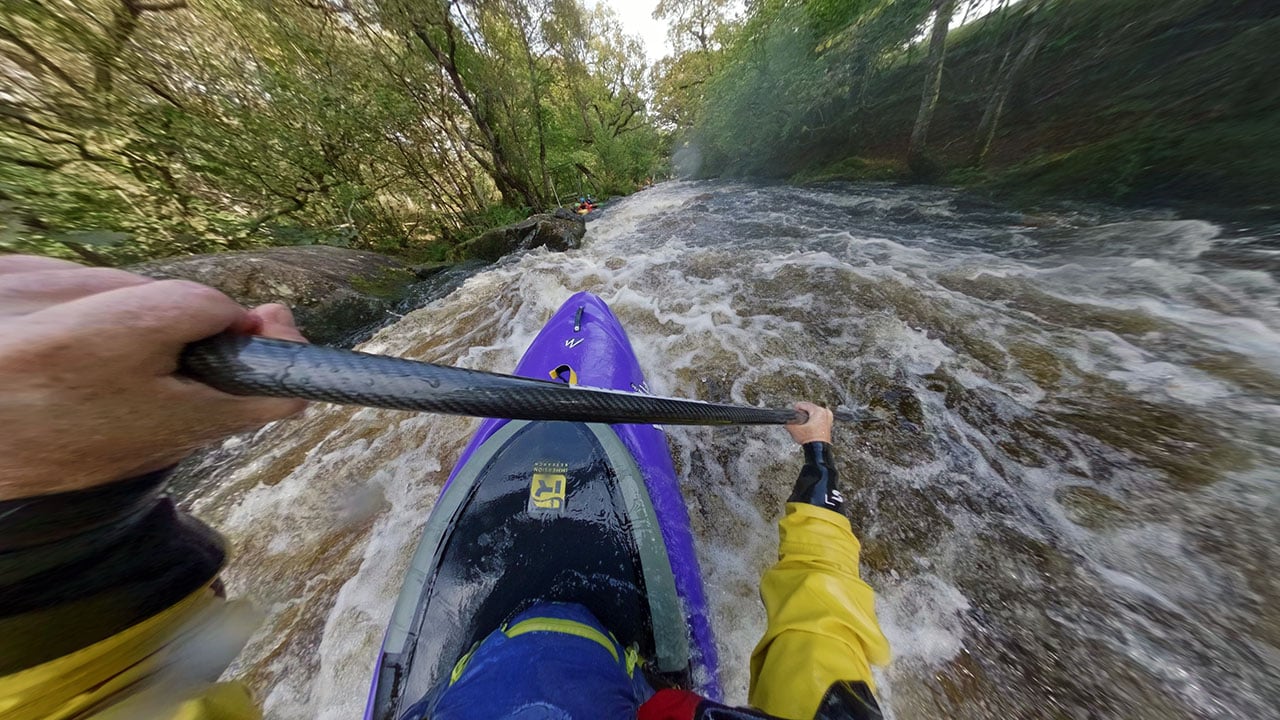
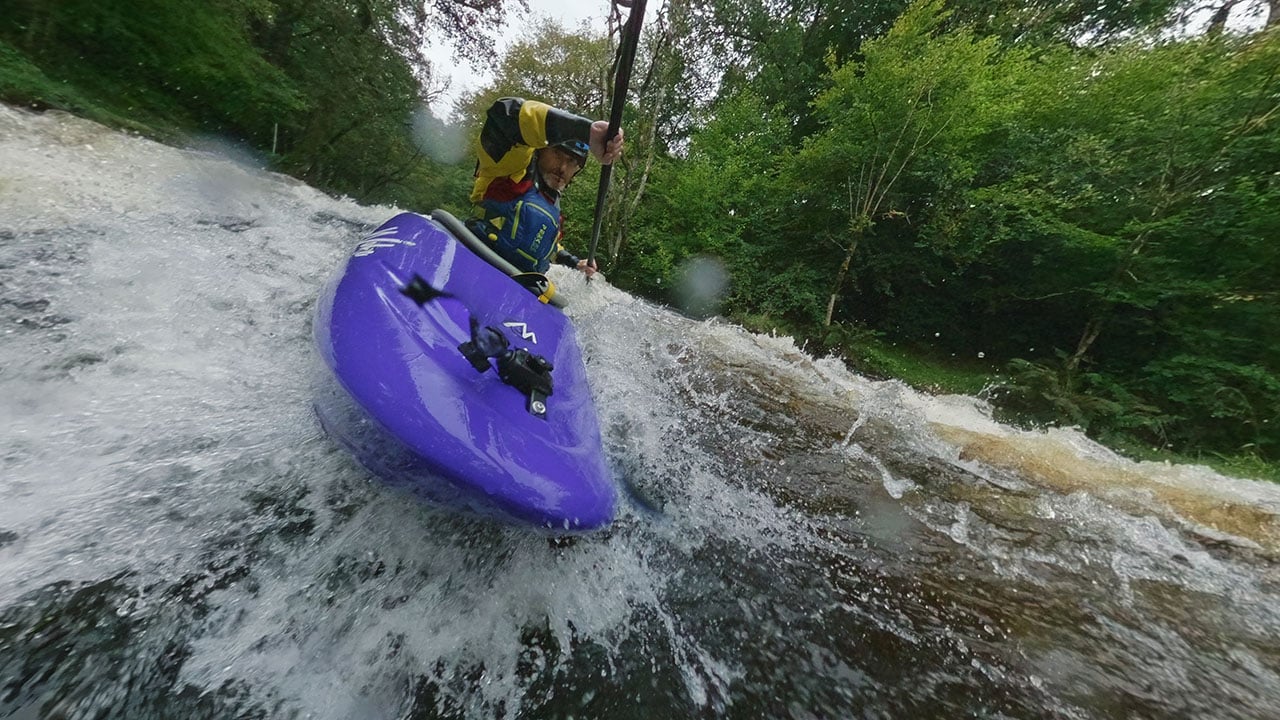
A 360 camera isn’t for everyone. Footage can take up a lot of storage, and it’s not as simple as just finding edit points and sending out a clip. I’m not a fan of using mobile editing software, but using GoPro’s Quik software was straightforward. Objects and people could be tracked easily, and overall it was pretty painless as mobile editing goes.
The desktop app is also easy to use, but it does lack the tracking abilities and more in-depth features of Insta360 and DJI’s software. Overall I’ve found that the DJI app gives some of the best output of reframed footage due to it not stretching the sides of the picture so noticeably.
Having said that, using the GoPro Player software on desktop was easy. One of the best things about a 360 camera for POV footage is that you have so much real-estate for reframing and performing distortion correction. It’s one of the only ways to get an ultra-wide POV while eliminating the fish eye effect.
While the current GoPro Player software is limited compared to alternatives, GoPro is working on an update that will provide more features.
The GoPro Max 2 is fairly no-frills compared to the competition. But what it lacks in headline grabbing recording modes it makes up for in its practicality for its intended primary uses and image quality. The Max 2 is the first 360 camera I can think of that I could genuinely see using instead of a traditional action camera. While low light modes and larger sensors are all well and good, if I can’t use the camera where I want to, either because of the form factor limitations and awkwardness or risk of damage, then whether a camera has those features is pretty much neither here nor there.
What GoPro has done with the Max 2 is to get the basic fundamentals right. Those small things such as a more compact form factor, incredibly tough field-replaceable lenses, and outright image quality and resolution add up to something that is just more practical and less stressful to use overall.
True, it is disappointing that it still lacks fast charging and can’t compete when it comes to wireless audio. But, if you want a 360 action camera rather than a vlogging or lifestyle device, because you are actually going to put the device at risk, or you want outright image flexibility, the Max 2 is one to seriously think about. The Max 2 is much more than the sum of its parts.
The Max 2 is available now and is priced at $499.
Tags: Production Featured Cameras Action cameras 360 video 360 cameras 360-degree cameras


RedShark 2020 @ All rights reserved.

Comments