
3 minute read

Shooting on analog film is hitting levels not seen since the pre-digital age, but demand is outrunning supply, and the chemistry underpinning the whole revival is under serious strain.
Film is back, and possibly more mainstream now than at any time since digital cameras first appeared on the market. Movies shot on film captured the Oscars for Best Picture and Best Cinematography in both 2025 and 2026, film was the medium of choice for a big chunk of the nominated movies both years, and the photography market is expanding rapidly beyond the niche carved out by holdouts such as Lomography.
 Harry Styles handed out 20,000 disposable film cameras at a recent sold-out concert, a remarkable if mixed advertisement for analog
The strongest growth is coming from younger shooters discovering analog for the first time, with disposable cameras a particular catalyst. At a sold-out concert last month, Harry Styles banned cell-phone photography and handed out 20,000 disposable film cameras, generating hundreds of news articles and a lively debate about the merits of analog. Whether or not the resulting photographs were any good (many weren’t), it was a remarkable piece of promotion for the format. You just have to hope not too many people were put off by the murky-at-best results.
It’s part of a sweeping trend. In 2022, Kodak VP Nagraj Bokinkere said the firm had hired more than 300 people to run its Rochester film production lines and was looking for about 75 more, having quadrupled output by moving from a single shift to 24/7 operation.
Even that wasn't enough to keep up. In 2024, Kodak carried out a major renovation of the Rochester plant that included a five-week shutdown while crews worked on equipment used in light-sensitive process steps. The company acknowledged in its 2025 annual report that further investment will be needed if demand keeps growing. Kodak's film revenue pulls in something in the region of $100 million a year.
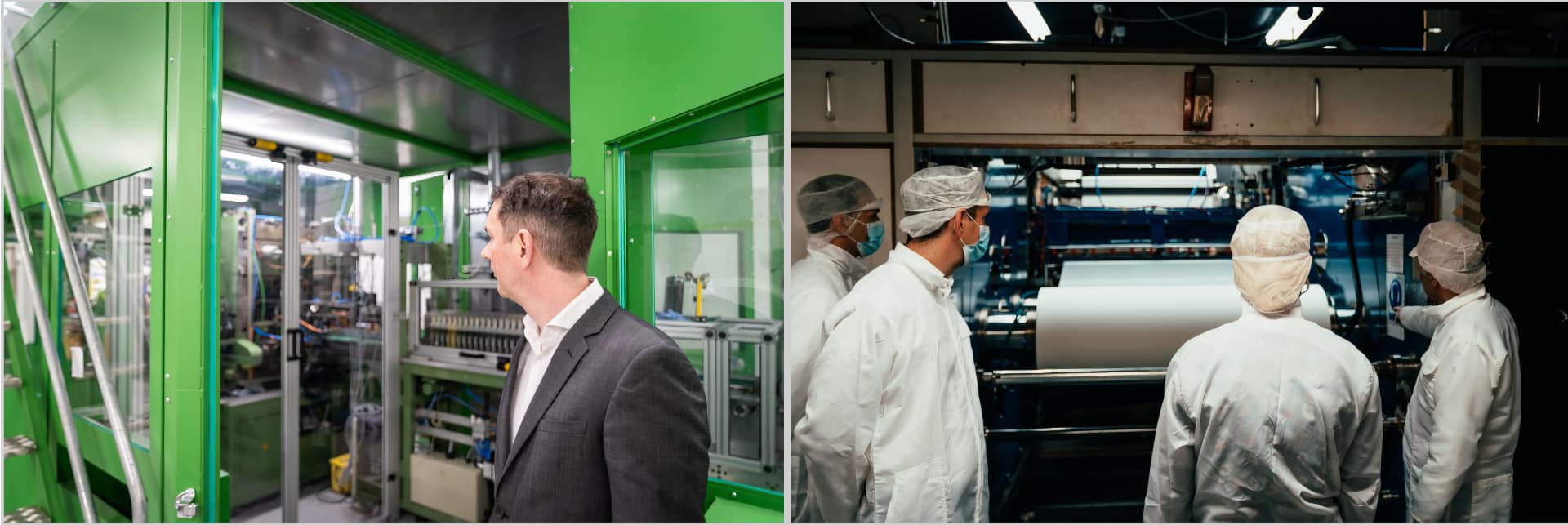 Harman Technology's Manchester plant: millions spent in 2024 on new machines to make 35 mm film cassettes
Harman-Ilford is in a similar position. The UK manufacturer spent millions in 2024 on two new machines to make film cassettes at its plant near Manchester. Fujifilm, meanwhile, has committed capital at the other end of the market: more than $30 million to upgrade a factory near Tokyo making Instax cartridges, with improvements expected to boost capacity by 10% by the end of 2026.
So, we have a boom. But reinvestment in production lines is only half the picture. The chemical supply chain feeding those lines is, to put it bluntly, fragile. Only two companies currently make development chemicals at significant scale: Fujifilm in Belgium and Photo Systems in Dexter, Michigan. That concentration of supply leaves the whole ecosystem badly exposed.
For insights into the sheer scale of the problem, we have to turn to Chemical & Engineering News which has looked into the whole problem of shortages and film stocks in detail.
There are some serious structural weaknesses here. China is now the only country of origin for two reducing agents and a chelator used in color development, while four reducing agents used in black-and-white are made only in India.
"There's no domestic supply," it quotes Alan Fischer, the founder and CEO of Photo Systems as saying. "The supply chain is much longer than it used to be, where we could just order what we wanted and get it in 2 or 3 days.”
At the materials level, the problem runs deeper still. Silver cost $15.70 per ounce in 2015; by 2025 that figure had reached over $72.40 per ounce. And that’s because silver demand is being driven not just by photography's revival but by its critical role in solar panels, electric vehicles, and medical manufacturing.
 The latest Kodak Ektapan releases: part of a range of emulsions back in demand as the analog revival gathers pace
As of 2026, only Kodak and Fujifilm are producing materials for silver halide prints, meaning photo labs have few options to combat rising material costs and extensive lead times. Effectively, film is competing for the same raw material as the green energy transition, where it’s never going to have enough leverage to make a difference. And the current situation in the Strait of Hormuz is not helping, with silver futures rising 32% since late March at time of writing according to commodity market data.
The problem is that the analog world spent the best part of two decades shrinking its supply chains to the bone. Rebuilding them against a backdrop of silver price volatility, a two-supplier development chemical market, single-country dependencies for critical reducing agents, and geopolitical shocks to the movement of goods and materials, is not a problem that gets solved overnight — no matter how many disposable cameras pop stars want to give their audience.
Tags: Production Film Fujifilm Kodak instax analog


RedShark 2020 @ All rights reserved.

Comments