
1 minute read
Advertisement
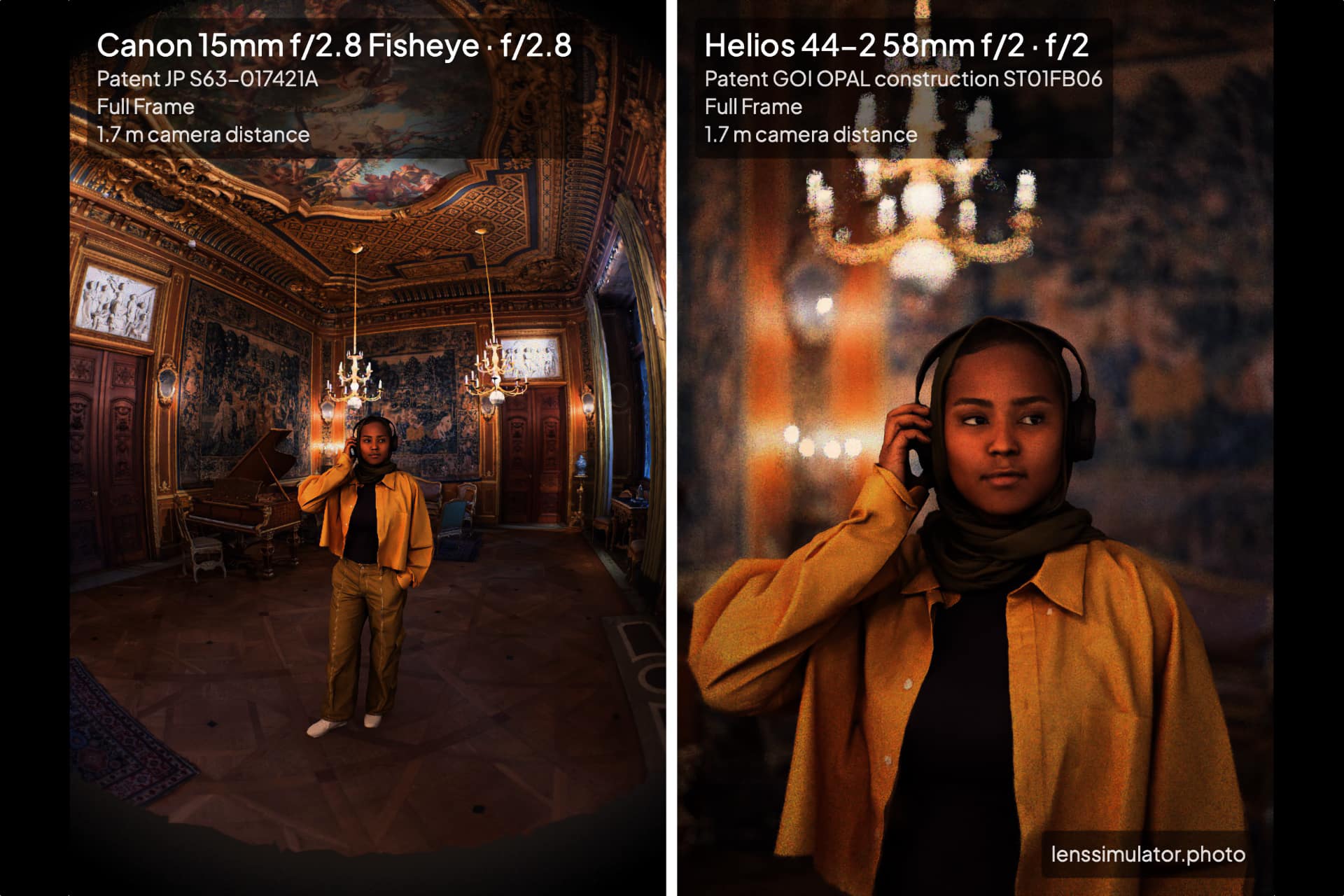
Peter Wey's free lens simulator compares focal lengths, apertures, sensor formats, and bokeh side by side. Its ray-traced profiles include Nikon, Canon, Sony, and even the Helios 44-2.
If you're looking to while away some time over the Thanksgiving weekend in the US, or just trying to take shelter from the Black Friday lunacy that now seems to have spread everywhere else, you could do worse than visit LensSimulator.photo.
Developed by Peter Wey, it's a free browser tool for comparing focal length, aperture, sensor format, depth of field, and bokeh across two side-by-side setups.
The picture is ray-traced through a 3D scene, and you can choose between an ideal thin lens and a profile that traces rays through the glass, aperture stop, and focusing groups. Rays accumulate over time, so the image cleans up the longer you leave it.
The site lists 287 profiles, which it says are ray-traced from real lens patents. Nikon leads with 86, followed by Canon with 58, Fujifilm with 41, Leica with 38, and Sony with 35. The list also takes in the likes of Sigma, Samyang, Viltrox, Angénieux, Zeiss, and Helios, with older glass such as the Helios 44-2 and Kodak Aero Ektar in the mix.
According to the site, the traced profiles model distortion, vignetting, color fringing, aperture blade shape, cat's-eye highlights, spherical aberration, and focus breathing. An Optical X-Ray view shows a cross-section of the lens, along with the aperture stop, ray path, and focusing groups.
Sensor options run from 1-inch through Micro Four Thirds, APS-C, full frame, and digital medium format to 4x5 and 8x10. Focal lengths extend from 8mm to 800mm, with apertures from f/0.95 to f/32.
The site is also upfront about what's missing. Flare, ghosting, coatings, assembly tolerances, sample variation, aspherical molding texture, and sensor noise are all absent from the model. It also warns that a profile follows its patent, which may differ from the lens that went on sale, and that patent-based bokeh can differ from the retail product, especially at close focus. Slider values are nominal, and the lens entries aren't sharpness rankings.
In short, LensSimulator.photo is no replacement for a lens test, but it could help you work out what you want to test when you get to that stage. It's also admirably free and available in 10 languages.

Written by Andy Stout
Advertisement
Advertisement
Advertisement
Advertisement
Advertisement
RedShark is a multiplatform online publication for anyone with an interest in moving image technology and craft. With over 50 contributors worldwide, full-time developers, editorial, sales and marketing staff, it is the go-to site for informed opinion and know-how for the quickly changing video, film and content creation industries.

RedShark 2020 @ All rights reserved.

Comments