6 minute read

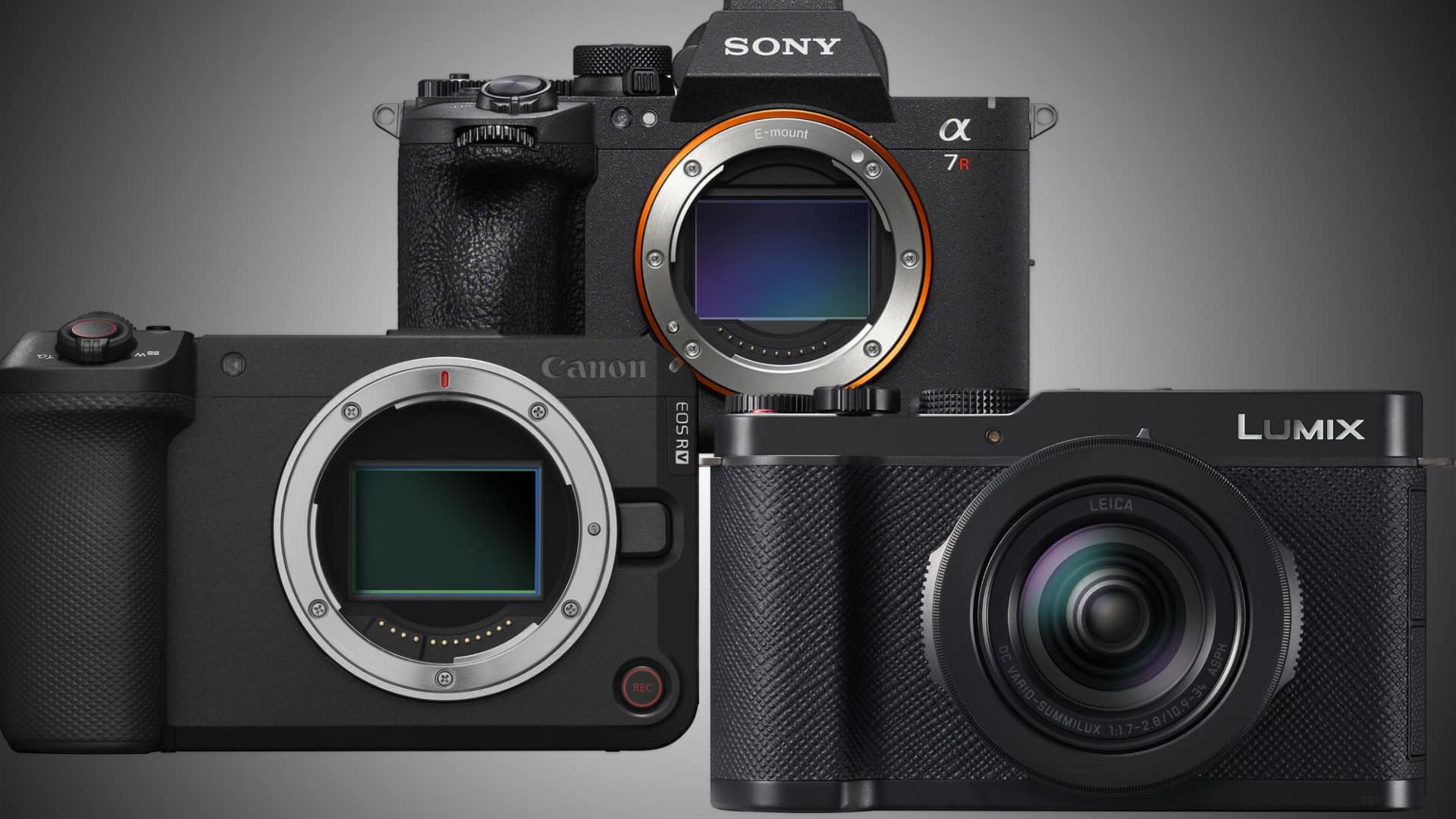
Canon went video-native, Sony went faster without sacrificing resolution, and Panasonic went compact. Here are the key takeaways from three very different camera announcements in 24 hours.
Something unusual happened in the camera industry last week. Panasonic, Canon, and Sony all made major announcements within a day of each other. Not at a trade show, not at a coordinated industry event, just in 24 hours in mid-May, like they'd all looked at the calendar and decided now was the moment.
Given the lack of camera announcements in 2026 up until then, it feels quixotic to say the least. Canon was first out of the gates with a teaser video, Sony followed the day after, and Panasonic dropped the LUMIX L10 the day before out of the blue in a classic spoiler operation.
What they announced, though, tells three completely different stories about where these companies think the market is going, or at least where they think the gaps to be exploited in it are. The Canon EOS R6 V is a video-specialist body with no EVF and a built-in cooling fan. The Sony A7R VI is a 66.8 MP resolution monster that also shoots at 30 fps, and is a callback to the days when resolution jumps were a big part of the story. And the Panasonic LUMIX L10 is a premium fixed-lens compact with a Leica-branded zoom, arriving eight years after the LX100 II it's clearly meant to succeed.
So, in release order, here are what we see as the key takeaways of each of them. Plus a handy comparison table for quick reference as the specs really are very different across the trio.
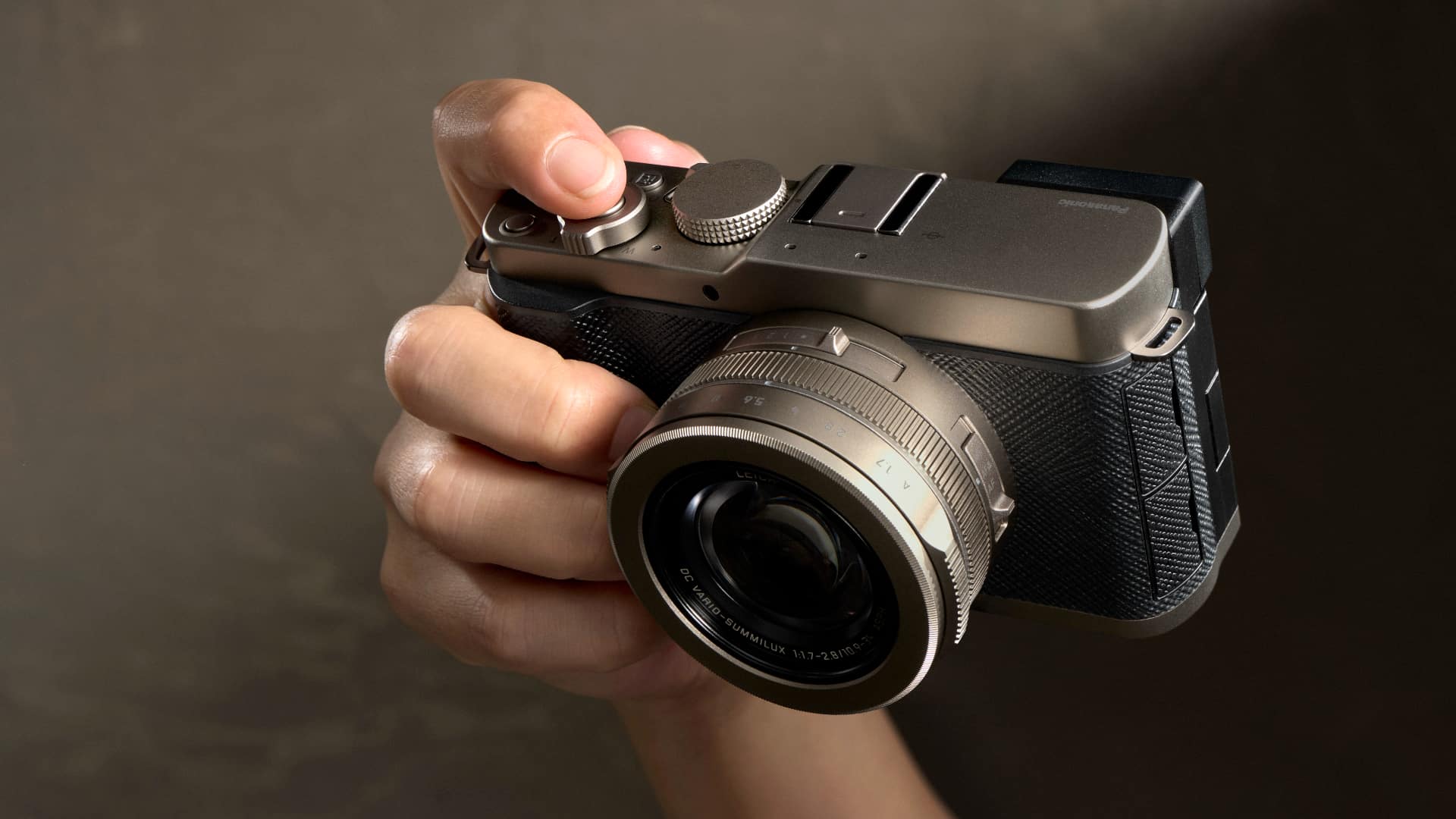 The Panasonic Lumix L10 pairs a 4/3-type BSI CMOS sensor with a Leica DC Vario-Summilux 24–75 mm f/1.7–2.8 zoom: the camera's main differentiator in a fixed-lens market converging on primes
Of the three, the LUMIX L10 is the most surprising. This isn’t because it's the most technically ambitious, it very much isn’t. But Panasonic has spent years being conspicuously absent from the premium compact conversation, and this is a clear and confident statement of re-entry into a booming sector of the market.
The L10 is a fixed-lens camera built around a 4/3-type BSI CMOS sensor, paired with a Leica DC Vario-Summilux 24–75 mm f/1.7–2.8 zoom. That lens combination alone distinguishes it from most of the fixed-lens compact market, which has increasingly converged on fixed primes. The L10 gives you a zoom with Leica glass and Panasonic's multi-aspect sensor design that holds a consistent angle of view as you switch between 4:3, 3:2, and 16:9 ratios.
For video, it offers 5.6K30 and DCI 4K120 in 4:2:0 10-bit, DCI 4K60 in 4:2:2 10-bit, V-Log support, and a Real Time LUT mode that lets you load custom looks directly into the camera and preview them while shooting. Phase Hybrid AF with 779 focus points and AI subject recognition rounds out the headline spec sheet.
It ships in Black or Silver for $1499, with a Titanium Gold Special Edition at $1599 — the latter featuring a threaded shutter release, exclusive menu colorway, and a leather strap, positioned as a collector's piece to mark LUMIX's 25th anniversary.
At $1499, it's more expensive than many will expect from a 4/3-type sensor compact. But it’s a very capable camera with a proper zoom, excellent video chops, and a lens that would not disgrace a much more expensive model. It’s been eight years since the LX100 II was released, and while you could hardly call the L10 a great leap forward, it’s a respectable enough advance on the whole compact conversation.
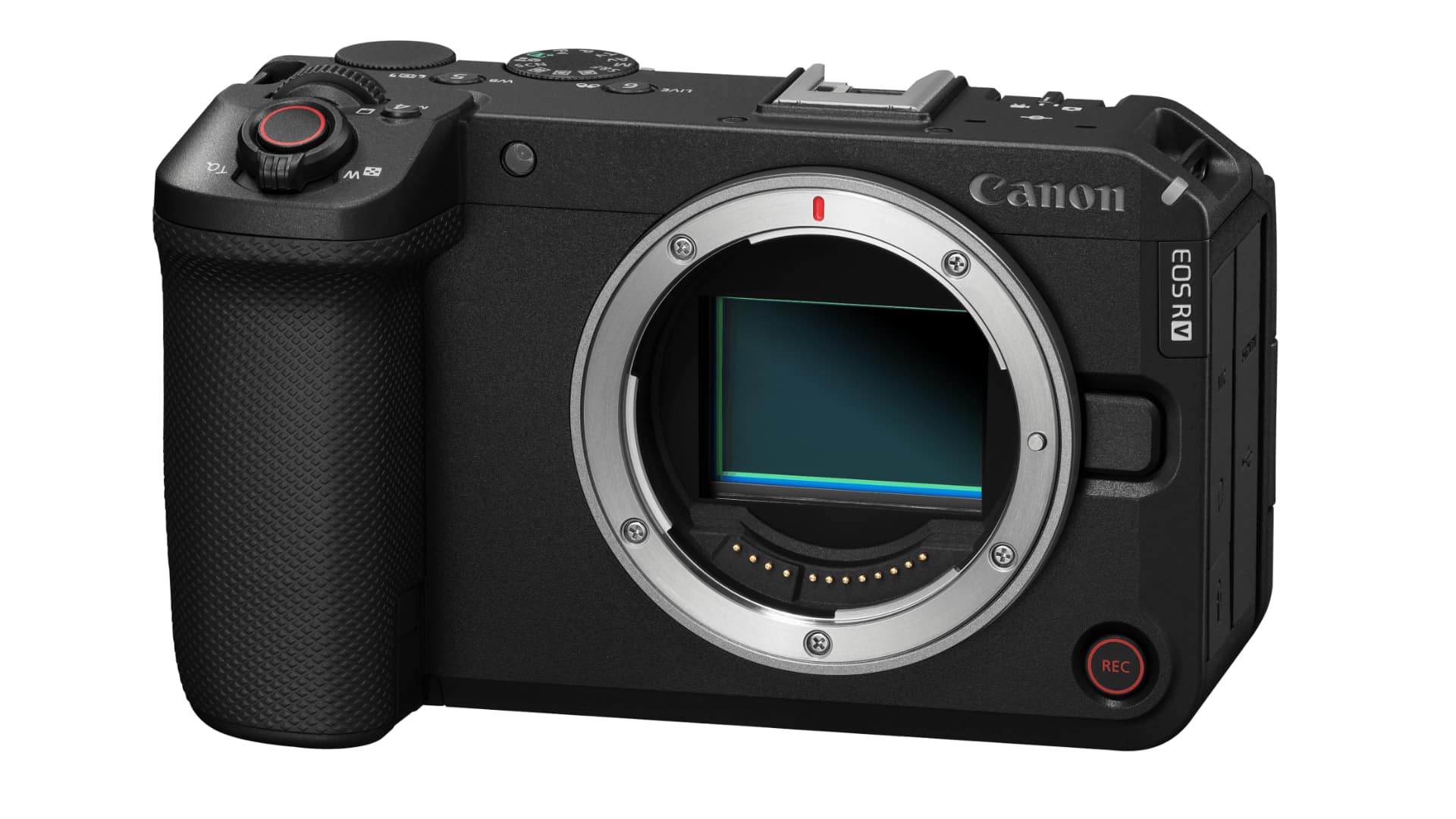 The Canon EOS R6 V drops the EVF in favour of a built-in cooling fan and video-native controls, including support for the new RF 20-50mm f/4L IS USM PZ power zoom
Canon's V-series has been edging this way since it was first created. The EOS R50 V was a starting point, a vlogging-oriented body for casual creators, but the EOS R6 V is something else entirely. This is a full-frame, video-native camera with a 32.5 MP sensor, 7K 60p RAW, 7K 30p open gate, 5-axis IBIS, an active cooling fan for unlimited recording, and a flat, EVF-less body designed to sit on a gimbal without argument.
The absence of an EVF is a deliberate statement and has proved contentious. Arguably those upset about its lack are missing the point. Canon isn't trying to make a hybrid that does everything passably. It's making a video camera that happens to be in a mirrorless body, mainly because this is the most cost-effective way to do it in the current climate.
There is a persistent argument circulating that the company is being too niche and cannibalising its own sales. The Canon's price, at $2499 (body only), is only $300 below the EOS R6 Mark III after all, but the feeling is that the aim is very different. Canon is following a similar logic to what Sony did with the FX3, and that has been successful enough by anybody’s measure. Ditching the EVF is as loud a statement as you can make about who this camera is and isn’t for. And if you treat Canon’s video hierarchy as a standalone entity, this is a very capable video tool that doesn't cost cinema-camera money and the current $3899 of an EOS C50.
The new RF 20-50mm f/4L IS USM PZ kit lens deserves a mention, too. It's Canon's first L-series power zoom, and designed specifically to work with the R6 V's video-centric workflow. For run-and-gun shooters, a proper power zoom with an L-series badge is a meaningful addition to the RF ecosystem.
The question is whether the R6 V has arrived late or right on time. The FX3’s combination of power and portability has seen it successfully colonise a fertile niche largely to itself. The FX3 II is presumably coming. But if the R6 V delivers on its specs, especially the open gate and the active cooling, which are the two things that frustrate professionals most about hybrid cameras used for long-form video, Canon has at least a brief chance to make some serious hay.
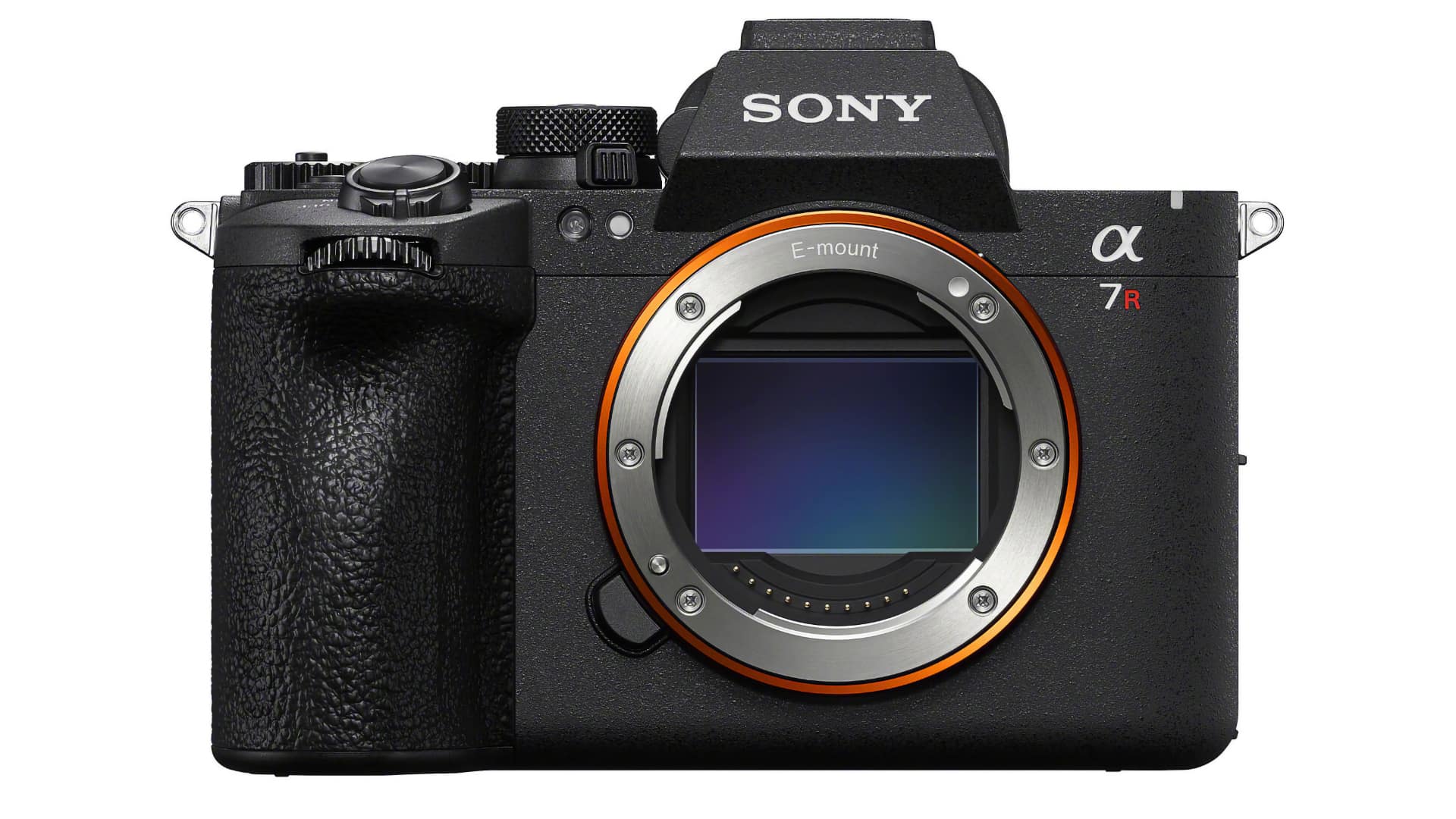 The Sony A7R VI introduces an all-new stacked 66.8 MP Exmor RS sensor — the first new R-series sensor in seven years — with a readout speed approximately 5.6x faster than its predecessor
The A7R V is, by most accounts, excellent and slightly slow. Released in 2022, its 61 MP BSI sensor dated back to 2019, and while the camera was refined in every other respect, the underlying chip was showing its age. The A7R VI fixes this with an all-new, fully stacked 66.8 MP Exmor RS sensor, the first new R-series sensor in seven years.
Stacked means fast. The readout speed is approximately 5.6x faster than the A7R V, which translates to 30fps continuous shooting in 14-bit RAW at nearly 67 megapixels. That is a genuinely remarkable number. Rolling shutter, the historic weakness of high-resolution sensors, is substantially reduced.
The video specification is also a step change. The A7R VI shoots 8K30 and full-frame 4K60, with 4K120 available with a field-of-view crop. It adds LUT import and monitoring, S-Log2, S-Log3, S-Cinetone, an auto-framing mode, and a front tally lamp, the last of which signals something about the audience Sony is increasingly courting.
The dual USB-C ports allow simultaneous power and external recording, a workflow detail that matters to people shooting long-form. Paired with the optional XLR-A4 handle, it supports 32-bit float audio at 96 kHz.
None of this, even that tally lamp, makes it a video camera. It's still fundamentally a resolution-first tool, and the absence of open gate recording is an obvious gap. But it's a resolution-first tool that can now credibly turn its hand to serious video work when required.
The new battery is worth flagging, too. Sony has moved to the NP-SA100, a new, higher-capacity cell that delivers around 27% more power than the outgoing NP-FZ100. Good news if you're buying fresh; perhaps less good if you have a drawer full of existing Sony batteries.
What makes last week's announcements genuinely interesting from a market perspective is how divergent the thinking behind each camera is. And the differences perhaps go a bit further than simply being arguments over price.
Canon's R6 V says video has its own needs, and trying to serve both stills and video in one body means compromising on both. Better to strip back, focus, and give video shooters what they actually want: open gate, cooling, no EVF, power zoom support.
Sony's a7R VI says that the future is one camera that does everything, and the way to get there is better sensor technology. If your sensor is fast enough, you don't have to choose between resolution and speed, or between stills and video.
Panasonic's L10 reckons not everyone needs interchangeable lenses, and there is a real market for a camera that is genuinely pocketable, genuinely well-built, with a lens that's actually good. The fact that nobody else from the big three is saying this is Panasonic's opportunity.
None of them is wrong. The camera market in 2026 is a collection of overlapping audiences with different priorities and different workflows. A wedding videographer, a high-res commercial photographer, and a street photographer who also shoots social video have almost nothing in common in terms of what they need from a camera.
The interesting test will be whether the Canon can convert the FX3 loyalists, whether the Sony's new sensor starts to change the conversation around resolution cameras, and whether Panasonic can generate the kind of cultural moment for the L10 that Fujifilm has repeatedly managed with the X100 series.
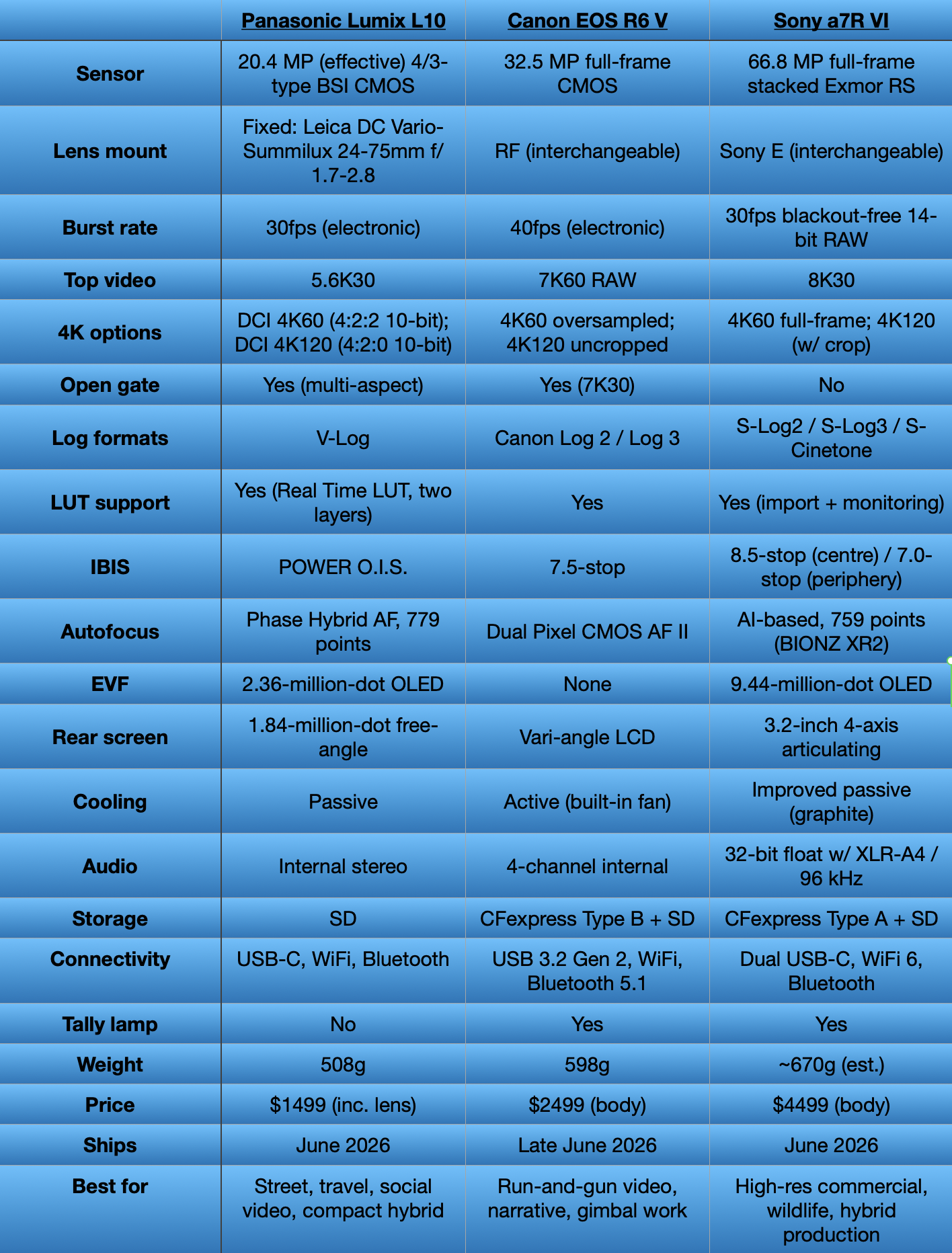 Key specs for the Canon EOS R6 V, Sony A7R VI, and Panasonic Lumix L10 side by side. Prices, sensor sizes, and video capabilities differ significantly across the three
Tags: Cameras Canon EOS R6 V Sony a7R VI LUMIX L10


RedShark 2020 @ All rights reserved.

Comments