
3 minute read
Advertisement
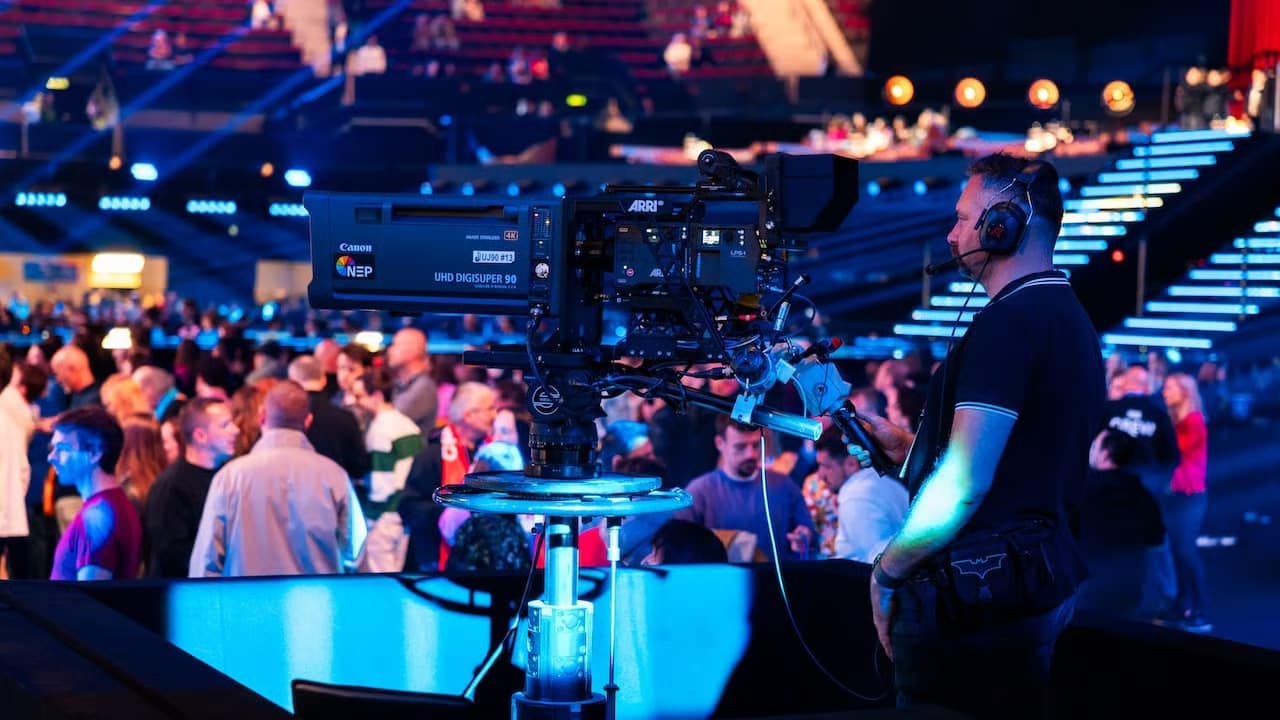
The Eurovision Song Contest marks 70 years of transnational live broadcasting, this year's show coming from Vienna with 24 ARRI ALEXA 35 Live cameras at its heart.
Today marks the 70th anniversary of the Eurovision Song Contest, and judging from the rehearsals the event is going to be as big, bold and wonderfully camp as ever. Taking place in Vienna with Austria's ORF as the host broadcaster, the event is taking its usual big swings with a massive interactive stage, enormous embedded screens, and 35-second changeovers between songs and artists that are essentially stage manager speed runs all through the broadcast.
166 million people watched last year's event, around 40 million more than watch the Super Bowl. Here are the highlights of the second (and strongest semi-final) so you can see the sort of staging involved.
As the EBU itself says, behind the spectacle is one of the most sophisticated live television operations in the world: a vast technical network that stretches from the host broadcaster in Vienna through the EBU’s distribution systems in Geneva and onwards to broadcasters, streaming platforms and devices across the globe.
We've written about the Eurovision network before, in this unfortunately Song Contest sceptical piece and this look at the 2023 show, and it is always a fascinating technical story.
The technology has changed out of all recognition over 70 years. The first contest in 1956 involved seven countries and was essentially an experiment in transnational live broadcasting, with signals travelling via microwave relay towers and terrestrial links across mountains, borders and incompatible national systems, not to mention the then vexed question of international performing rights. Engineers had to overcome challenges such as transmitting live pictures across the Alps and beneath the English Channel.
Satellite joined the picture from the 1970s, dramatically expanding the reach of the network. Digital fibre followed, and in 2026 the signal travels via high-speed IP and fibre infrastructure, delivering multiple formats and resolutions simultaneously to broadcasters and streaming platforms.
This year, the main innovation in the arena is the presence of ARRI cameras. According to this excellent SVG Europe piece written by Adrian Pennington, ORF considered both a traditional and a cinematic multicam workflow before finally settling on what looks to be a compromise between the two for reliability: cinematic-capable cameras mounting standard broadcast lenses and transmitting in 1080i after conversion from 1080p.
“It’s always a compromise,” commented ARRI managing director, David Bermbach. “You need to match what’s required for the output. Creatively, of course, the ideal would be PL‑mount lenses and a progressive format. But for this environment, right now, this is the best approach."
24 ALEXA 35 Lives are joined by Sony FR7 and FX6 cine-style cameras (four handheld, one gimbal), along with railcams, PTZs, and aerial systems. The OB is being operated by NEP, who also had to work out how to sync the rolling shutter ARRI cameras with the approx 500 sqm (5381 sqft) LED video wall.
Judging by the performances at the semis, they succeeded. For completion's sake, here is the performance recap of the first semi-final, which includes red-hot favorites Finland (though we've put a sneaky quid on Australia from the second semi-final, because who can resist a golden plinth rising from the middle of a grand piano).
It is unlikely that this year's contest will surpass the viewing figures from 2025. Four nations are boycotting the event this year in protest at Israel's inclusion given the ongoing situation in Gaza: Slovenia; 'Big Five' EBU country Spain; joint holder of the record for most Eurovision wins, Ireland; and Iceland, where over 90% of the population normally watch the contest. Indeed, in some epic-level trolling, Ireland's RTÉ is broadcasting the classic Father Ted Song for Europe episode instead of the Viennese show.
Where the event will be hosted next year is, as yet unknown. Helsinki looks a good bet from here (even if second favourites Australia win, there is no way the ESC is going to decamp to Sydney next year, the runner-up country will host instead). And with Riedel now in control of ARRI, and this year's event being the 12th in a row that Riedel products have played key communications and distribution roles, there is a very good chance that ARRI cameras will be used once more too.
Hopefully, they will then get a more cinematic role with a longer time to prep for the event. And hopefully the Eurovision family will be back together again by then as well.
Tags: Production Live ARRI Eurovision Song Contest NEP Outside Broadcast

Written by Andy Stout
Advertisement
Advertisement
Advertisement
Advertisement
Advertisement
RedShark is a multiplatform online publication for anyone with an interest in moving image technology and craft. With over 50 contributors worldwide, full-time developers, editorial, sales and marketing staff, it is the go-to site for informed opinion and know-how for the quickly changing video, film and content creation industries.

RedShark 2020 @ All rights reserved.

Comments