
3 minute read
Advertisement
If you’ve ever tried to tune a vocal with a bargain-bin plugin and ended up with something that sounded like a confused dial-up modem, you’re not alone.
A lot of budget tools promise “pro tuning,” but only a handful actually get you there without wrecking the character of the performance.
The good news is that great vocal correction doesn’t have to drain your bank account, there are accessible options that genuinely hold up in the mix.
This guide will give you a clear look at the best affordable tuning plugins that sound great, whether you’re cleaning up demos or polishing a release.
1. Natural results, when you want them
Even if you like the noticeable, stylized tuning effect sometimes, you probably also want the option to fix things without changing the personality of the voice. Good tuning keeps the natural inflections intact. It doesn’t flatten everything into a perfectly straight line unless you ask it to.
2. Keeping artifacts in check
A good vocal tuner handles transitions and consonants more gracefully, even when you push the correction a bit harder. The affordable plugins worth using avoid the metallic tail-ends, robotic warbles, and little audio “hiccups” that show up when a processor is struggling.
3. An interface you can get comfortable with quickly
Complicated pitch editors exist, and they’re great when you need them, but if you’re choosing from the affordable end of the spectrum, the best plugins give you a smooth, simple process. Everything important is visible, and you don’t need to dig or decode the workflow.
4. It works in your DAW without a fight
This might sound obvious, but compatibility is the thing that makes a plugin practical. If a tuner only plays nicely in certain DAWs or maxes out your CPU on a laptop session, that’s a headache.
Here are a few options that don’t require an expensive subscription or a giant one-time investment. Each one has strengths and trade-offs, and none of them will surprise you with hidden “gotchas.”
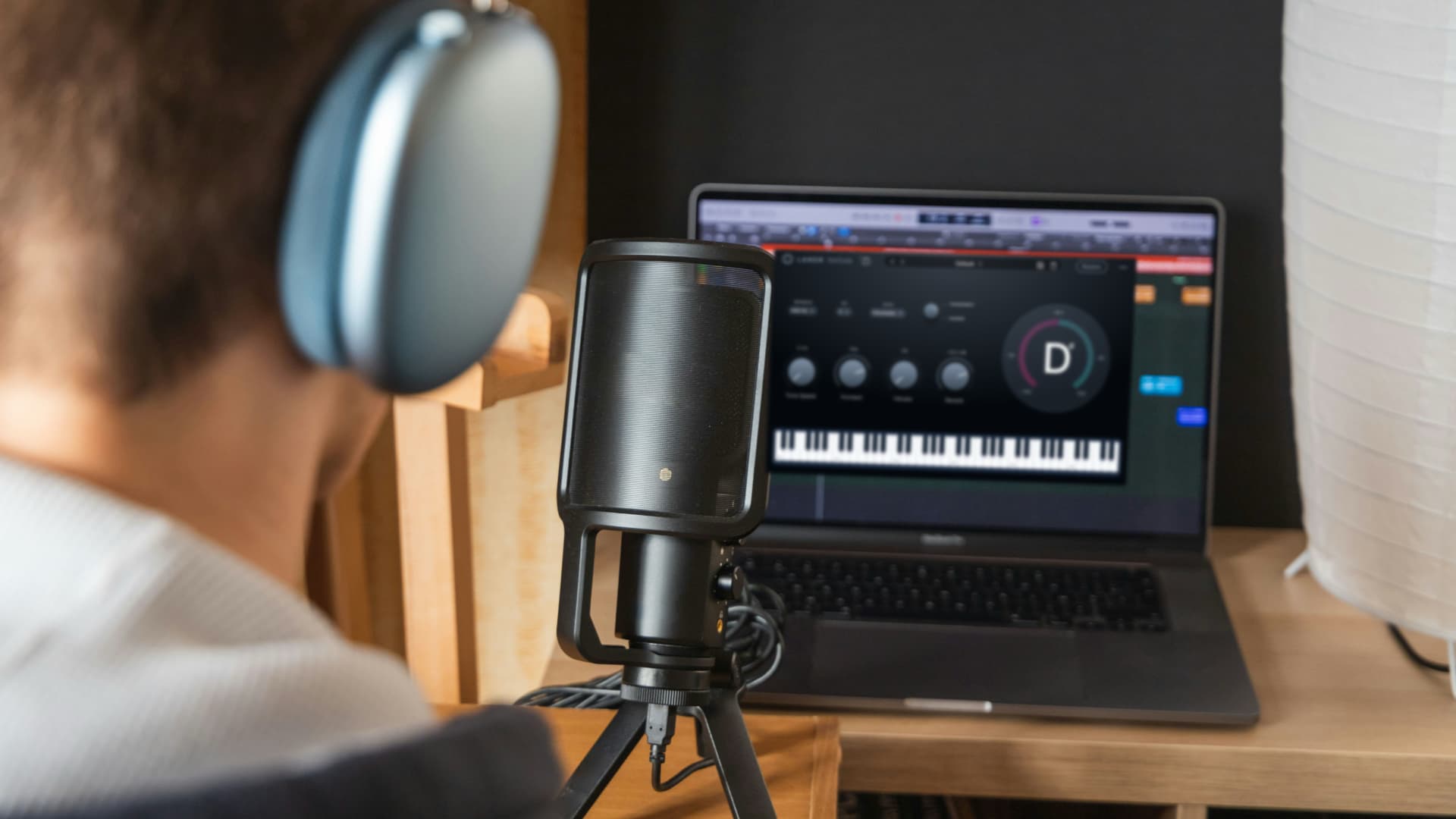
VoxTune focuses on clean, natural-sounding pitch correction without the artifacts you might expect at this price point. It’s genuinely easy to use: drop it on a vocal, move a few sliders, and you get smooth, believable tuning. If you prefer to work quickly and keep the vocal feeling like itself, this is a great fit. It’s also included in LANDR Studio, which gives access to 70+ other plugins, unlimited distribution & mastering, a massive sample library and more.
RePitch is a streamlined, affordable alternative to the big-name tuning suites, built for clean, natural pitch correction without the usual artifacts. It’s great when you need to tighten a vocal performance without losing its character, think subtle note shaping, smoothing out shaky vibrato, or fixing a line that’s emotionally right but technically off. The interface makes surgical tuning fast and the transparent processing keeps the vocal sounding like the singer, not the plugin. It’s also part of LANDR’s Ultimate Bundle, which makes it more accessible if you’re building out your toolkit.
If you want something that costs nothing and still gives you functional, usable tuning, MAutoPitch is a safe pick. The correction is clean enough for demos or light-touch fixes, and the formant control is a helpful bonus. It’s not the most transparent tool, and you don’t get detailed editing, but for quick tuning on a budget it’s solid.
Graillon’s free version leans a little more “colorful,” which can actually be great if you’re doing pop, hyperpop, electronic, or anything where a bit of artificiality adds personality. The tuning can get obvious, but the tone-shaping and creative detune effects make it fun to experiment with.
Affordable tuning tools have come a long way. You don’t need a high-end suite, and you don’t need to feel pressured into buying something massive just to get clean pitch correction. The plugins in this list all offer something genuinely useful without demanding a big commitment, and they’re flexible enough to grow with you as your sessions get more ambitious.
If you’re unsure where to start, try one or two on your next vocal session. See how they interact with your voice, how they fit into your workflow, and which one feels the least distracting. Real-world comfort matters just as much as sound quality.
Pay attention to the small improvements: cleaner transitions, gentler tuning curves, fewer moments that pull you out of the performance. Those little wins are what make a plugin worth keeping around.

Written by RedShark News Staff
Advertisement
Advertisement
Advertisement
Advertisement
Advertisement
RedShark is a multiplatform online publication for anyone with an interest in moving image technology and craft. With over 50 contributors worldwide, full-time developers, editorial, sales and marketing staff, it is the go-to site for informed opinion and know-how for the quickly changing video, film and content creation industries.

RedShark 2020 @ All rights reserved.

Comments