4 minute read

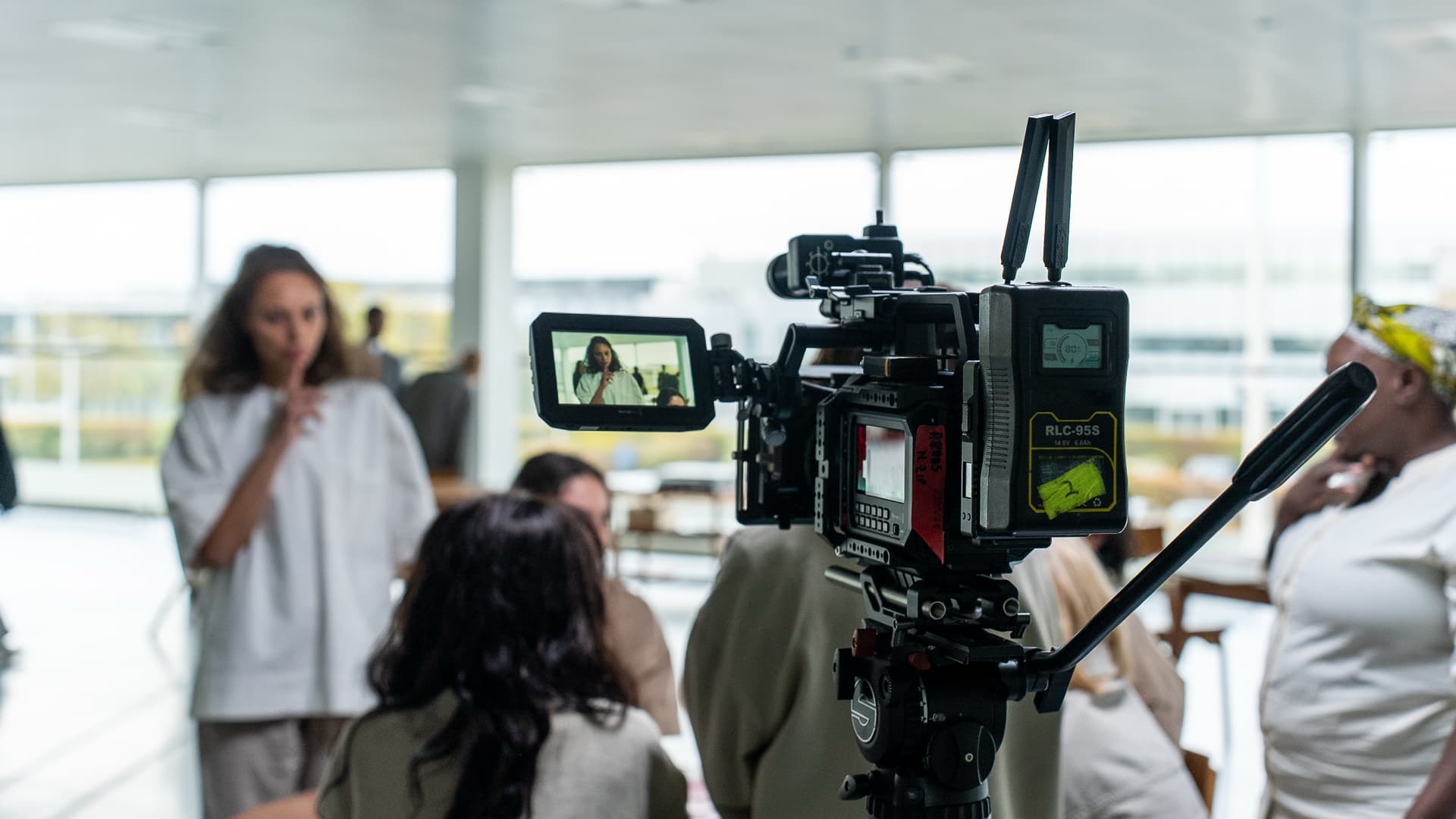
"Beautiful colour and large format, all in a tiny body." Why Cinematographer James Westlake used the Blackmagic PYXIS 12K on independent feature Imagination of a Phoenix.
 Independent feature Imagination of a Phoenix, a psychological drama from director Nicholas Beveney, explores perception, memory and the boundaries between reality and imagination. Set inside a psychiatric hospital, the script called for a cinematic approach that was intimate, moody and authentic, yet also able to drift into dream sequences.
Filming in a challenging location with complex lighting, the shoot had to contend with extremes of contrast and exposure, as well as balancing a wide range of skin tones. Time was another factor, with only two weeks allotted. It all added to a project that demanded flexibility.
Cinematographer James Westlake is no stranger to such pressures. Having worked on everything from music videos and charity shorts to horror features and the Teletubbies TV series, Westlake brings a versatile approach that served the director well. He found the camera he chose – the large format Blackmagic PYXIS 12K – equally adaptable.
“It offers beautiful colour and large format, all in a tiny body,” he says, noting how it was the right fit for a film that required high sensitivity and the ability to shift quickly between grounded drama and dreamlike moments.
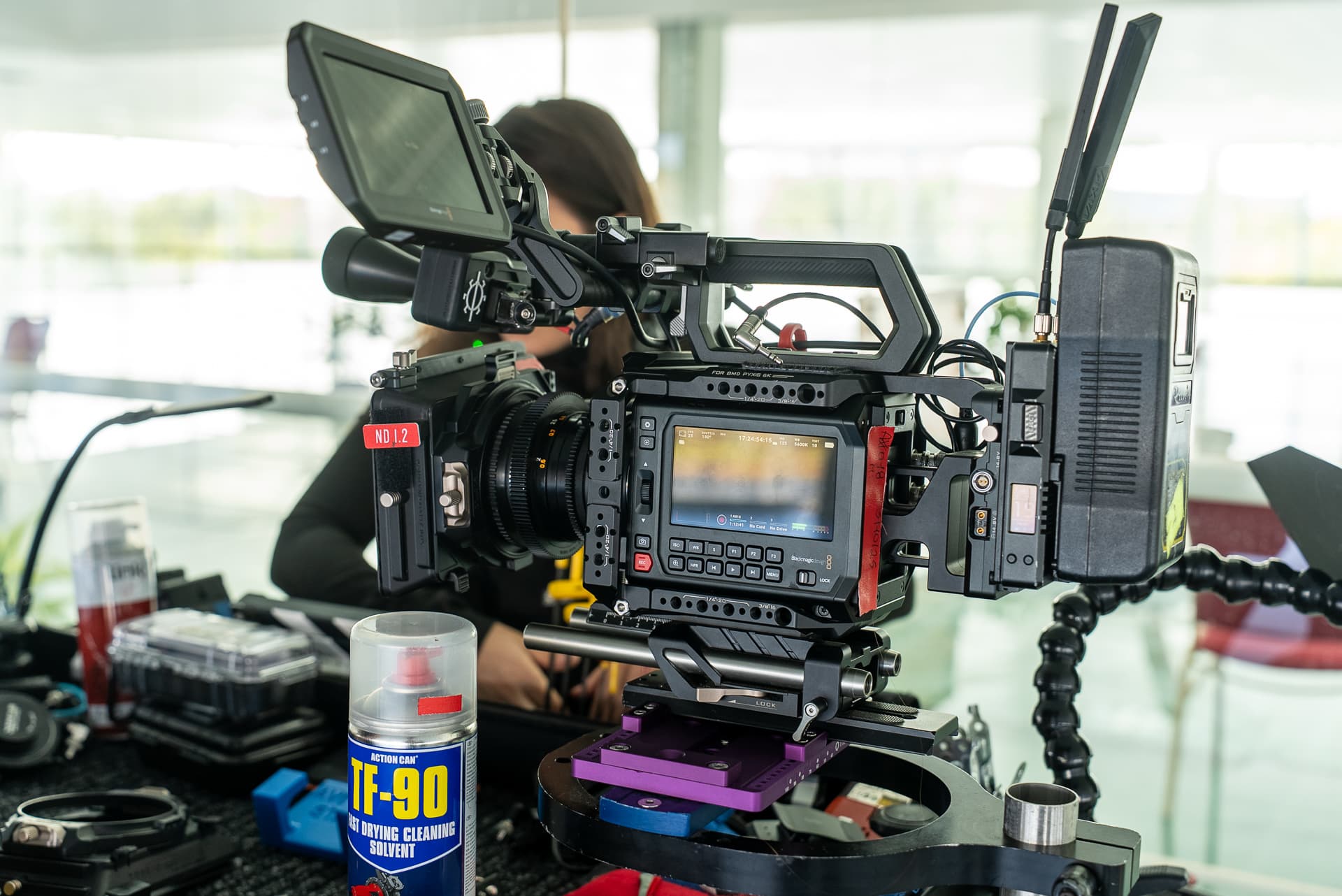 Having used the URSA Cine 12K LF, Westlake appreciated its large format RGBW sensor, and the PYXIS 12K offered it in a compact, nimble body.
“What I really like about this camera is that Blackmagic’s RGBW sensor always gives you the full image, no matter what RAW resolution you’re recording,” he says. “You’re never dealing with a crop, so your lens behaves exactly as you expect and you keep that big-format, shallow depth of field in every setup.”
“The PYXIS 12K can be used as a gimbal camera or an A camera, depending on how you rig it,” he adds. “Something like the Venice or an Alexa Mini is much bigger and so everything else on the rig gets bigger; you need bigger gimbals and it all takes longer to rerig. The PYXIS is at a sweet spot, being portable, usable and configurable. It suited us because we were doing a lot of different camera styles, including sticks work, gimbal work, and sliders. Having something so small worked well for us on that film.”
To add character, Westlake paired the camera with vintage Canon FD primes cine modded for an EF mount. “They add a halation to everything, a softness in rendering and glowing highlights, which you don’t get on modern glass. Every lens has its own personality.”
He chose the L-mount variant of the PYXIS, fixing the lenses with a locking adapter, “which gives the same usability as using proper PL. It doesn’t move when you’re focusing”.
“The short flange distance of the PYXIS means you can put pretty much any lens on it,” he adds. “I can also use native L-mount glass with this camera; you get the best of every world.”
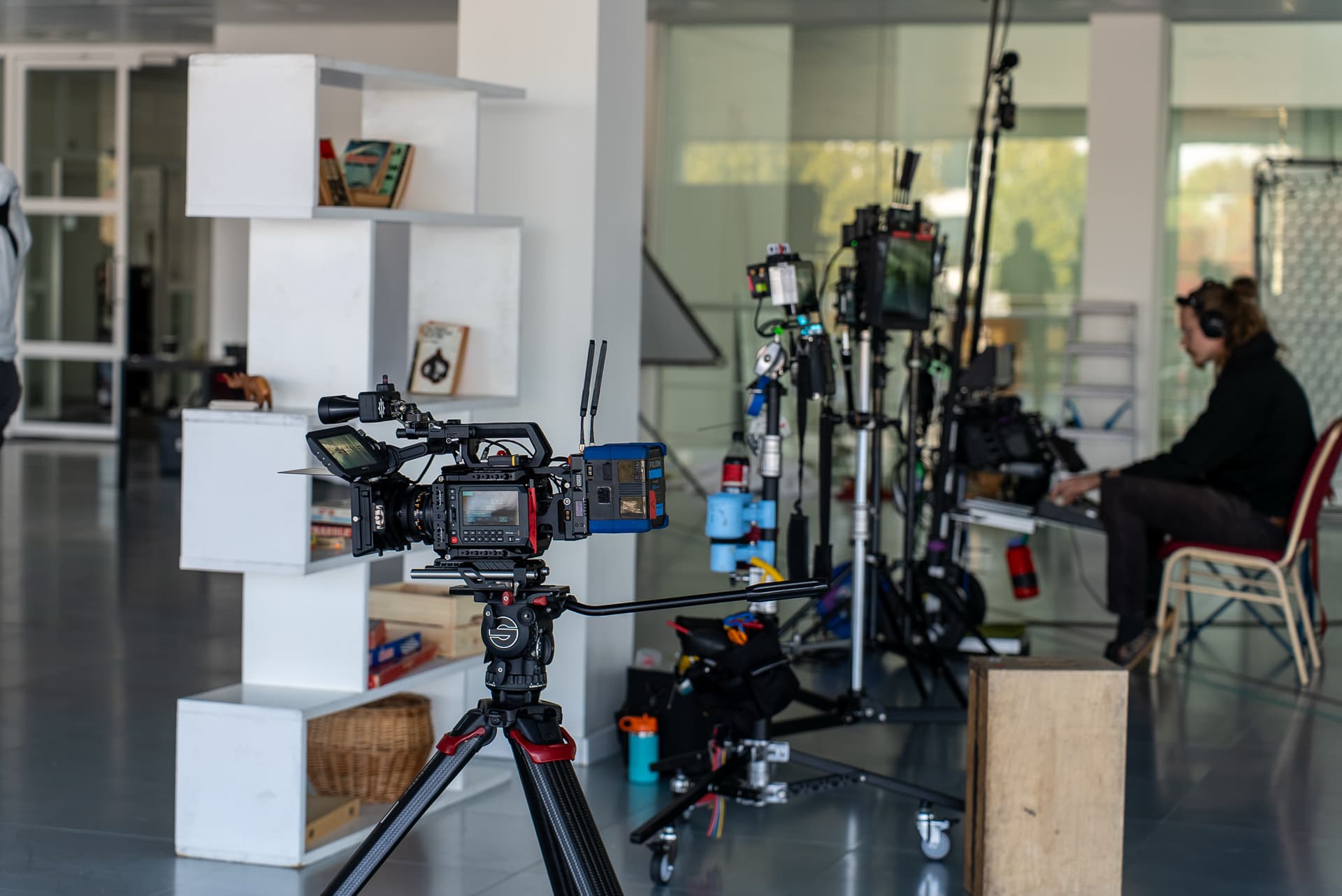 Everything went smoothly, with few retakes. “Unless something went wrong, it was usually only two takes for each shot because that was all we had time for,” says Westlake. “We had to make quite a few bold decisions.”
One bold choice was unconventional framing. “Sometimes we would let a scene just play out in a big wide shot. You’re not actually seeing the emotion on the characters’ faces because they’re ‘in the distance’.”
The full frame PYXIS helped those open spaces breathe. “You’re getting a much wider field of view from this sensor than you would on a Super 35 camera. Often our wides were on a 24mm or 35mm, rather than having to be on a 20mm all the time. That shallow depth of field really helped create separation in a wide shot.”
It also worked in tighter spaces. “If you’re in a small space but still want an epic wide shot, those lenses on full frame help you do that without feeling claustrophobic. One of my favourite lenses in that set was the 55mm. As you open up to T1.2, it suddenly goes very soft; it’s incredibly quirky. On the PYXIS, you still get a clear sense of where the characters are in the space. The 55mm wasn’t so long that you lost spatial awareness, but it still had that quirky, magical softness. It became perfect for our dream sequences.”
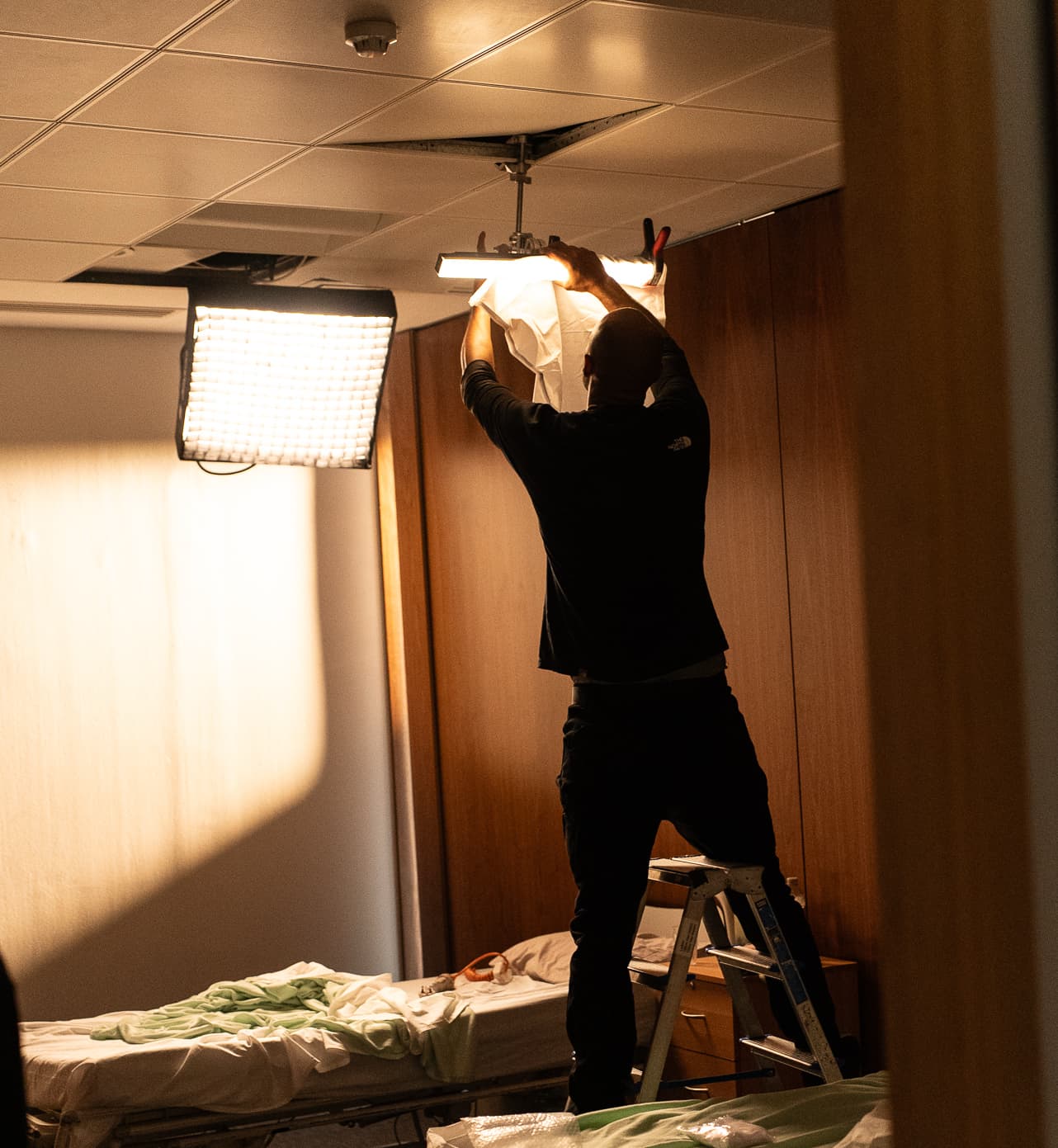 With a derelict office block standing in for the hospital, the location offered a host of tricky surfaces and narrow corridors. “There were windows all around and the reflective floors looked great, but as we wanted wide shots, we couldn’t add lighting everywhere,” says Westlake. “We used negative fill where we could, but the reflections made it difficult to place lights.”
The camera’s 16 stops of dynamic range allowed him to expose for faces while retaining texture. “It’s almost impossible to clip. There’s so much highlight and shadow range that you can trust it completely.”
Accurate skin rendition was also crucial. “We had a very diverse cast, so we wanted to faithfully reproduce all the different skin tones.”
To help, Aputure daylight units were bounced off walls. “With the RGBW sensor, the lighting retained subtle tonal transitions. Reds in the shadows, all those colours you can’t really see. Everything just has a really natural look.”
Westlake shot mainly at ISO 600 and was impressed at how clean shadows remained even in darker rooms. “We were pushing it and it stayed incredibly clean. We could lift the blacks without it falling apart.”
The DP used higher frame rates to emphasise tonal shifts in the film. “There’s one sequence, when all the families visit the patients, where my reference was the opening airport scene of Love Actually, slow motion shots of hugging and laughing. For our sequence, we shot at 75 frames per second.”
“We committed to shooting everything in 8K at higher frame rates on PYXIS, recording Blackmagic RAW at 12:1 and 8:1,” he says. “That gave us a sensible data footprint for the project while still delivering 12-bit RAW for grading color correction.”
Playback was seamless on Westlake’s MacBook with an M3 processor. “That’s basically a 100 megapixel still, 25 times a second, and it plays back smoothly. The editor was able to use 8K files directly, no proxy workflow was needed.”
The main challenges arose from time pressures and the set itself. “The location looked amazing, but it had no power, so everything had to run off batteries and generators,” Westlake recalls. “This meant hauling cabling up three flights of stairs and figuring out how to light the entire building once the sun went down, so that things like hair and makeup could still work.
“It was definitely tough. We spent a lot of time on logistics rather than being creative,” he adds. “Having a camera that handles whatever you throw at it makes all the difference when everything else is a challenge.”
Tags: Production BTS Blackmagic PYXIS 12K


RedShark 2020 @ All rights reserved.

Comments