5 minute read

From AI-assisted concept development to 3D animation and professional colour grading, Warsaw's Academy of Fine Arts is bringing industry-standard production technology into the classroom.
The boundaries between traditional art, digital media and film production are becoming increasingly difficult to define. Today's creative students might move between digital painting, 3D animation, video editing and AI-generated imagery within a single project. For educational institutions, keeping pace with these changing workflows presents a significant challenge.
At the Academy of Fine Arts in Warsaw (ASP), one of Poland's leading art institutions, the Faculty of Media Arts is embracing this convergence, combining traditional artistic education with the technologies increasingly found in professional production environments.
Working with ASUS, the Academy has equipped its New Media Department with a range of ProArt displays, a high-performance workstation and AI-assisted creative tools. The aim is to give students the freedom to experiment while developing practical skills that translate directly into the creative industries.
As creative workflows become more demanding, the hardware requirements of an art school are beginning to resemble those of a professional post-production facility.
High-resolution video editing, complex 3D scenes, multi-layered digital artwork and colour-critical finishing all place considerable demands on computing hardware. Add AI-assisted image generation and increasingly sophisticated creative applications into the mix, and the need for reliable, responsive systems becomes even more important.
For Piotr Kucia, PhD, Dean of the Faculty of Media Arts, the challenge is about more than simply providing faster computers.
"We can't ask students to be ambitious if the tools hold them back," he explains. "What we need is industry-level hardware: reliable, accurate, and flexible enough to support every kind of creative expression."
It's a philosophy that will be familiar to anyone working in film and television production. Whether editing a complex timeline, rendering an animation or evaluating a final grade, technology should enable the creative process rather than interrupt it.
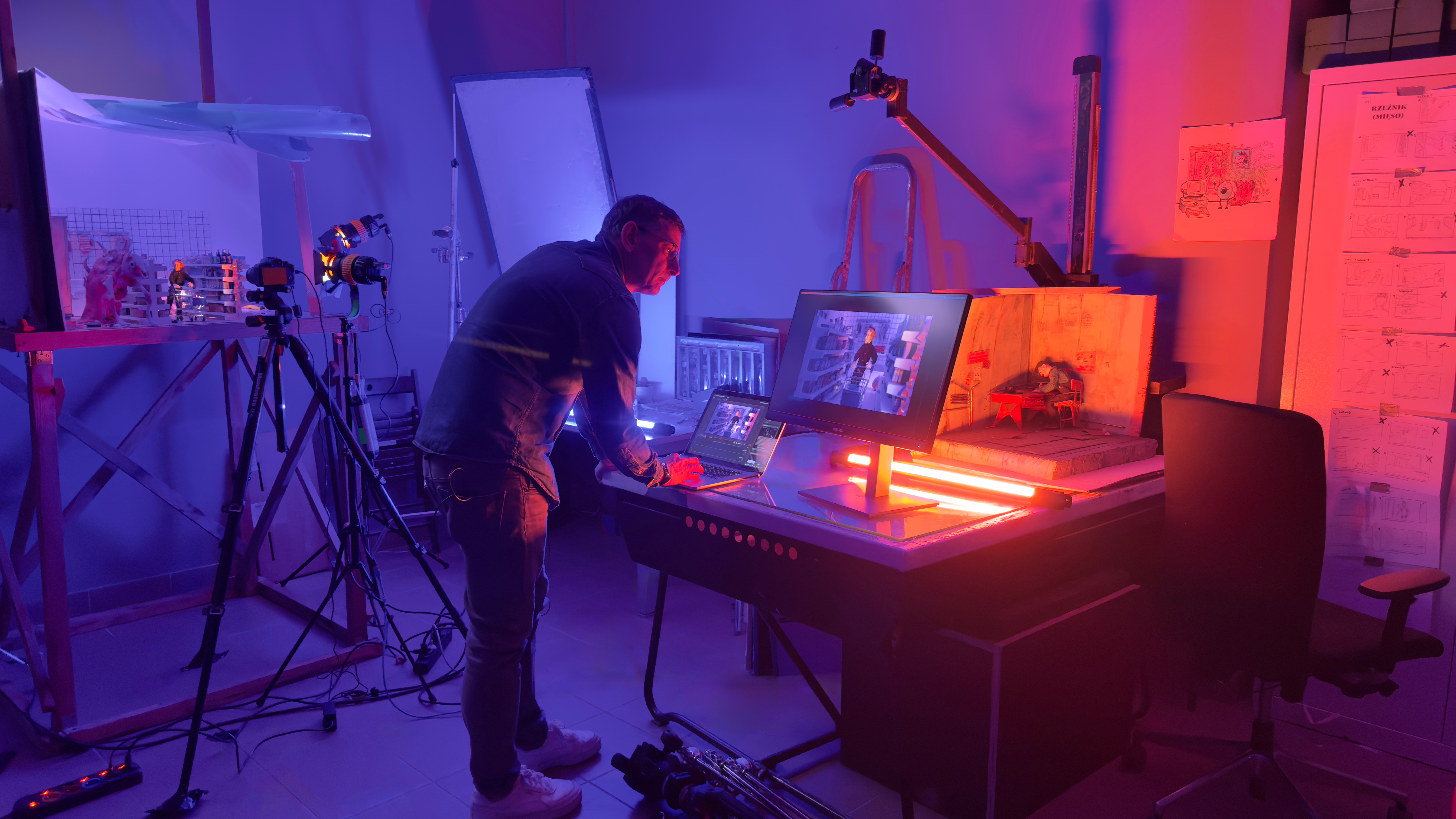
At the centre of the Academy's new setup is a Komputer Aktina Creator workstation, Powered by ASUS, designed to handle the varied demands of modern digital content creation.
Students can move between 3D animation, video editing, digital painting and AI-assisted applications, often working with several resource-intensive tools simultaneously.
For educational environments, this flexibility is particularly important. Unlike a dedicated professional workstation configured around a single application or production pipeline, a teaching system needs to accommodate a wide range of software and creative approaches.
The workstation also supports experimentation with ASUS MuseTree, an AI-powered image generation application that introduces another dimension to the students' creative process.
"It's about keeping the flow alive," says Kucia. "If the machine can keep up with the student, then their creativity isn't interrupted."
Generative AI is becoming an increasingly important consideration for creative education, raising questions about how emerging tools should fit alongside established artistic disciplines.
At ASP, the emphasis is on using AI to support experimentation and concept development rather than treating it as a replacement for traditional creative skills.
ASUS MuseTree allows students to generate and explore visual ideas, experiment with different directions and rapidly iterate concepts before committing to more detailed production work.
For students developing animation, digital environments or visual narratives, this kind of workflow can offer a useful starting point for exploring compositions, styles and alternative creative approaches.
"MuseTree doesn't make art for you; it opens up possibilities," says Andrea Chodera-Isakau, a researcher and educator at ASP. "It's an intelligent partner in the early stages of visual thinking."
Importantly, AI-generated imagery is treated as part of a broader creative workflow, where artistic judgement, technical understanding and the ability to critically evaluate results remain essential.
While processing power is essential for demanding creative applications, display technology is equally important, particularly for students working in animation, video production and digital imaging.
Colour management is a fundamental part of professional post-production, yet it can be difficult to teach effectively without access to suitable monitoring equipment.
A project that looks convincing on an uncalibrated display may appear very different when viewed on another screen or delivered in a different colour space. Understanding these differences is an important part of preparing students for professional production environments.
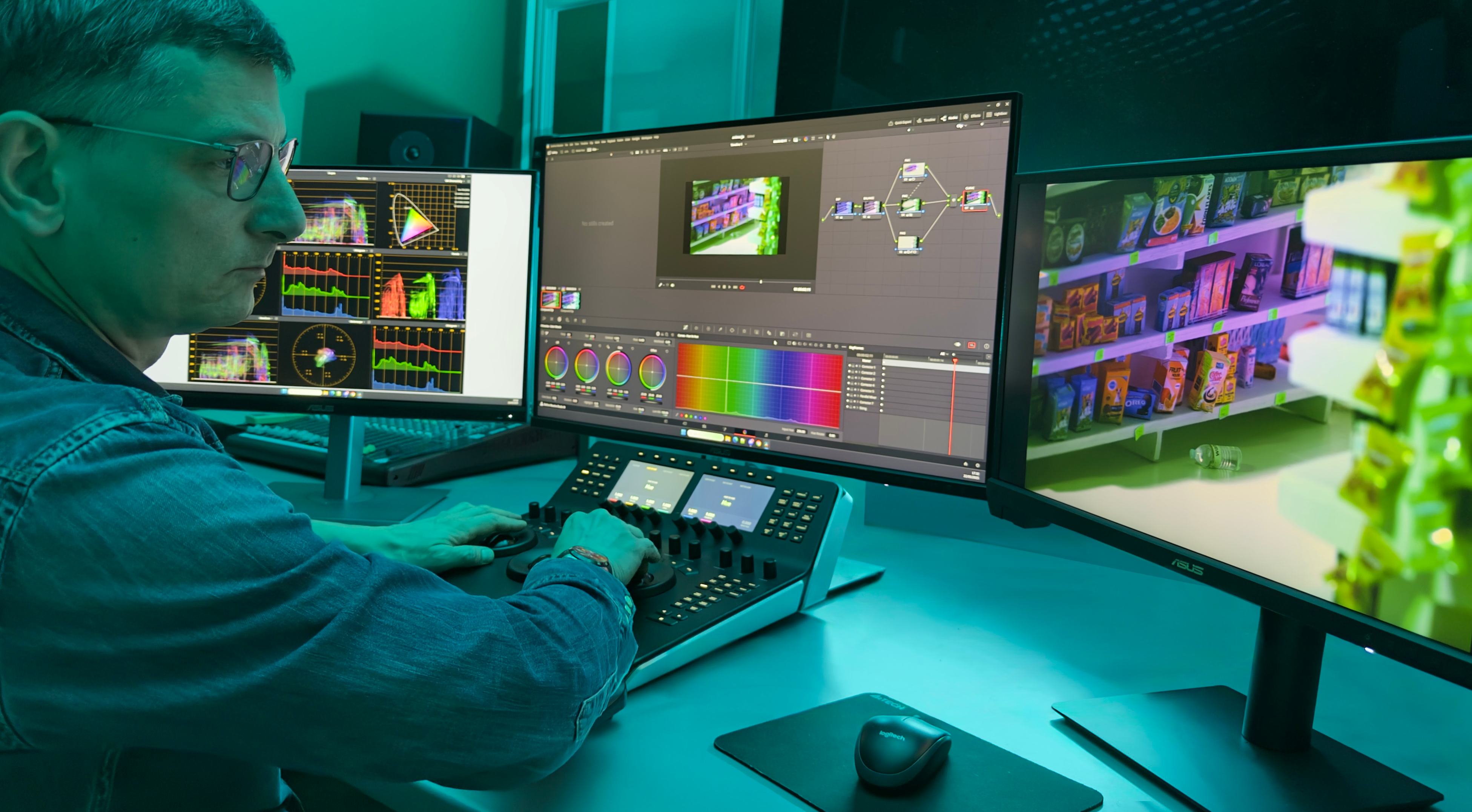
To address this, ASP has incorporated several ASUS ProArt displays into its facilities, each serving a different role in the creative workflow.
The 32-inch ASUS ProArt Display PA329CRV provides a 4K workspace for high-resolution digital painting, animation, video editing and colour-sensitive visual work.
Its wide-gamut colour capabilities and factory-calibrated accuracy, with a specified Delta E below 2, make it particularly useful for projects where subtle differences in colour and tone matter.
For students working with detailed imagery, the combination of screen size, resolution and colour accuracy provides room to examine their work closely while maintaining a consistent visual reference.
This becomes especially relevant when evaluating AI-generated imagery, where fine textures, gradients and subtle tonal variations may require careful inspection and further refinement.
For more specialised video applications, the Academy uses the ASUS ProArt Display PA24US.
This 24-inch 4K HDR display includes 12G-SDI connectivity, making it particularly relevant to professional video workflows where SDI remains an established interface for connecting production and monitoring equipment.
The PA24US also features a built-in motorised colourimeter, allowing users to calibrate the display and maintain colour consistency.
For students learning colour grading and finishing, access to this type of equipment provides valuable experience with some of the monitoring principles and connectivity standards used in professional post-production.
It also reinforces an important lesson: accurate monitoring is not simply about how good an image looks, but about understanding how that image is represented throughout the production pipeline.
Not every task requires a dedicated reference display. For everyday creative applications, ASP also uses the ASUS ProArt Display PA278CGV.
The 27-inch QHD monitor provides a flexible workspace for editing interfaces, application panels, secondary monitoring and general digital content creation.
Its colour-accurate IPS panel, high refresh rate and eye-care features make it well suited to extended working sessions, where students may spend hours moving between different applications.
Together, the three displays give the department a flexible monitoring environment, from general-purpose creative work to more specialised colour-critical applications.
The wider significance of ASP's investment goes beyond the individual workstations and displays.
Film, television, animation and digital content production are becoming increasingly interconnected. Artists entering these industries are expected to understand not only their chosen discipline but also the technologies and workflows that connect different stages of production.
An animator may need to understand colour management. A digital artist might work with AI-assisted concept tools. An editor may be expected to handle high-resolution media, complex effects and multiple delivery formats.
By introducing professional-grade technology during their education, ASP is helping students become familiar with these workflows before they enter the industry.
Just as importantly, the Academy is maintaining its emphasis on artistic experimentation. Technology is being introduced as a means of expanding creative possibilities, rather than defining what students should create.
"We're not here to train button-pushers. We're here to support the kind of artists who invent new visual languages," says Kucia.
"That takes freedom, but also structure. It takes experimentation, but also precision. With ASUS, we found a partner who understands both."
As AI and increasingly sophisticated digital production tools continue to reshape the creative industries, educational institutions face the challenge of preparing students for workflows that are still evolving.
For the Academy of Fine Arts in Warsaw, the answer is to combine artistic freedom with practical experience of the technologies used in modern production, giving the next generation of digital artists the skills and confidence to explore what comes next.


RedShark 2020 @ All rights reserved.

Comments