2 minute read

Astrophotographer Andrew McCarthy persuaded Artemis II commander Reid Wiseman to shoot bracketed moon bursts from orbit, and the atmosphere-free data has produced the most detailed color images ever taken of the lunar far side.
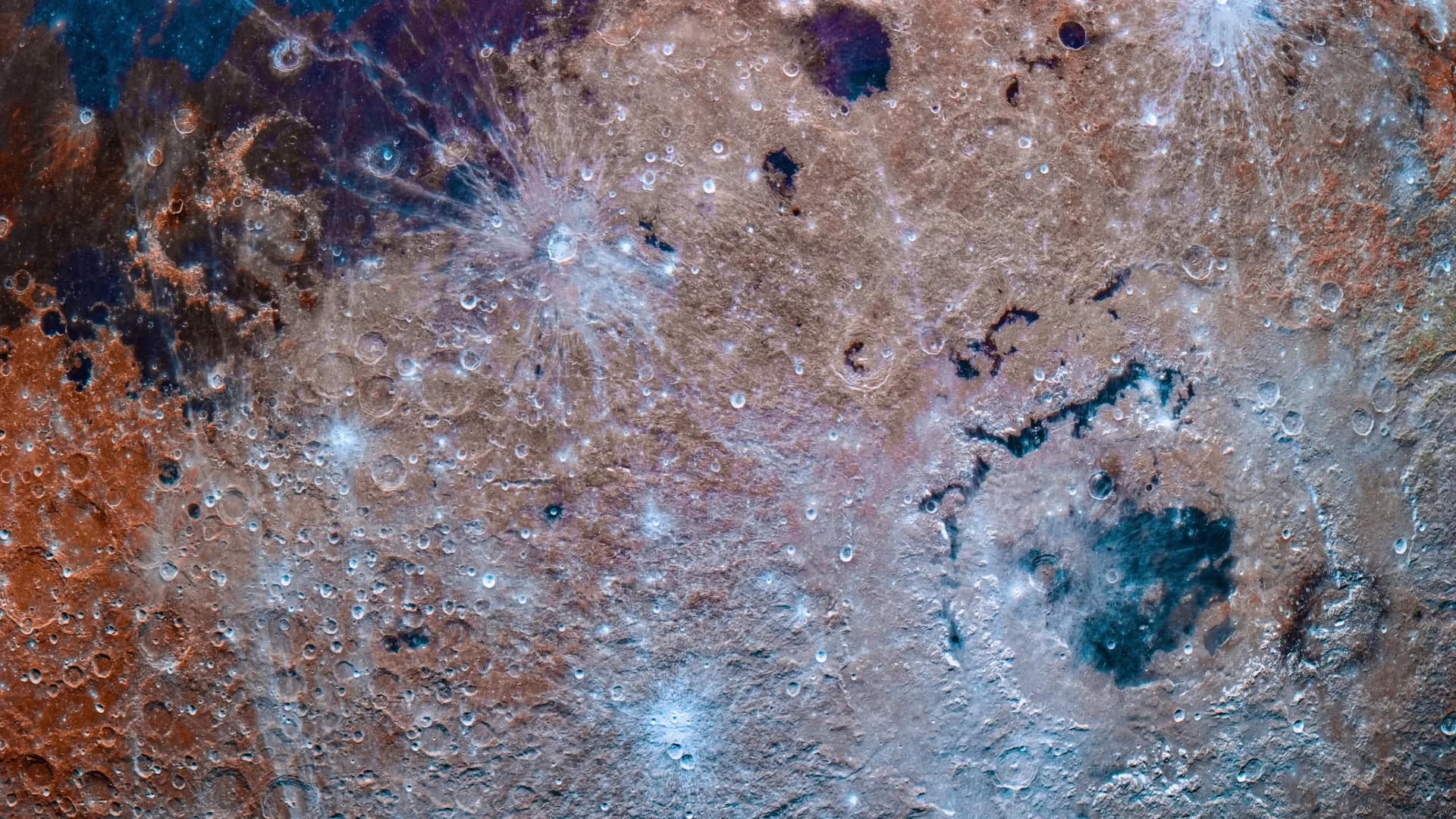
Astrophotographer Andrew McCarthy is known for turning the moon into something it decidedly isn't to the naked eye; a colorful, mineral-rich landscape that looks more like a geological survey than the grey orb hanging in the night sky. His technique relies on stacking hundreds or thousands of images together to suppress noise and amplify the subtle spectroscopic differences between different surface materials. The result is both scientifically accurate and visually arresting.
As Space.com details, just weeks before the Artemis II launch window, McCarthy DM'd mission commander and NASA astronaut Reid Wiseman with a proposal: could Wiseman shoot the moon the same way McCarthy shoots the moon?
It turns out he could. "He was immediately onboard," McCarthy said. "It was a dream come true, obviously, for me, but I saw it as this very unique opportunity."
McCarthy worked up a plan alongside Wiseman and NASA's lunar photography team, the same group that had trained the Orion crew on their camera kit. As regular readers will already know, the primary workhorse was a Nikon D5 DSLR paired with an 80–400 mm Nikkor lens, a decade-old body chosen specifically for its exceptional high-ISO performance.
Wiseman shot burst sequences at varying exposures throughout the flyby, generating a dataset McCarthy could stack back on Earth.
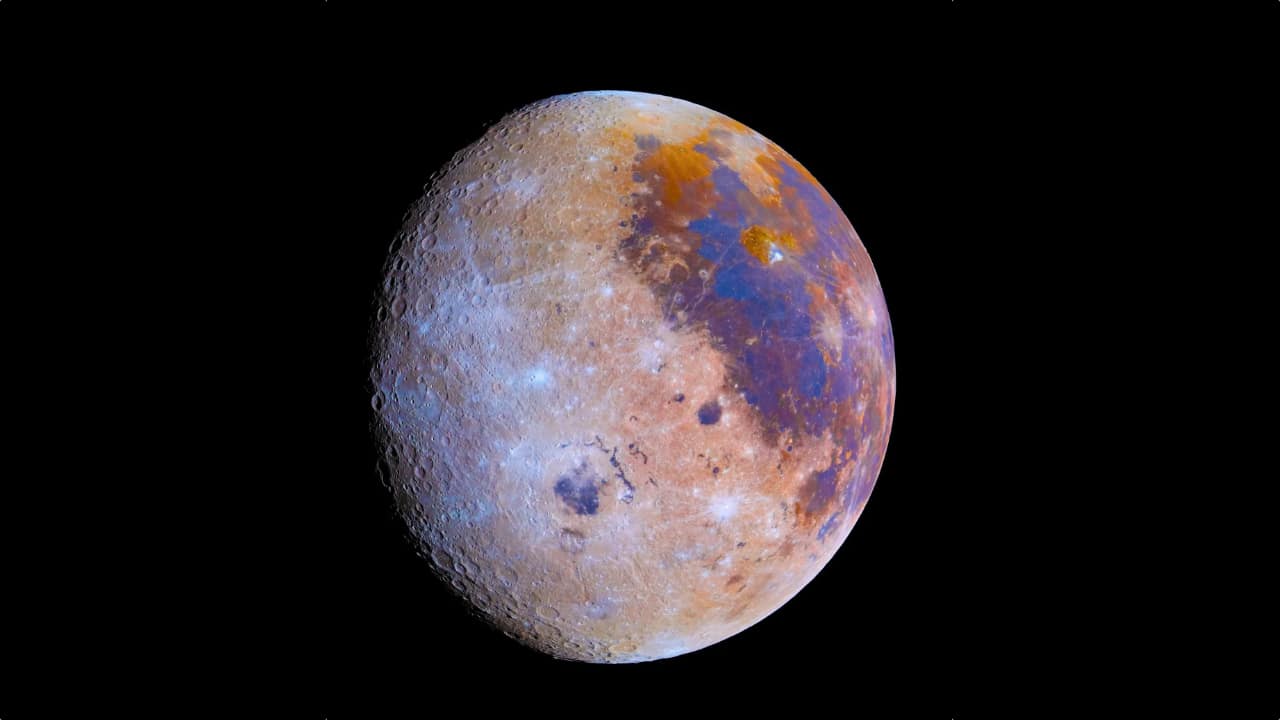 Only a tenth of the normal number of shots was needed for the final composite due to the lack of atmospheric interference. (Image credit: Andrew McCarthy / cosmicbackground.io)
It's important to note that the color differences revealed aren't artistic choices, McCarthy explaining that human eyes simply don't have the color sensitivity to make them out on their own.
"When I'm stacking those photos together, I'm able to average out that noise, and then that noise vanishes," he says. "That's why you hear astrophotographers talk about the signal-to-noise ratio — when you stack, the signal stays the same, but the noise diminishes."
What nobody had done before was apply the technique to imagery from the lunar far side. NASA's Lunar Reconnaissance Orbiter has some color data, but at a resolution that doesn't allow the kind of saturation processing needed to show genuine geological variation. Basalts rich in titanium tend blue; older, iron-heavy material darkens toward brown and red.
And there was another important benefit to using shots taken from Artemis II. Shooting anything from Earth adds another layer of difficulty: the atmosphere introduces a color cast and forces McCarthy to work with far more frames, sometimes 150 to 200 for a single result, or thousands for a mosaic.
From lunar orbit, with no atmosphere in the way, Wiseman needed to shoot only around 50 exposures, and McCarthy found that just 10 to 15 of them were sufficient for the process to work. "It's the best data I've ever worked with," he said.
More on McCarthy and his work at cosmicbackground.io.
Tags: Cameras Moon Nikon D5 Artemis Astrophotography


RedShark 2020 @ All rights reserved.

Comments