4 minute read

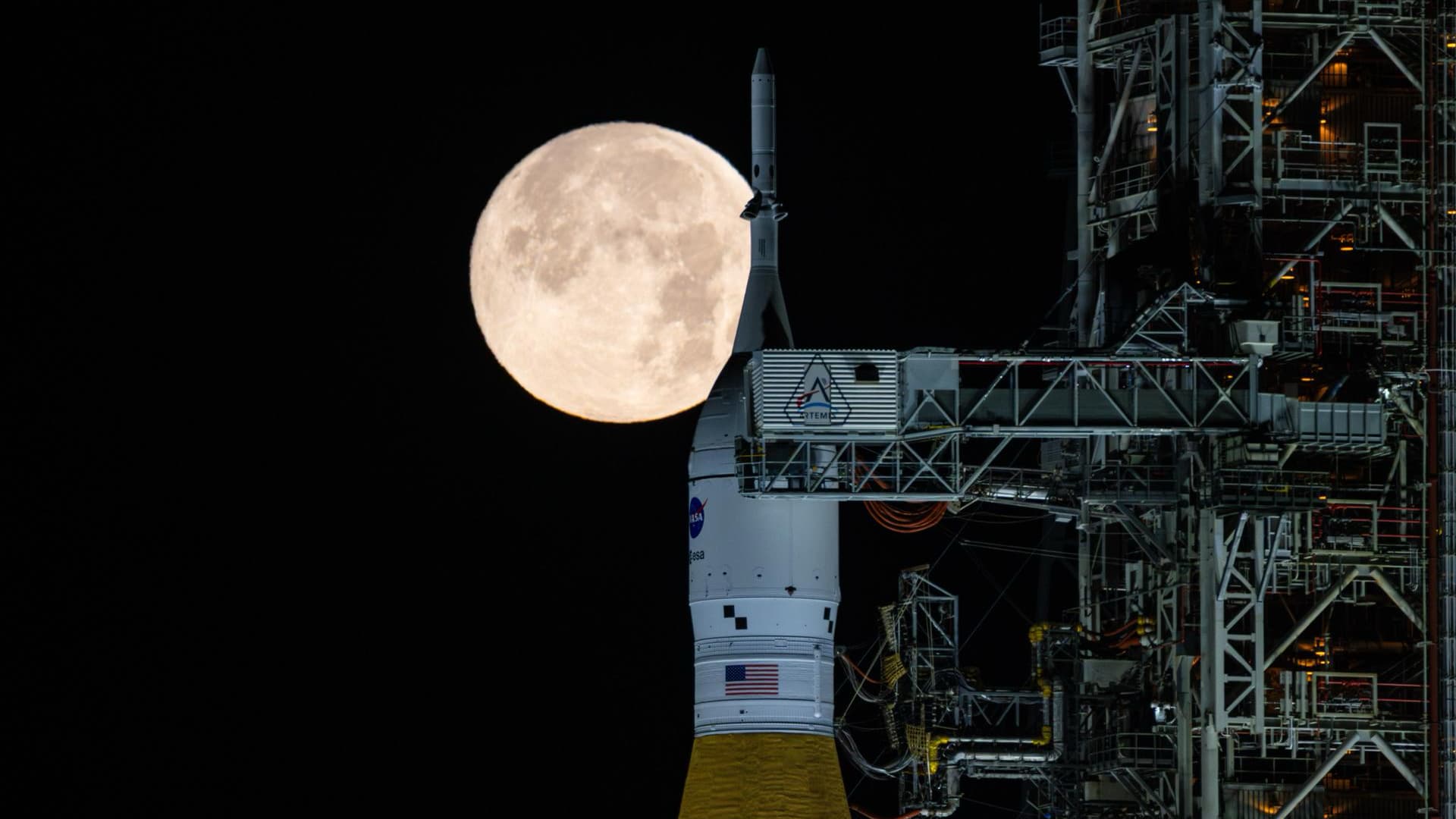
With Artemis II hopefully launching April 1, NASA is sending a 10-year-old Nikon D5 DSLR to the Moon — and there are several very good reasons why.
[Update: It turns out that a Nikon Z9 made it onto the Artemis II launch manifest after all. Read more here.]
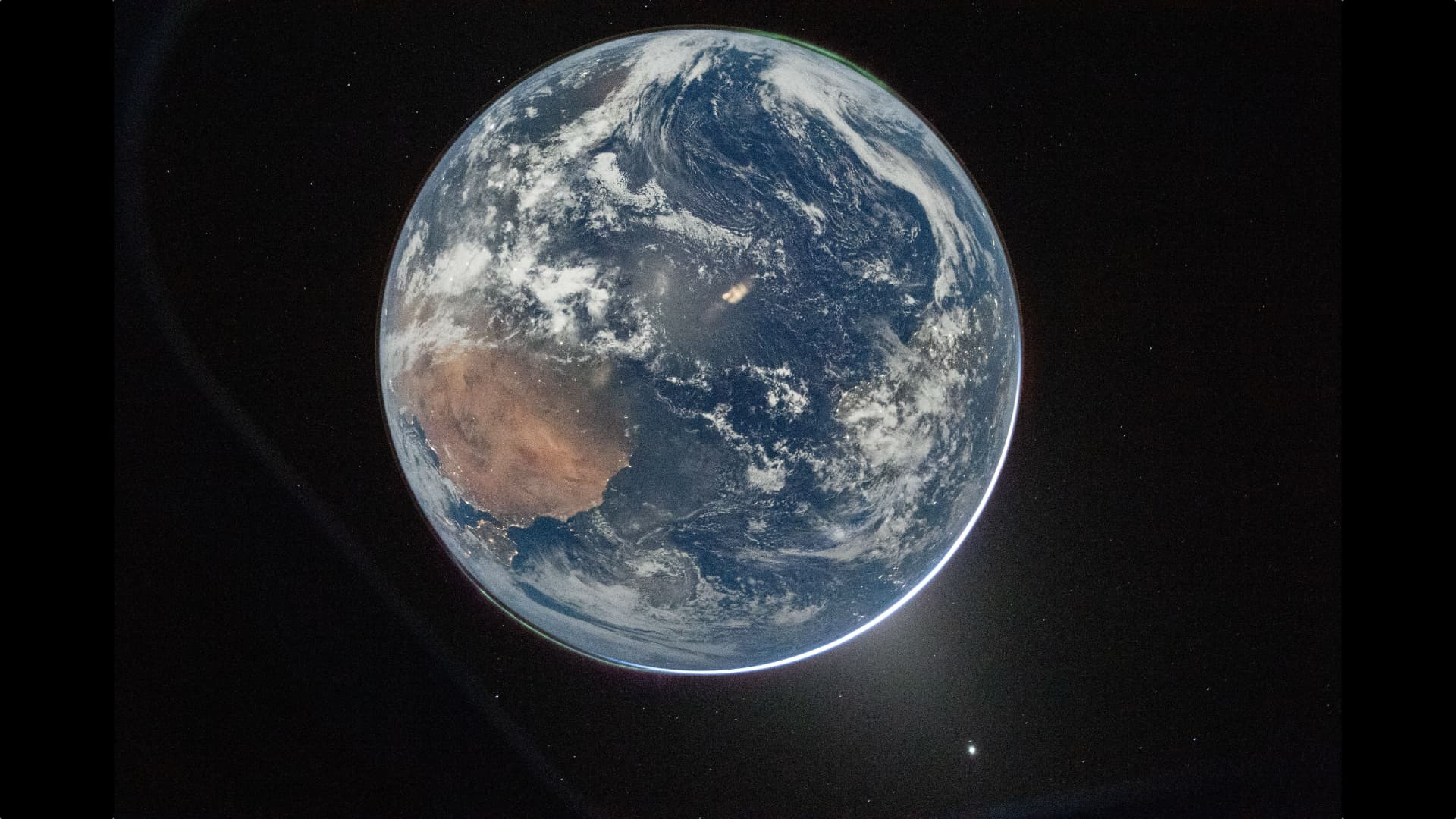
Artemis II is possibly the most consequential space mission for decades. It is the first crewed deep-space flight since Apollo 17 in 1972 and is looping around the Moon on a free-return trajectory as part of its 10-day mission.
With the Artemis II launch window opening on April 1, one detail that has surprised many is that the crew isn't flying with Nikon's latest mirrorless hardware. Rather, they’re taking a DSLR that was released in 2016, as Artemis II commander Reid Wiseman confirmed in a Facebook post.
Two Nikon D5 bodies (“Old school Nikon,” says Wiseman) will be aboard the Orion spacecraft, equipped with wide-angle and telephoto lenses.
The choice wasn't arbitrary, either. According to NASA's Orion Imagery Working Group planning document published in December 2023, the D5 was selected for qualities that matter specifically once you get beyond Earth’s orbit (which, let’s not forget, no human has ventured beyond for over half a century). The camera's high dynamic range handles the extreme contrast between sunlit surfaces and deep shadow, its radiation resistance is well-documented beyond low Earth orbit, and its ISO range extends to an expanded equivalent of 3,280,000.
This gives it a significant low-light advantage over newer models. For comparison, the Nikon Z 9, which many would have expected to be in pole position for a mission such as this, tops out at ISO 102,400.
That is a critical performance advantage when it comes to Artemis II and shooting in the darkness of deep space, and especially the brief transit around the far side of the Moon.
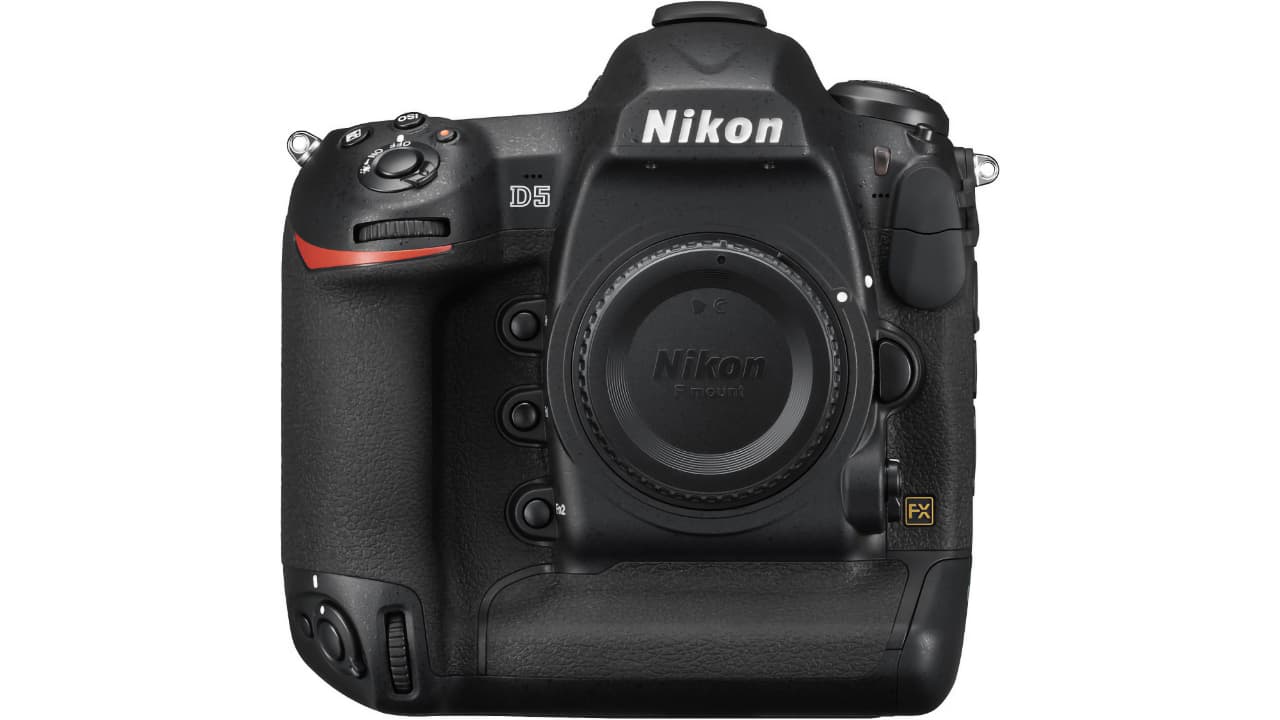 10 years old and counting...The Nikon D5
The deeper reason, however, looks to be certification. Nikon's involvement with NASA goes back to Apollo 15 in 1971, and the company has supplied cameras to the ISS continuously since 1999. It knows as well as anyone therefore that all hardware sent beyond low Earth orbit must survive launch vibration, thermal extremes, vacuum exposure, and sustained radiation bombardment. This is a qualification process that takes years and must be completed before any mission window. The D5 has that history; the Nikon Z 9, despite being in regular use on the International Space Station since 2022, has not.
NASA confirmed to PetaPixel that "future Artemis missions will incorporate next-generation camera systems currently undergoing spaceflight qualifications,” and modified Z 9s are being developed for use on the lunar surface in future Artemis missions. But for Artemis II, old school it (mostly) is
The D5s won't be the only cameras onboard. Video from the D5s can be routed through Orion's onboard ZCube encoder, with selected footage compressed and sent to ground during the mission — mission planning notes that 4K files will likely have to wait until splashdown, and recommends limiting in-flight downlinks to 1080p or 720p. Ten 256 GB CompactFlash cards are allocated for D5 storage.
Then there are the GoPros. Under another Space Act Agreement announced in 2021, National Geographic is flying compact, lightweight audiovisual hardware inside Orion for a multi-platform documentary project. The planning document confirms these are handheld GoPros that will be operated by the crew throughout the mission with no in-flight downlink.
No word yet on what GoPro units will be taken on the mission. If the Z 9 has yet to qualify, it certainly won’t be one of the new GP3 processor-based units, however tempting a prospect that is. Equally, it’s unlikely that they will be as old as the D5s, but if they were that would be the HERO5. Somewhere in the middle, we’d guess.
And, in a change of long-standing policy, all NASA crews from Crew-12 for the ISS and now Artemis II will be allowed to take their own smartphones into space with them.
Finally, there are fixed cameras mounted throughout the Orion interior and exterior will handle engineering documentation, tracking solar array deployment, spacecraft separation, and vehicle inspections. In total, 28 cameras will be supporting Orion during Artemis II.
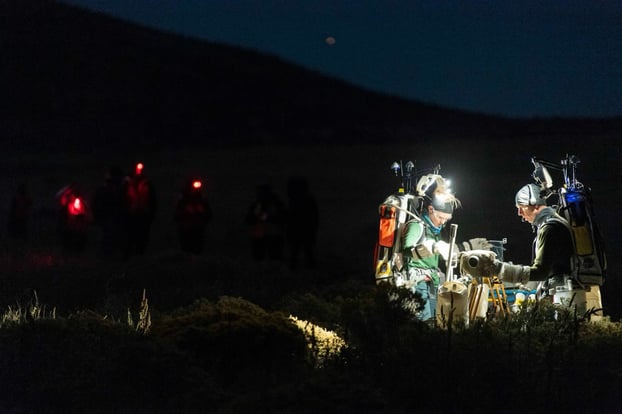 NASA astronauts Zena Cardman and Drew Feustel practice using an early design of the Handheld Universal Lunar Camera during the Joint Extravehicular Activity and Human Surface Mobility Test Team (JETT) Field Test 3 in Arizona. NASA / Bill Stafford
NASA will have to move on to the Z 9 eventually. Nikon and NASA's Marshall Space Flight Center have been developing the Handheld Universal Lunar Camera (HULC) — a modified Z 9 — under a Space Act Agreement signed in 2024. The HULC features redesigned circuitry to withstand radiation, a custom EVA grip connecting via the camera's 10-pin terminal and helping the camera’s operations using thick spacesuit gloves, modified firmware, and a NASA-developed thermal blanket to protect against lunar dust and temperature extremes. Astronauts from NASA, ESA, and JAXA have been training with the system, including geological field tests in Lanzarote and simulated moonwalks in Arizona.
In a rejigged schedule, Artemis IV is now planned to attempt a Lunar landing in early 2028. During the Apollo program, crewmembers took over 18,000 photos using modified large-format cameras. However, those cameras didn’t have viewfinders, so astronauts were trained to aim the camera from chest-level where it attached to the front of the spacesuit. They also had to use separate cameras for photos and video, including the memorable footage of the Lunar Lander leaving the Moon for the last time.
The new lunar camera will have a viewfinder and video capabilities to capture both still imagery and video on a single device. This will hopefully see much use, as with its latest redrawing of the Artemis schedule and replanning of the Artemis missions, NASA now plans to establish “an enduring presence” on the Moon in the upcoming years.
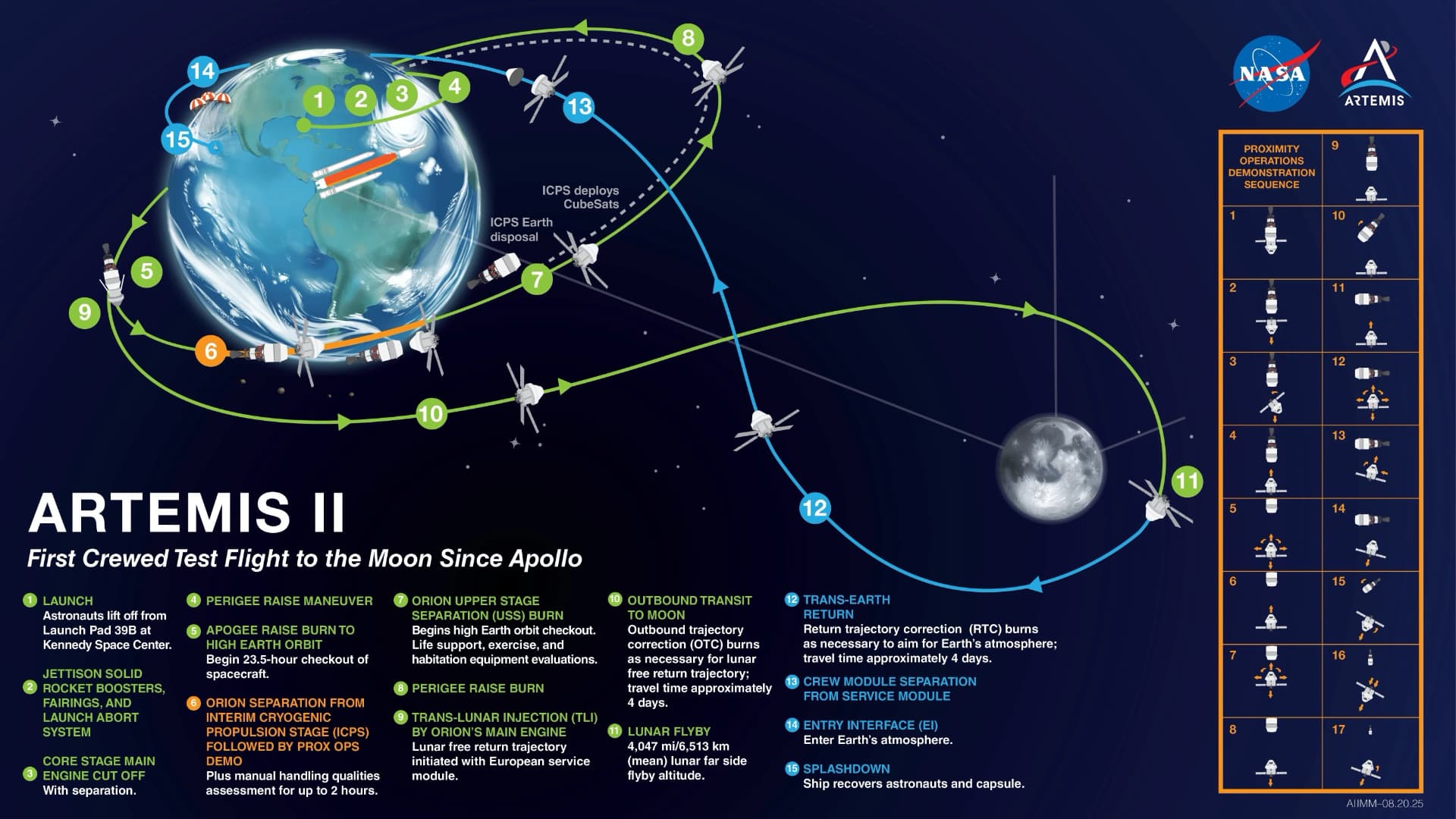 Launch is targeted for no earlier than 6:24 p.m. EDT on Wednesday, April 1, with a two-hour window and further opportunities through April 6.
The 10-day mission will carry NASA astronauts Reid Wiseman (commander), Victor Glover (pilot), Christina Koch, and CSA astronaut Jeremy Hansen on a free-return trajectory around the Moon and back to Earth. The key milestones, assuming an April 1 launch:
Live coverage throughout the mission on NASA+, YouTube, and Amazon Prime. Mission tracking at nasa.gov/trackartemis.
Tags: Production Space NASA GoPro Nikon D5 Artemis Nikon Z9


RedShark 2020 @ All rights reserved.

Comments