
2 minute read

Netflix has already faced criticism for the use of genAI in a couple of its productions, and so it is looking to get ahead of the curve by laying down strict rules for its use in the future.
As ever, when Netflix does something everyone notices, which tends to happen when you have something north of 300 million subscribers around the world. The recent use of genAI in Argentine sci-fi show The Eternaut was remarked on by co-CEO Ted Sarandos in its recent earnings statement, Sarandos saying that it helped the production team to complete a sequence showing the collapse of a building in Buenos Aires 10 times faster than if they had used tradition vfx.
"The cost of it would just wouldn't have been feasible for a show in that budget," he said. '"That sequence actually is the very first [generative] AI final footage to appear on screen in a Netflix original series or film."
'Footage' might be doing a lot of work in that sentence. Netflix was also accused of using genAI to manipulate some photographs of convicted murderer Jennifer Pan in the true crime documentary What Jennifer Did last year. It has so far still not commented on that, but what it has just done is release some strict guidelines on the use of genAI in future productions.
A new post on Netflix' Partner Help Center, Using Generative AI in Content Production, sets out the full principles. Its essence is in the following two paragraphs.
To support global productions and stay aligned with best practices, we expect all production partners to share any intended use of GenAI with their Netflix contact, especially as new tools continue to emerge with different capabilities and risks.
Most low-risk use cases that follow the guiding principles below are unlikely to require legal review. However, if the output includes final deliverables, talent likeness, personal data, or third-party IP, written approval will be required before you proceed.
The principles are thus:
Here's a handy matrix that illustrates what is currently greenlit without any issues and what needs to be escalated up to a company representative so that written approval can be granted.
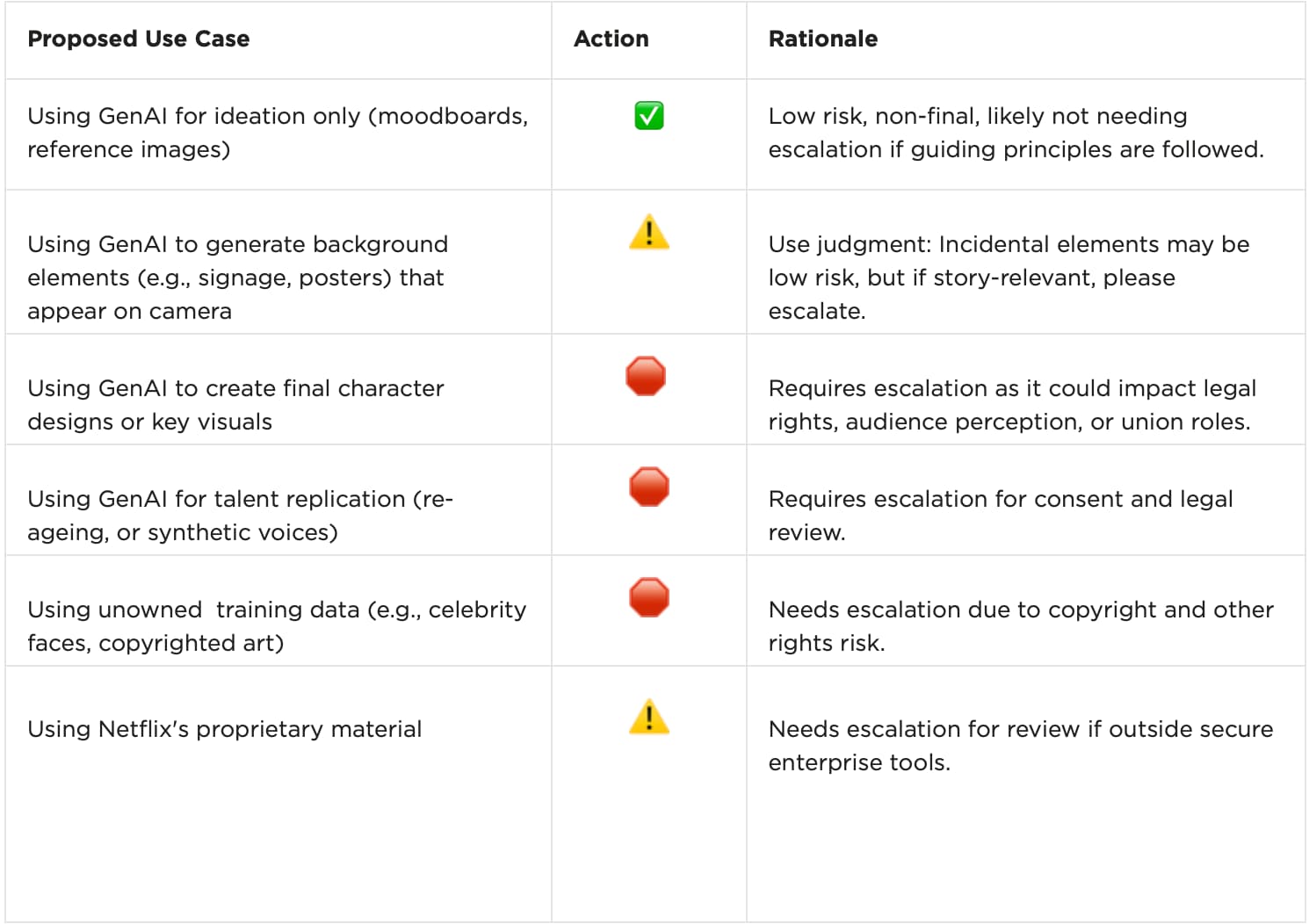
The generative AI guidelines extend out to include vendors and production partners. Custom genAI workflows featuring multiple tools must follow the guidelines during each step of the process.
What will be interesting to note from here on in is how Netflix discloses this information. Public opinion on genAI use is currently strongly negative, as the furore that our article on The Brutalist's use of AI earlier this year proved. Once a use of genAI in a production is escalated to the company, will it feel obligated to mention that somewhere in the credits? Or will it just keep the use on record in case it is challenged in public forums, as with What Jennifer Did?, or in the courts. Given the speed with which the technology is progressing, you get the feeling it won't be long before we find out.
Tags: Production AI Netflix


RedShark 2020 @ All rights reserved.

Comments