2 minute read

Two compact bi-color LEDs from Godox's ML series, tested in the real world. The ML80Bi and ML150Bi share a lot of DNA, but which one is right for your kit? Jesse Calis from JeCal Productions gives us his verdict.
There's a particular kind of light that every solo shooter or small crew quietly fantasizes about: one that is powerful enough to actually do the job, light enough to actually bring it along, and versatile enough to not need three others set-up alongside it. Godox's ML80Bi and ML150Bi are making a credible play for that slot.
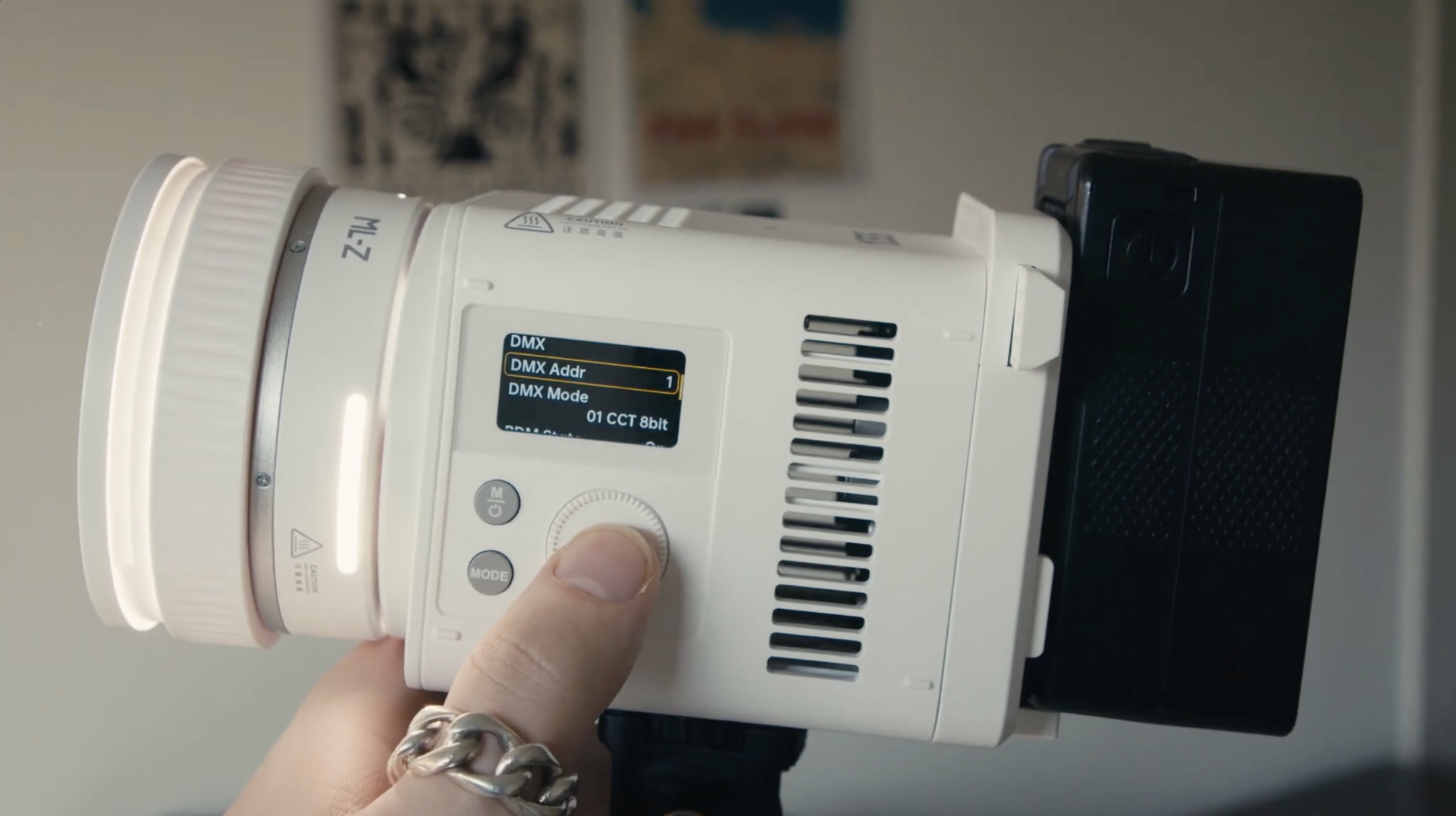
Both lights sit within Godox's ML series modular ecosystem and share a lot of common ground. They're bi-color, running from 2800K to 6500K, with 0–100% dimming and 11 built-in FX modes covering everything from lightning and candle flicker to TV and welding effects. Control is via the onboard controls, the Godox Light app over Bluetooth and NFC, or — for the ML150Bi — DMX and RDM for more demanding broadcast and studio environments. CRI and TLCI both come in at 96, which is a solid result at this price point.
The key difference between the two is output. With the ML-Z zoom lens reflector fitted, the ML80Bi reaches 29,600 lux at 1 m (3.3 ft), performance Godox compares to a conventional 100W fixture. Meanwhile, the ML150Bi pushes that up to 61,054 lux at the same distance. Weight is sensibly proportionate: the ML80Bi comes in at 519 g (1.1 lb), while the ML150Bi is 770 g (1.7 lb).
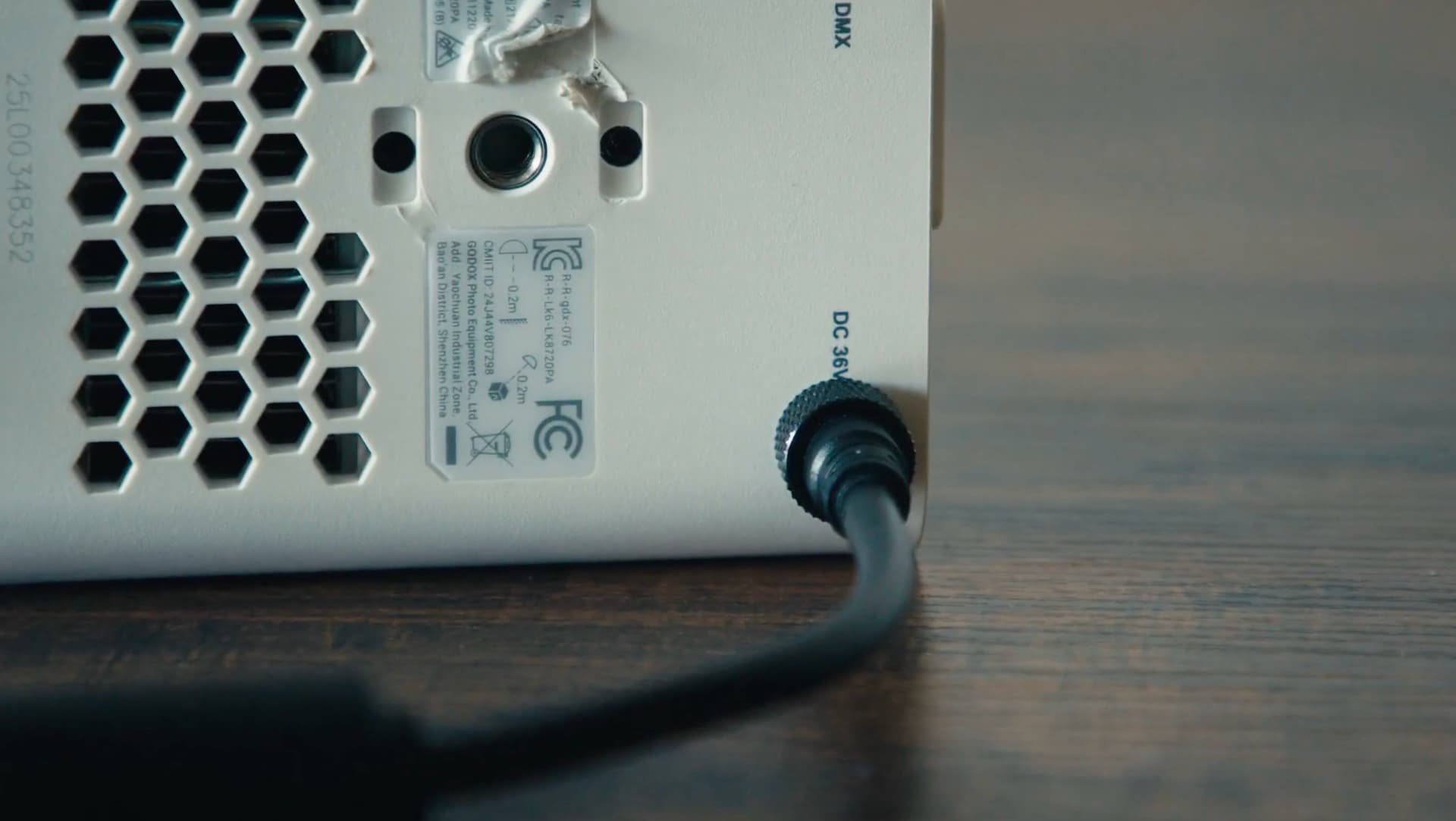 Do not get these muddled up! This is the ML150Bi; the ML80Bi requires 20V input
One thing worth flagging clearly: the two lights have different power requirements, and mixing up the chargers could cause real damage. The ML80Bi requires 20V input, while the ML150Bi requires 36V. If you're running both make sure you're using the correct charger for each. Beyond the DC adapters, both support NP-F batteries via an adapter plate, and the ML150Bi ships with a V-mount adapter plate as standard. The dedicated ML-BA battery runs the ML80Bi at full output for over 60 minutes.
The appeal of both lights is largely about that combination of portability and flexibility. The ML80Bi will sit happily on a lightweight stand without drama, and the modular Godox Mount system means there's a wide range of accessories — softboxes, reflectors, lanterns, beam shapers, barndoors, diffusion panels — that snap or mount on without fuss. I can have a full lighting setup built in minutes, which, for anyone who's wrestled a traditional softbox onto a light in a hurry, is not a trivial claim.
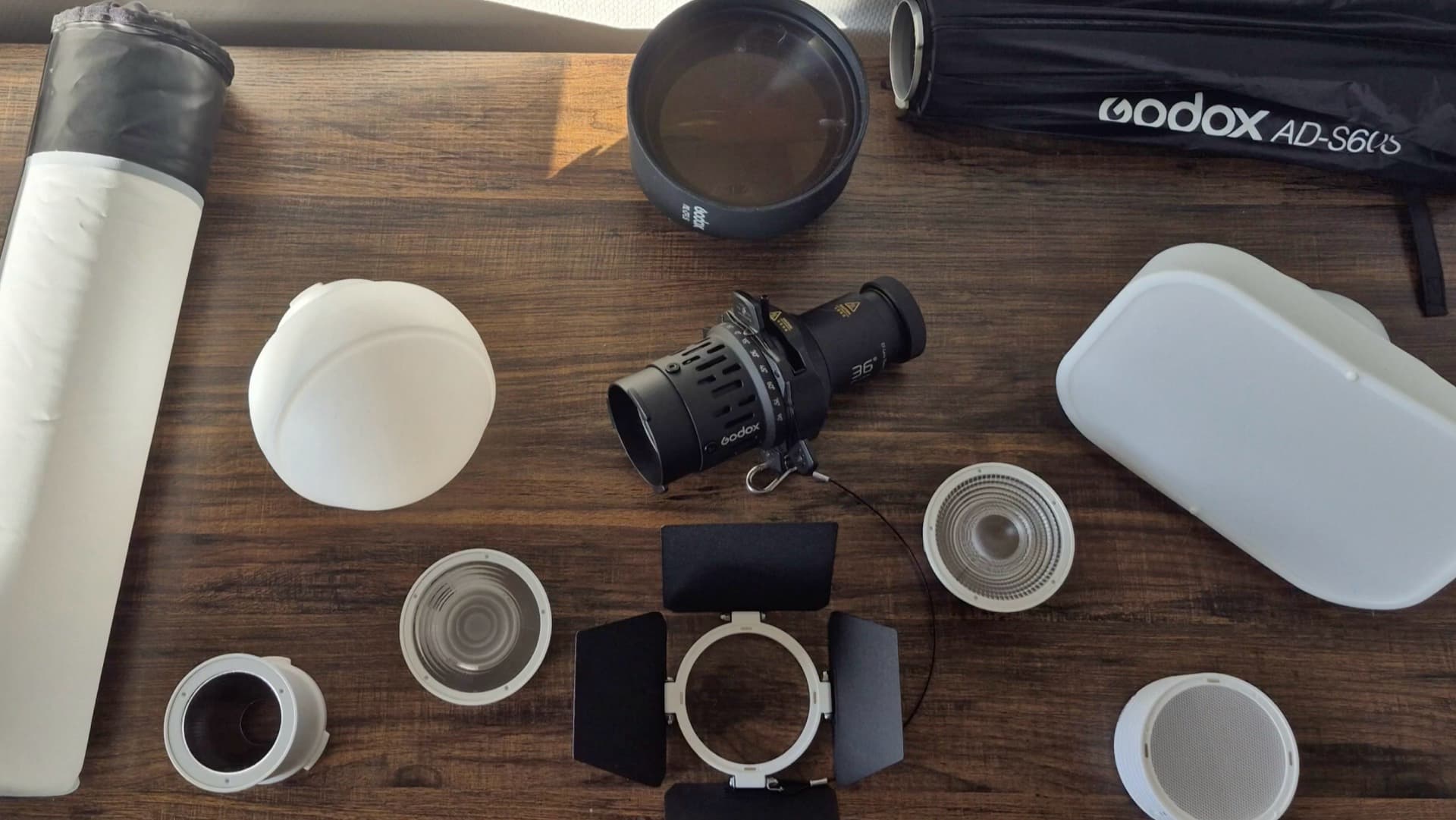 The ecosystem is wide but variable
I have to be honest about the accessory ecosystem's limitations. Some of the add-ons feel gimmicky and not all of them are built to the same standard. The advice here is sensible: don't just buy the everything bundle because it exists. Work out what you actually need, because the costs add up and some of the accessories are more useful than others.
The construction is another area worth tempering expectations. Both bodies are predominantly plastic, which keeps the weight down but does mean they're not especially robust. Handle with care, particularly on busy sets.
On pricing, the ML80Bi comes in at around $229/€275 and the ML150Bi at $259/€310, a surprisingly small gap for a meaningful step up in output. For shooters comparing these against the likes of Aputure or other premium compact LED brands, that achievability on price is part of the point.
Neither light is designed to be a primary source for large-scale shoots, and Jesse is clear-eyed about that: for bigger setups or outdoor work, you'll want something with more punch.
But as secondary sources, interview lights, or the backbone of a compact travel kit, the ML80Bi and ML150Bi make a strong case. They're genuinely easy to use, quick to set up, and the modular system means they can adapt to more situations than their size suggests. For solo shooters and small crews working fast, that's worth quite a lot.
Tags: Production Review Lighting Godox ML150Bi ML80Bi


RedShark 2020 @ All rights reserved.
Comments