3 minute read

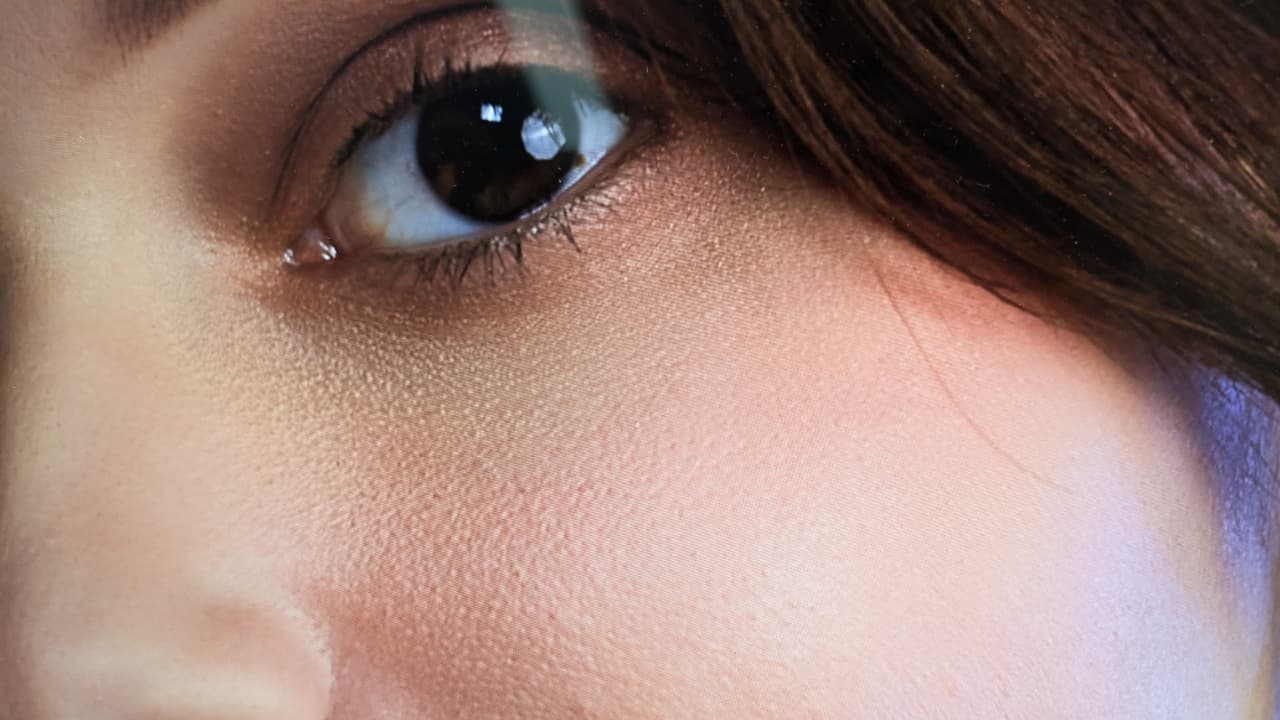
Evoto has earned a solid reputation for its stills retouching software, but the company’s next challenge is a lot harder: video.
When a developer of still photography software invites a film industry journalist to a product launch, there are no prizes for guessing that the company is about to launch something that works on moving pictures.
The thing is, there is no shortage of new announcements about AI, and it would quickly emerge that Evoto AI’s upcoming video tools are just that - upcoming, and very much a work in progress. What’s enticing for us, here, is the gulf of difference between cleaning up still portraits, which Evoto has been good at for a while, and cleaning up moving pictures. AI makes fixing stills fast. Potentially, it makes fixing video possible, at least at any worthwhile level of effectiveness.
Dealing with laugh lines and crow’s feet has been a sine qua non of commercial photographers for decades - but short of doing a CG rebuild of an A-lister’s head, the techniques available for moving images were often rather primitive combinations of keying and blur.
So, your narrator’s interest was sufficiently piqued to commit to a two-night stay in New York City (at, for the sake of disclosure, Evoto’s expense) and see what was going on.

Companies tend to be quite careful that launch-event demos look convincing, though the whole thing seems built on solid foundations. Most people would agree that Evoto’s stills tools work at least as well as a skilled hand on a mouse, and do so faster, and for less money. Even at the extremes, even with all the sliders maxed out, AI does a far more convincing job than those historic blur-based tools. Extreme settings can still provoke roboticism, but it’s a lot better looking than this sort of thing has ever been.
Sensible questions include how the company will charge for it, and, as an AI-based tool, how much it will cost to build a workstation capable of running it. Evoto has so far preferred to make its stills tools available as standalone applications running AI models locally, as opposed to a plugin which farms out the heavy lifting to the cloud. The idea, it seems, is to slide in as a replacement for Photoshop as being indispensable to portrait photography. There are, consequently, various utility functions to make it possible to finish stills entirely in the company’s software.
How practical that sort of approach will be in filmmaking remains to be seen. Evoto is presumably not intending to take on Resolve at its own game, but if it wants to stick with standalone applications, the userbase will likely be limited to the most elementary parts of the entry level - though, as we’ll see, that might be okay.

As to computer workload, some perspective is useful. The initialism AI in popular discourse often means chatbots, which means large language models, and “large” is the operative term. It is counterintuitive that photo manipulation is less hard work than generating text, but Evoto’s stills retoucher runs in a second or three per slider tweak on very modest hardware. Processing video is not just a case of running each frame through the still photo algorithm, which will lack sufficient consistency. Processing 24 video frames will likely be more work than processing 24 unrelated still images.
Ordinarily, Evoto charges per photo exported. This is not an unusual business model in 2025, but a metered-use approach is perhaps more common where the heavy lifting is done in the cloud. It seems to work for photographers because it reflects the per-image costs of a retoucher and Evoto’s fee is typically competitive. Exactly how this might work for video remains to be seen.
Part of that offset is technical - issues of bit depth, colour and brightness encoding. Those are solvable technical issues. The difference is in workflow. The approach of an occasional stills photographer can be similar to the workflow of a full-time professional shooting high end commercial stills, and similar tools might suit both. Conversely, the workflow of a casual cellphone YouTuber is vastly different to that of a high-end feature film or commercial, and the tools need to be different.

The thing is, there are a lot of people making quick YouTube videos who might want their zits cleaned up. There are comparatively fewer people making promotional content for the big brands. Evoto will struggle to sell a standalone app to the high end, but, well, Evoto may not be that concerned about it. In a world where big money can be made from large numbers of small-scale cellphone auteurs, it would not be unreasonable for the company to concentrate on them.
Should a Resolve plugin emerge, though, it’s not hard to imagine a receptive market for it. Some sort of near-realtime, on-set preview - already available for studio stills shoots - might help smooth out the inevitable politics. Crucially, from a creative point of view, it might also facilitate things like more adventurous lighting on trickier skin (your correspondent speaks as one of the first few people to be paid as a DIT in the UK).
Make it realtime enough, and it can go in a box in a rack in every TV news studio on the planet, an audience which seems downright thirsty for such an option. The AI is impressive, but if two days in New York City highlights anything, it’s that new media and old media don’t necessarily want or need the same things.
Tags: Production AI Evoto


RedShark 2020 @ All rights reserved.

Comments