7 minute read

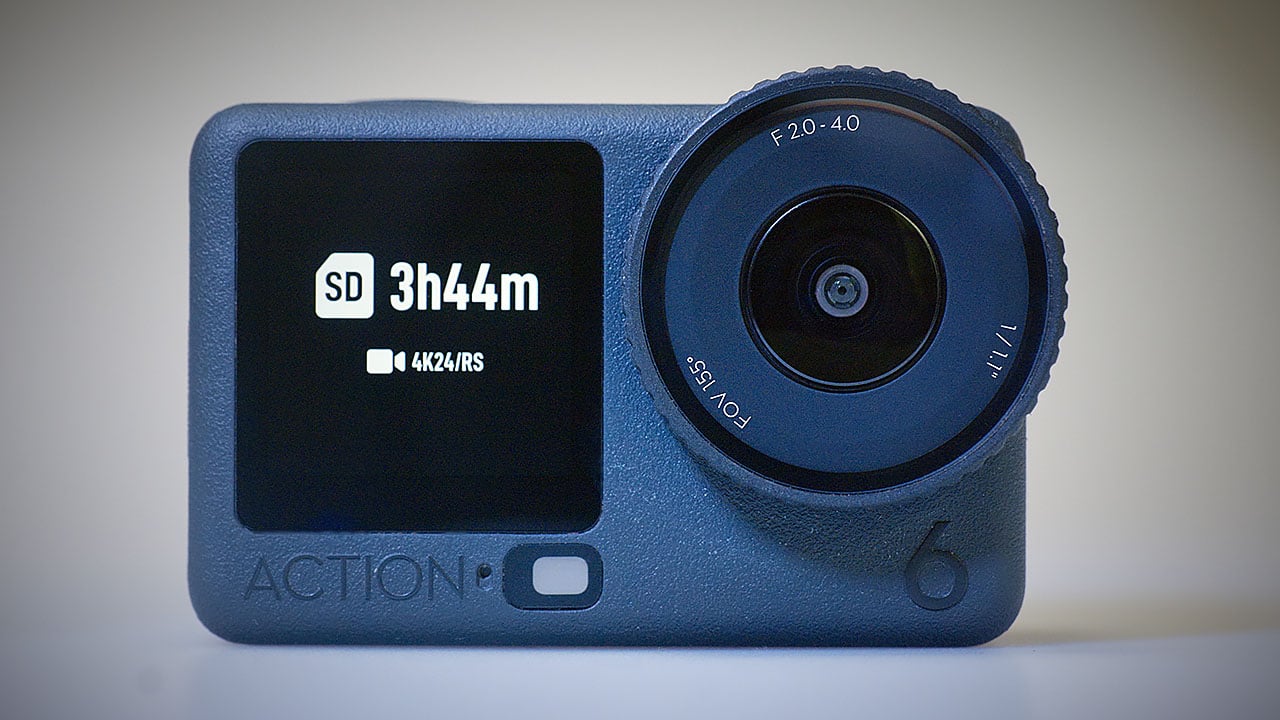
The new DJI Action 6 is getting a lot of attention right now. Here’s our detailed look at the camera's strengths and weaknesses. Has it upped the game once again?
At one time in history, GoPro was the only true option if you wanted the most capable action camera. In recent years however, companies like Insta360 and DJI have been working overtime to make the market theirs.
The result has been new cameras that outperform their predecessors by quite some degree, and now the release of DJI’s Action 6 promises another step change in performance.
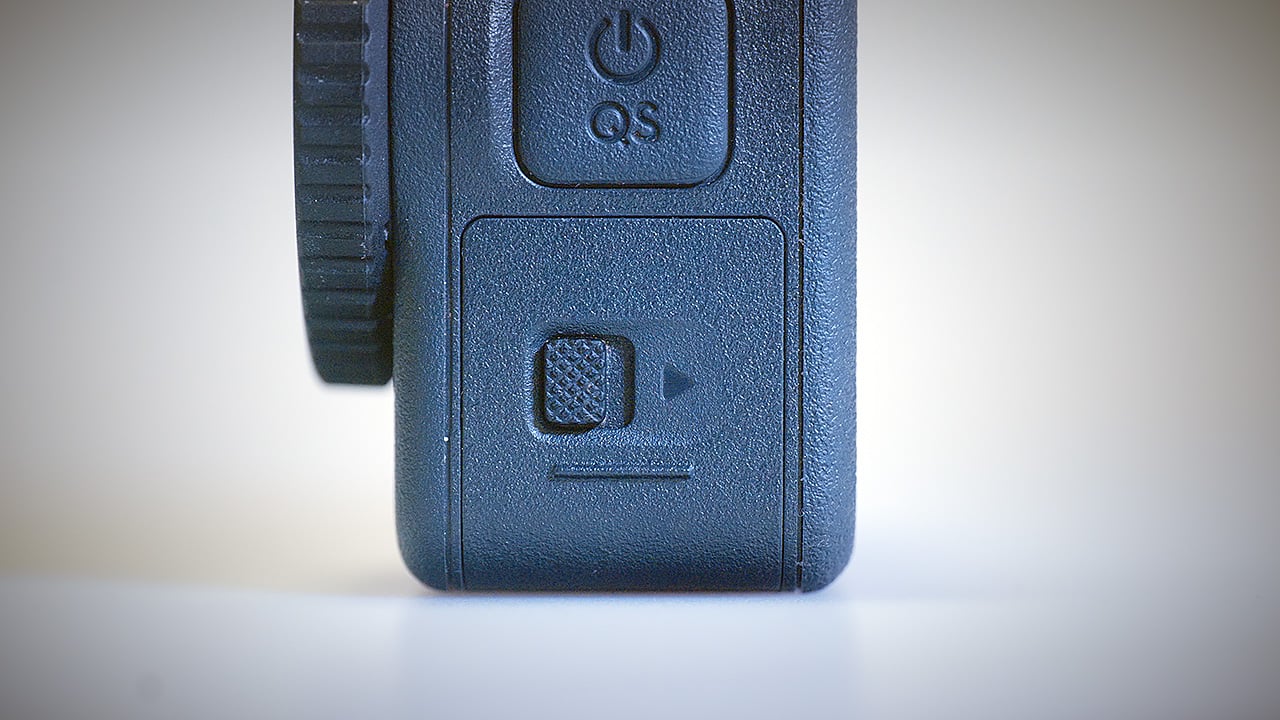
The Action 6 is a bit chunkier than the previous Action 5. It’s approaching the size of the GoPro HERO13, but doesn’t feel quite as heavy. One key improvement is the redesign of the side door. The Action 5’s doors were at risk of opening accidentally, creating potential problems for divers or anyone using the camera in water based situations. The new Action 6 door, which takes cues from the Osmo 360, features a latch you must move horizontally first before unlocking, offering much greater security and peace of mind.
While the Action 6 can use mounts from the previous models, DJI has tweaked the magnetic mounting system so that it's now multi-directional. This means you no longer need to mount the camera in a specific direction, making setup much easier, very similar to what GoPro has done with its recent cameras. The magnetic mount allows you to attach and detach the camera quickly, regardless of orientation.
Battery compatibility carries over from the Action 5, which is a thoughtful touch from DJI for anyone with a stockpile of batteries. This means you don’t need to purchase all-new batteries for the latest model.
The sensor on the Action 6 has been made a little bigger than the Action 5, mainly taller, with a square format allowing for a 1:1 ratio. Practically, this sensor offers better options for reframing footage later, and also means slightly less cropping during stabilisation.
The square sensor also enables full horizon levelling. Users can choose between a 45-degree mode or a full 360-degree horizon levelling. Interestingly, the image doesn’t crop in as much as you might expect, and the final FOV isn’t too much narrower than the Standard Dewarp mode. Standard Dewarp for the uninitiated, is the digital lens mode on the camera that removes any fish-eye distortion.
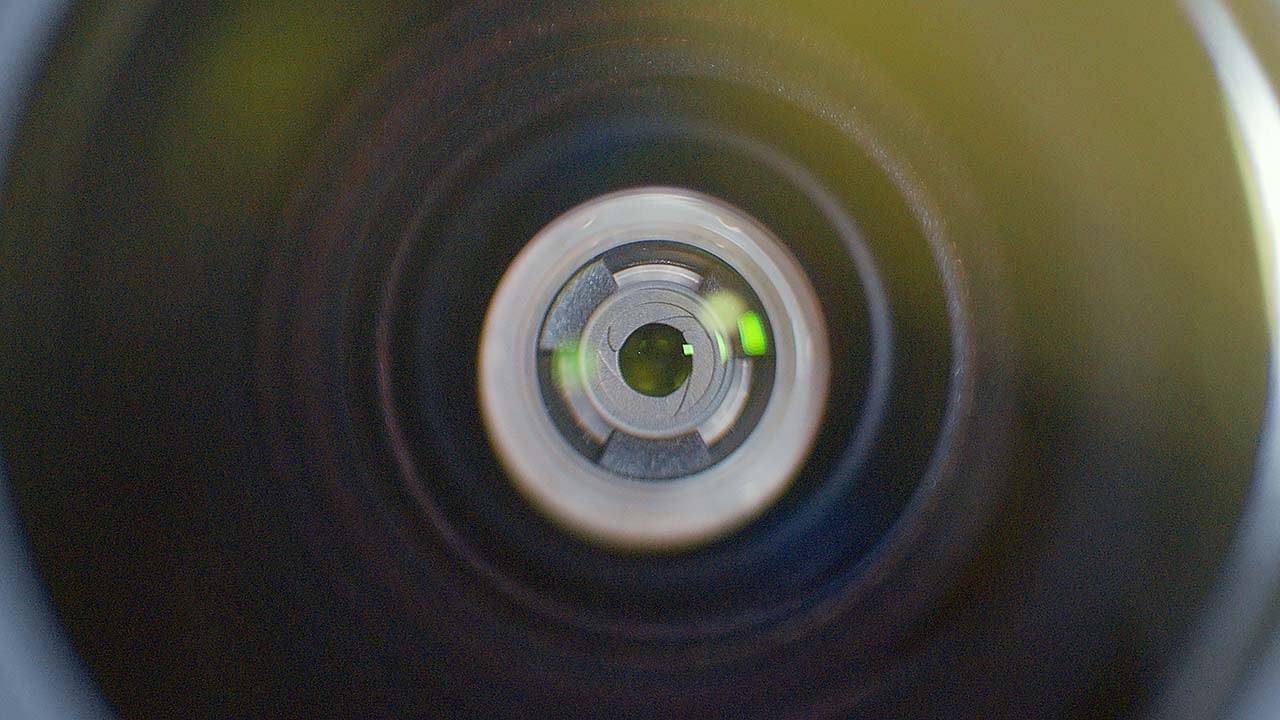
A major talking point for the Action 6 is its variable iris, a first for any action camera. The long-term reliability of this mechanical component is yet to be proven since action cameras tend to encounter a lot of vibration. However, the rationale for including a variable iris is to improve low-light capability. Depending on how you need to use the camera, the iris can be opened to f/2 for more light, or stopped down to f/4 for better close focus during vlogging.
The iris was a necessary inclusion in order to allow an increase in low light performance without sacrificing close focus when needed. At f/2.0 the hyperfocal distance is around 40cm to infinity, while at f/4.0 it's 20cm to infinity, which is actually a longer hyperlocal depth than the Action 5.
The variable six-blade iris also lets users create starburst style lens flares. I hope that DJI has done extensive testing in extreme conditions, but time will tell how this mechanical solution holds up under abuse.
Out of the box, the Action 6 offers a 155-degree field of view, one of the widest available alongside the Insta360 Ace Pro 2. The wide lens is excellent for immersive POV filming and outperforms the GoPro, which, despite its ultra wide modes such as HyperView and SuperView, suffers from noticeable distortion.
The Action 6 adds more field-of-view options, including a Natural Wide view for ultra-wide shots with straight vertical edges in addition to the Dewarp mode that gives straight edges in all directions. The Boost lens, an aftermarket add-on, delivers up to a 182-degree view with stabilisation off. It’s now automatically recognised by the camera, similar to GoPro’s Lens Mod integrations. I should point out that the first version of the Boost lens, which was made for the Action 5, won’t give the auto-recognition function. ND filters also still need manual setup, since they aren’t auto-recognised.
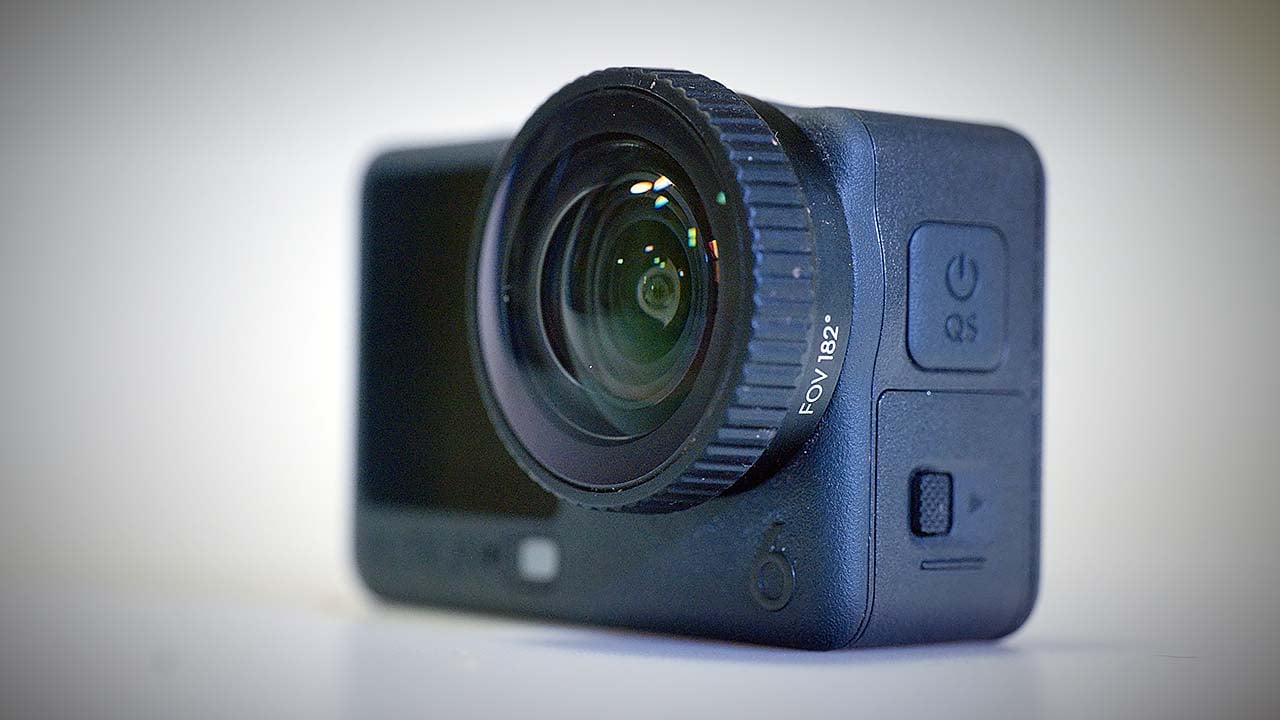
The Boost lens does come with some limitations. You don’t get the option of full horizon levelling or access to the 1:1 sensor mode, which is reserved for the standard lens. When using the standard lens, the Custom Frame mode lets you capture footage in a square 1:1 ratio, giving the option for reframing to different formats later.
Unfortunately, in 1:1 Custom Mode the camera doesn’t take advantage of the full width of the lens, which is a shame. I quite often use the square ratio modes on the GoPro so I can perform distortion correction in post while still retaining an ultra-wide FOV. Users needing maximum width for distortion correction with 1:1 capture may find GoPro’s HERO13 more versatile.
Macro capability is available with another add-on lens, allowing close focus up to 11 centimetres along with pleasing background defocus. However, it’s not designed for underwater use. Additionally, at the time of review, unlike GoPro’s alternative focus peaking is only available when connected to the Mimo mobile app. Hopefully DJI will add focus peaking to the camera itself in a future update.
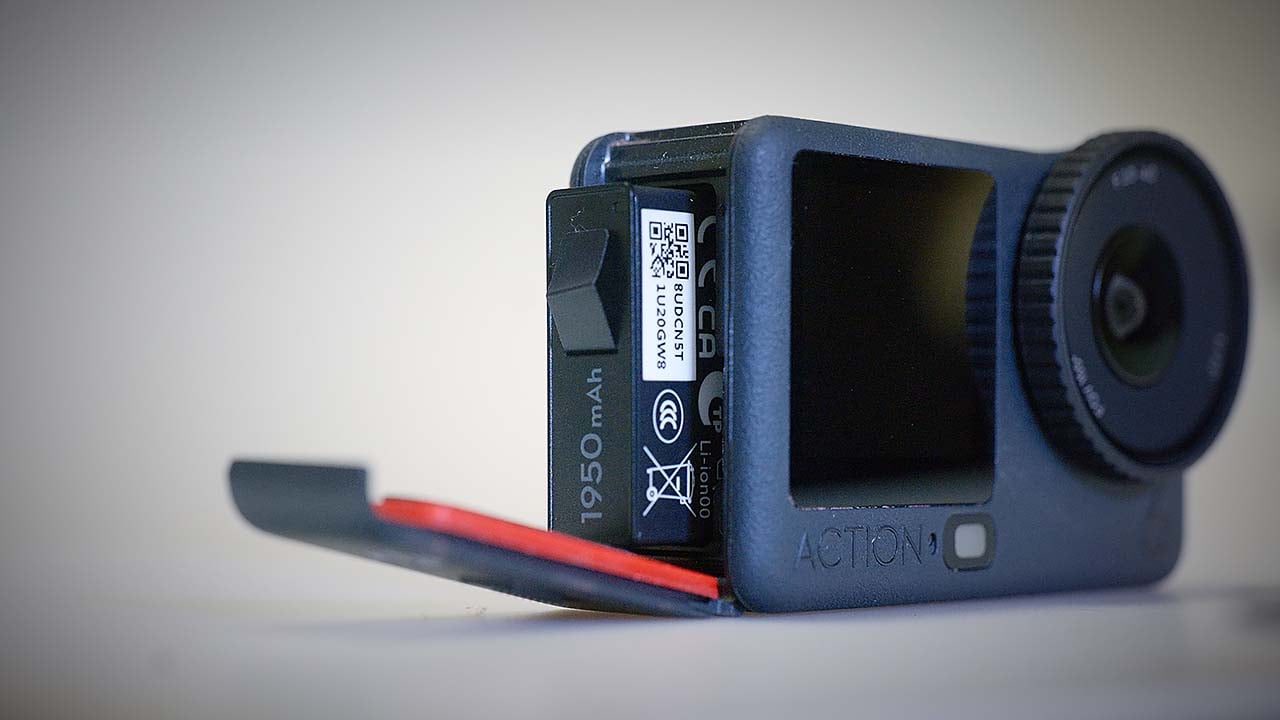
Image quality has seen notable improvements from the Action 5. DJI has managed to deliver cleaner, less electronic looking images than the Action 5 Pro, with easier grading and much more pleasing lens flare. Shadows and skin tones render more naturally, and I find that the colour is “fuller” compared to previous models. Side-by-side with the Action 5, the images reveal less harsh images, better colour rendition, and more shadow detail.
Exposure ramping, a problem that was exhibited on the Action 5, appears less pronounced on the Action 6. The new model appears less hypersensitive to exposure changes caused by moving objects in front of the lens, but continued testing is needed.
In low-light, with its f/2.0 lens, the Action 6 delivers a full stop improvement over the Action 5. In layman’s terms, that’s nearly double the amount of light than the f/2.8 lens on the previous model.
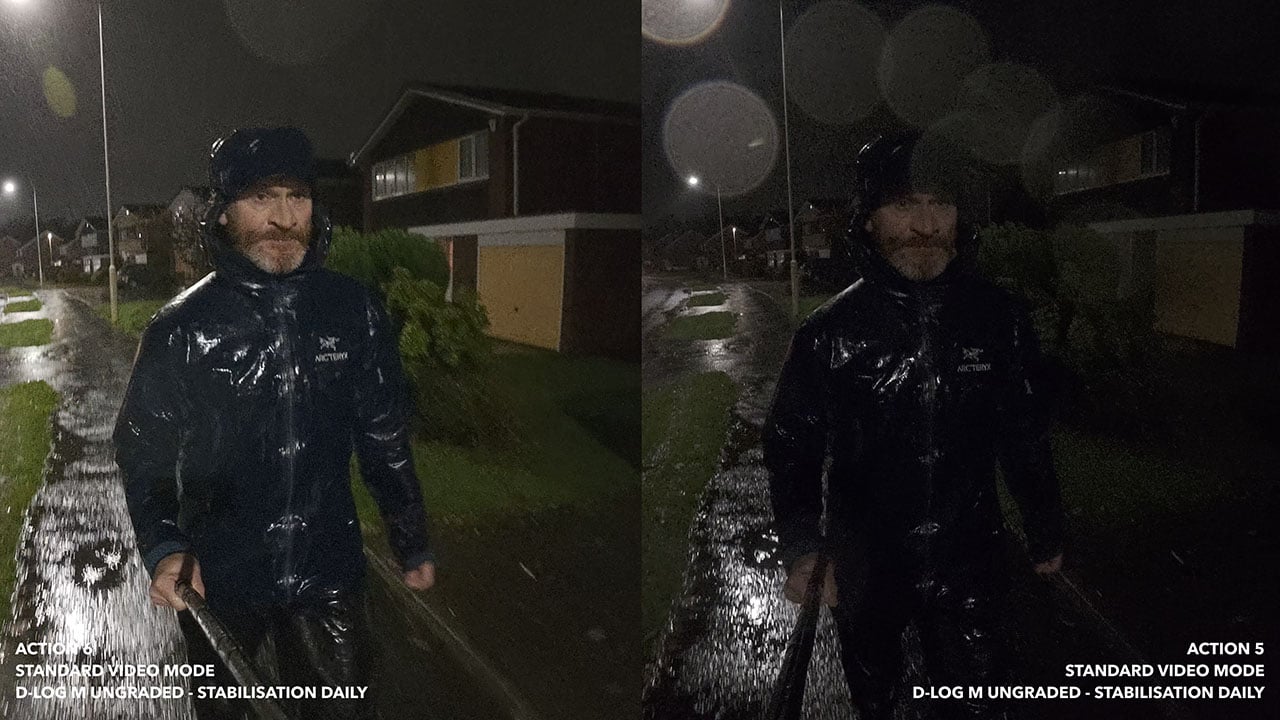
In the dedicated SuperNight mode, the Action 6 was able to use a faster shutter as a result of its faster lens. The result is noticeably cleaner stabilisation with almost no motion jitter visible. Now, SuperNight mode does look extremely processed, which it is. The good news is that the Action 6 performs remarkably well in low light even in the standard video modes. In fact, it’s so good that SuperNight mode can be reserved for those absolute last resort situations.
There is lots of high ISO noise in low light while using the standard video mode. However, it is still remarkably usable, and the noise can be reduced using software like Neat Video, Topaz, or the tools built into Resolve.
There is some talk online suggesting that the better low light performance of the Action 6 is just a firmware tweak. I can tell you straight away that that's simply nonsense. Even though you can brighten Action 5 footage in post, the low light detail of the Action 6 is objectively superior as a result of being able to allow in double the light. Users who rely on action cameras in challenging lighting will certainly appreciate the difference. Though I do feel that DJI could further enhance the camera by adding ultra-high bitrate recording for better post-production flexibility in those high ISO situations.


While the Action 6 supports DJI’s own wireless mic systems, the onboard microphone is better than I expected, even in windy environments. Insta360 has started to include dedicated built-in physical wind filters on its cameras, making them the current leaders in this area. However, the Action 6’s wind reduction mode produced surprisingly usable audio for an onboard mic in challenging windswept conditions.
The fact that you can use any one of DJI's multiple wireless mic systems makes the Action 6 an extremely flexible tool for filming on the move.
Speaking of audio, while the Action 6 doesn't feature haptic feedback like Insta360's cameras, the speakers giving sound cues are nice and loud. This is particularly important when the camera is helmet mounted in loud environments such as white water rivers. I could always hear when the camera had started and stopped recording.
Whilst the Action 6 is a very good performer in general, there are a couple downsides I found. One notable bug I discovered affected recording to SD cards. Unlike previous cameras, the Action 6 no longer breaks up files into 4GB segments, instead going up to 17GB before a split. I discovered that the camera stopped recording after reaching 17GB in file size. What’s supposed to happen is that a new file is created after that file size limit is reached for seamless continuous recording. Now, this works correctly on the camera's built-in 50GB storage system, but not on the SD card recording.
DJI is aware of the issue, and hopefully this will be fixed in the release firmware. Just as an additional side note, thermal shutdowns were not experienced during the review.
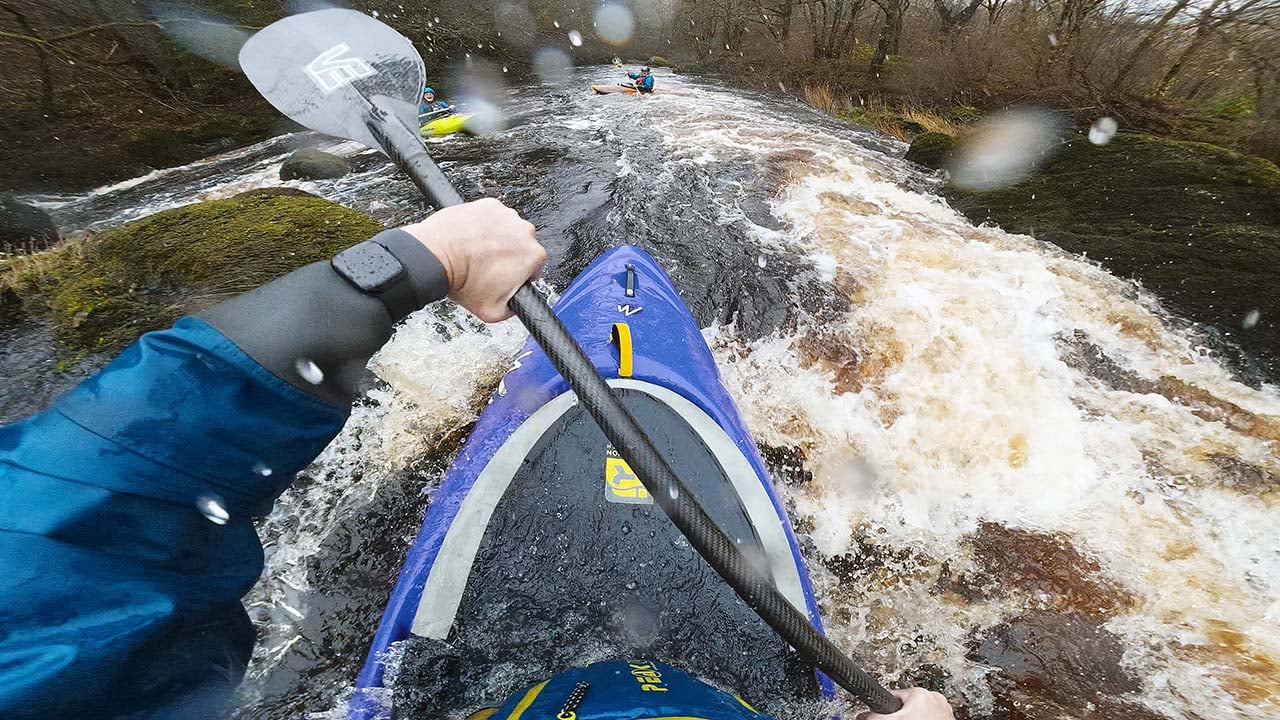
Another aspect that I’m not a fan of is the way in which white outlines can appear around some objects in certain colour and contrast situations. For example trees and leaves against a deep blue sky can often have a white outline appear. Just as with the Action 5, it seems this is a side effect of the tone mapping that the camera utilises. It doesn’t seem quite as objectionable as it did with the Action 5, but it is still there.

With all that said however, overall the Action 6 has proven to be a reliable, well-built camera with practical improvements in its design, sensor, image quality, and low-light performance. While GoPro retains some advantages with its highly flexible Labs firmware, the Action 6 marks an evolution forward, especially for users who value low-light shooting.
What DJI appears to have done is take the best aspects from its own cameras along with the best aspects from the GoPro and Ace Pro 2 devices, and put them into one camera. If DJI can eliminate the SD card recording bug and possibly utilise more lens width in the Custom Frame mode, we’d be getting very close to the perfect action camera.
In the current competitive landscape, it will be extremely interesting to see how GoPro and Insta360 respond to the Action 6. Will Insta360 finally relent and put 10-bit recording on its cameras for example? For now, the Action 6 sets a new benchmark in overall action camera performance.
The DJI Action 6 is available now from $379.
Tags: Production Review Cameras Action cameras DJI DJI Action 6


RedShark 2020 @ All rights reserved.

Comments