
2 minute read

Can a movie really make nearly $3 billion and still remain culturally absent? As James Cameron's Avatar trilogy lights up movie theaters once more, where is all the fandom?
Avatar made just shy of $3 billion when it was released in 2009 and despite the best efforts of many Marvel movies, remains the highest grossing film of all time. Avatar: Way of Water also made over $2 billion when it was released in 2022. If Avatar: Fire & Ash makes more than $2 billion, and the early box office suggests that it might, it will become the first franchise in movie history with three installments all over the $2 billion mark.
So, where are the posters? Where are the t-shirts? Where are the endless memes? All the other massive movies of the modern era have spawned a vast culture of artifacts and ephemera that has woven them into the cultural zeitgeist. Hell, there are even TV series that punch culturally above the weight of what is going to be the most successful movie franchise (per installment) of all time. Don't even get me started on K-Pop Demon Hunters...
Here's some data showing the number of Wiki pages generated per major franchise on the Fandom website and where Avatar ranks.
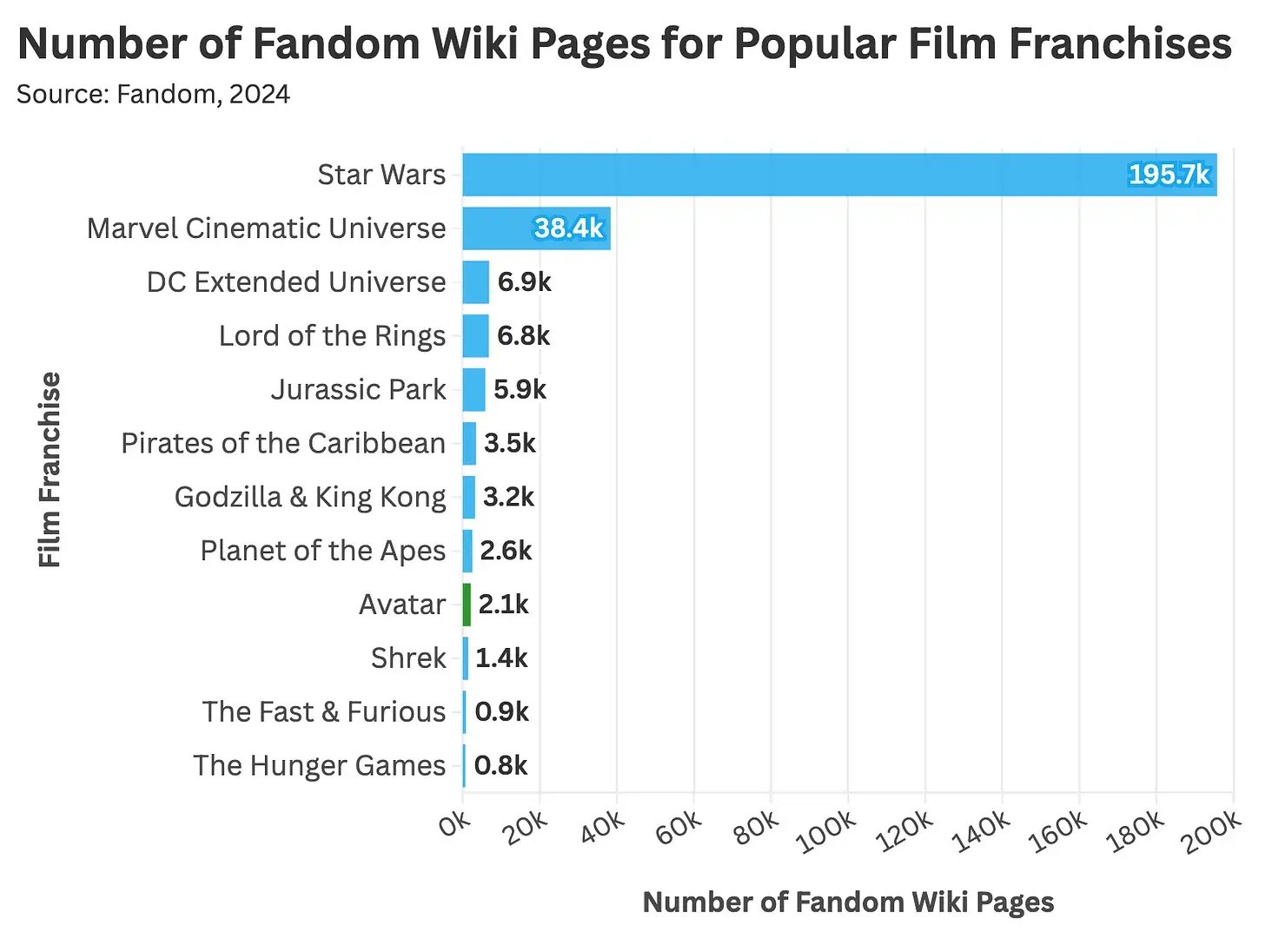
Somewhere between Shrek and Planet of the Apes feels distinctly out of place for the sheer number of dollars it took and people who went to see it at the cinema.
The graph above comes from Daniel Parris's excellent Stat Significant, a free weekly newsletter featuring data-centric essays about movies, music, TV, and more. And he reckons he has the answer. Or several answers.
First, there's not a lot of merch. Toys, books, TV spin-offs, LEGO tie-ins, Comic-Con cosplay are all down. Memo for future franchises: make your stars a bit easier to impersonate: the Na’vi are hard work. Yes, there are merchandise tie-ins, no tentpole movie drops without them nowadays (you can even buy Stranger Things branded snacks this year ahead of Season 5's finale), but it's not at the scale you might expect.
Second, though, and Parris reckons this is the big one, Avatar was made for cinemas. It is all big-screen bombast and was designed from the outset to be a cinematic experience. The Avatar movies have been marketed as unmissable box office, and that is largely where they have stayed.
"To measure the difference between theatrical and at-home enjoyment, we’ll compare average MovieLens user ratings recorded during a film’s theatrical window with ratings submitted after it went to home video," he writes. "When we apply this methodology to films released between 2005 and 2010, Avatar emerges as one of the clearest examples of a film that works better in theaters."
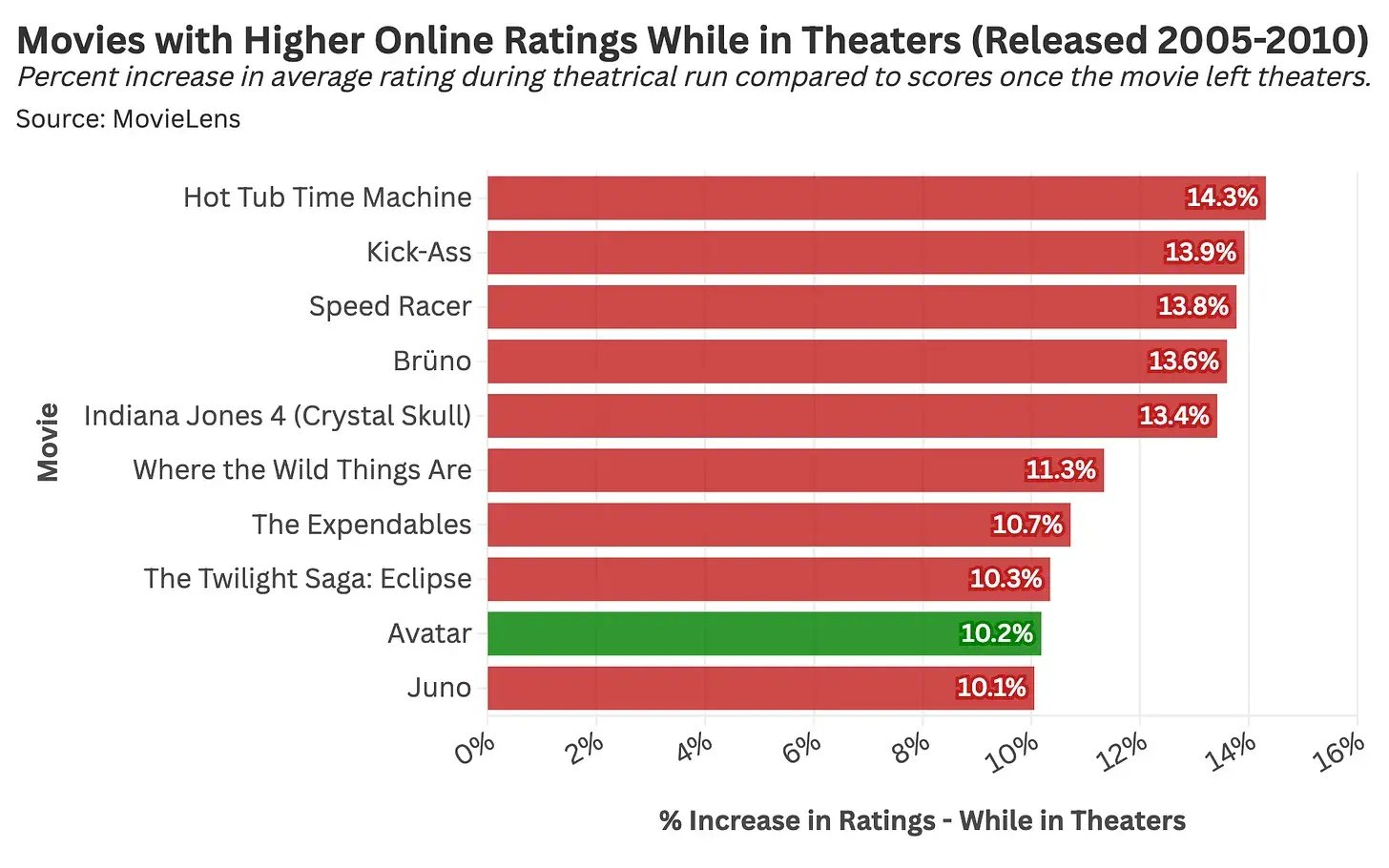
Simply put, it pins you back into your chair in the movie theater with sheer noise and spectacle. Watch it at home and the effect is dramatically reduced. Unlike most modern entertainment products, the Avatar trilogy has been designed to be movies first and pop-culture ephemera second, and it has been remarkably successful as a result.
As Netflix increasingly looks like winning in its bid for Warner Bros. Discovery, it will do well to remember that the theatrical business can still generate revenue like nothing else even if the fandom fades rapidly once showtime is over. Cinema matters, spectacle is important, and even bombast can be a good thing.
Read more over at Stat Significant.
Tags: Business Box Office Avatar


RedShark 2020 @ All rights reserved.

Comments