2 minute read

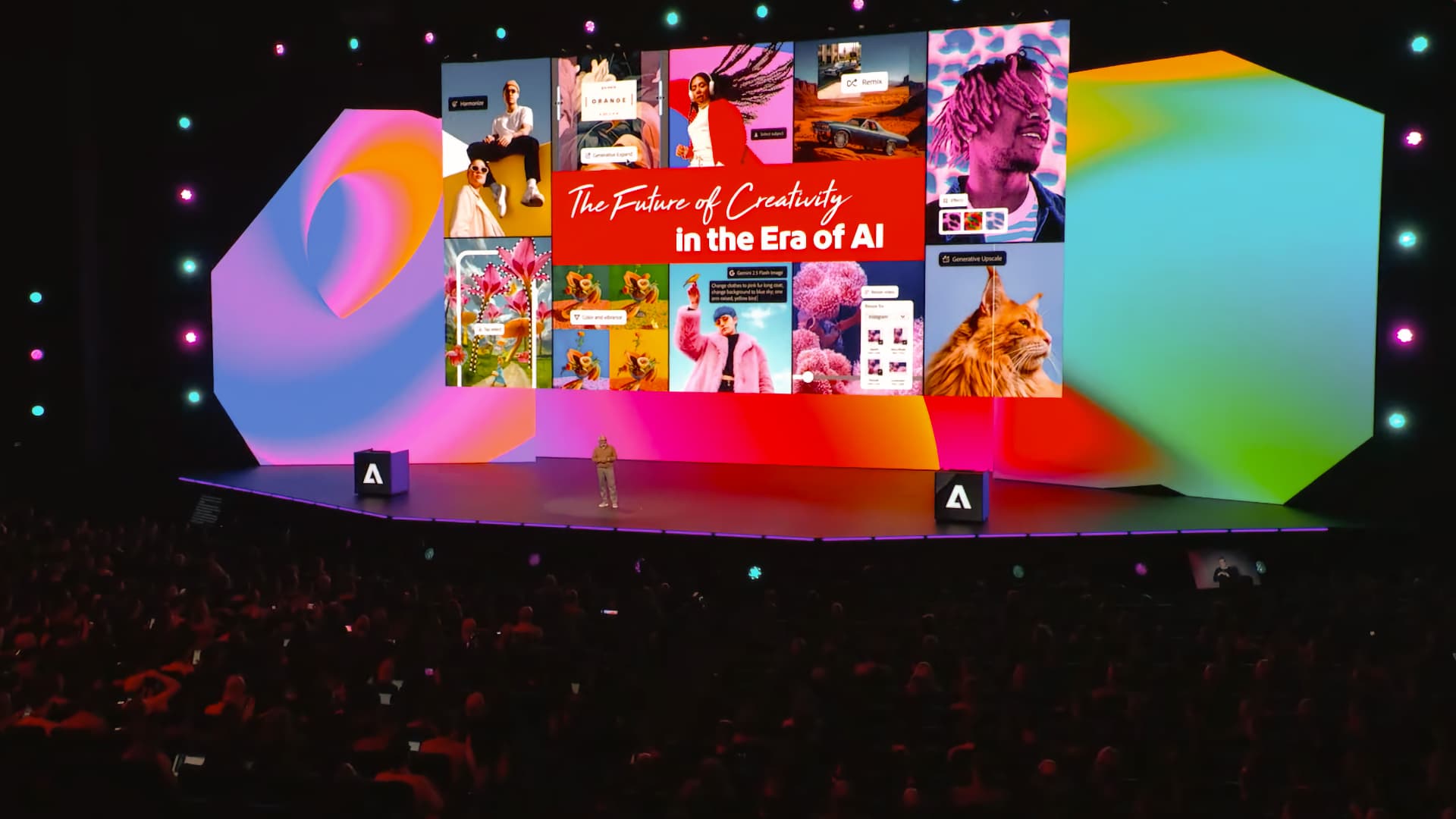
Adobe MAX 2025's opening keynote was a three-hour epic where the company set out its agenda for the year ahead, and there was some fascinating insight about what is to come.
"Welcome to Adobe MAX 2025," said Adobe Digital Media President David Wadhwani at the start of his part of the Adobe MAX 2025 opening keynote. "I guarantee you, we have never shown more innovation on stage. So buckle up. It's going to be a packed morning now."
He wasn't wrong either. We were already almost 15 minutes into the conference's opening keynote, which in the end stretched out over three hours of new feature presentation, some hugely impressive demos, and more. You can watch the whole thing below, but here we're going to concentrate on the opening remarks of Wadhwani and Shantanu Narayen, Chair and CEO, and what they reveal about the immediate direction of the company.
It's no surprise to anyone that AI was, of course, central to all this, but all the speakers, and not just Narayen and Wadhwani, were also keen to point out that its implementation is very much at the service of human creativity. In fact, the word 'creative' was used more over the three hours than the term 'AI' was, which given the latter's buzzworthiness at MAX is impressive.
If MAX 2025 represented Adobe doubling down on AI tools, it also saw it double down on its position that they are collaborative. Speaker after speaker made the point that AI will increasingly act as a collaborator. It will work with us to plan multi-step workflows, refine results, and free users from repetitive tasks — all while maintaining human control and creative ownership.
“Two out of three Photoshop users in the beta version use generative AI in their workflows every single day," said Narayen, and elsewhere the company also pointed to other stats that show generative AI's use is snowballing across the creative industries.
That though, was not the story that Adobe was telling today. "The future belongs to those who create," he said. "And while technology will amplify human ingenuity and unlock new possibilities, the one thing it can never replicate is the emotion and humanity that you creators uniquely bring to your art."
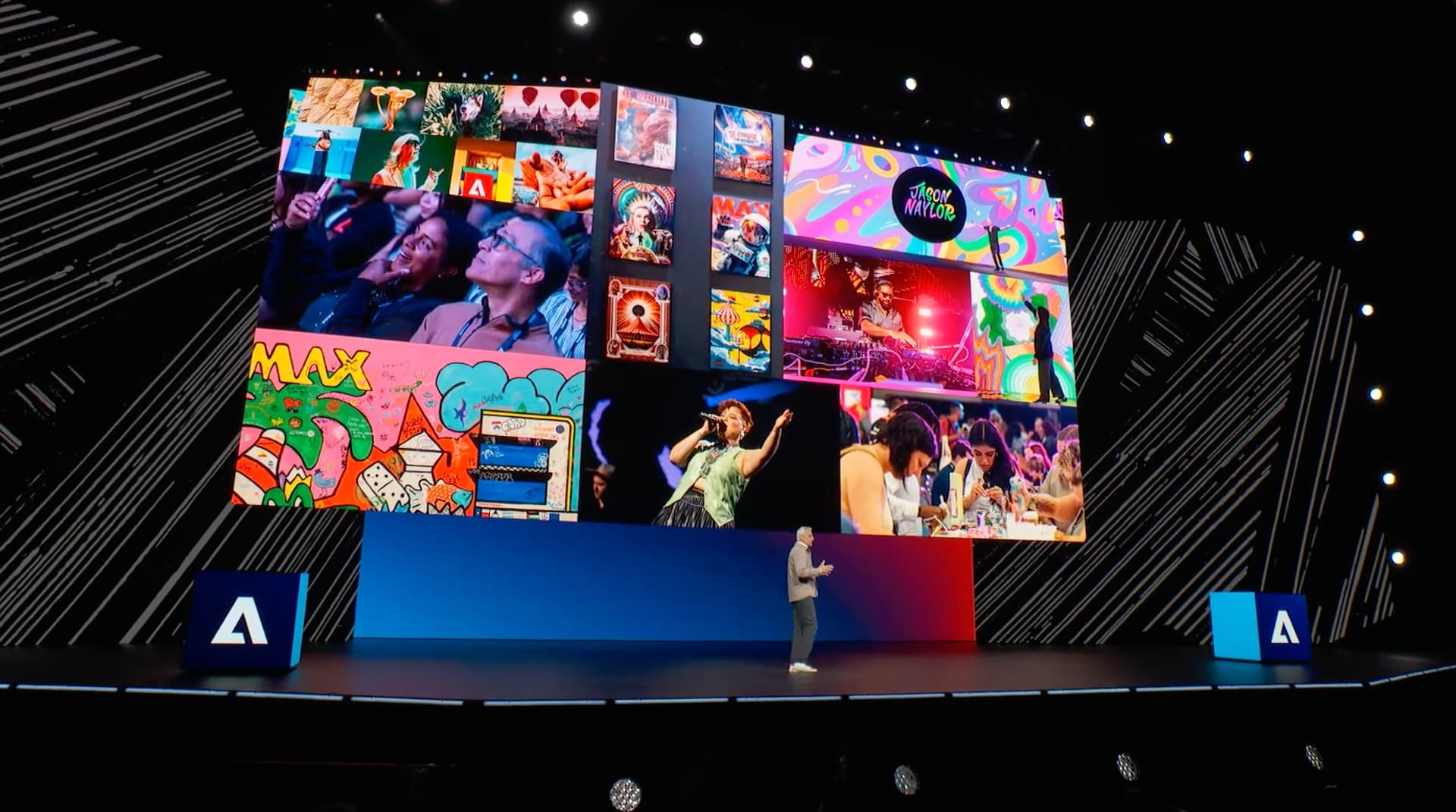 These words were echoed by Wadhwani, who also hinted that the turbulent era of AI is only just getting started. He sweetened the pill at the start though.
"I've got good news for you: the content that you create has never been in more demand," he said. "Most businesses continue to say that they need a lot more content to meet the market opportunities, and an overwhelming majority of creative and marketing teams plan to expand their talent pool to do so.
"That said, as Shantanu talked about, we also need to acknowledge that the creative industry is going through an incredibly important transformation on the back of two huge technology trends," he continued. "First, generative tooling with AI models, and second, conversational experiences with AI agents."
This is what Narayen's comments about multi-step workflows were all about. "In the future, we envision the single-step, prompt-based edits of today will become multi-step workflows that span tools and actions to help you achieve your project-based goals," he explained further.
To make this all happen, Adobe is making three strategic commitments when it comes to AI development:
The Firefly family now includes image, video, audio, design, vector, avatar, and voice models. All have been trained transparently and designed for commercial safety, and the task now is to join it all together, make it seamless, and make the reality of agentic AI match its promise. The rest of the long, but very entertaining keynote, was about sketching out the first steps in making all that happen.
Tags: Post & VFX Adobe MAX


RedShark 2020 @ All rights reserved.
Comments